


The phrase “all roads lead to Rome” is one of those timeless expressions that most people recognize, even if they’ve never stopped to think about its meaning.
Often used metaphorically to suggest that different paths can lead to the same outcome, this saying actually has deep historical and geographical roots. In the literal sense, during the height of the Roman Empire, all major roads really did lead to Rome.
But beyond the physical infrastructure, the phrase also reflects the city’s unmatched influence over politics, culture, and civilization.
The Origins

The saying originates from the Latin expression “mille viae ducunt homines per saecula Romam”, which translates roughly to “a thousand roads lead men forever to Rome.”
This was not just poetic language—it was a factual statement about the engineering marvel that was the Roman road system.
Built over the course of centuries, the network of Roman roads spanned more than 400,000 kilometers, with about 80,000 kilometers paved in stone.
These roads were designed with remarkable precision and durability, connecting distant provinces from Britain to Mesopotamia directly or indirectly to the capital.
At the heart of this network stood the Milliarium Aureum, or the Golden Milestone, erected by Emperor Augustus in the Roman Forum.
This monument symbolized the point from which all distances in the empire were measured, essentially making Rome the center of the known world. In this literal and logistical sense, every major road truly led to Rome.
The Engineering Genius of the Roman Road Network

The Roman roads were not just dirt paths; they were meticulously constructed to last. Engineers layered gravel, stone, and sand to ensure stability and drainage, while milestones placed along the way recorded distances and destinations.
This system allowed for the rapid movement of armies, trade goods, and information—key ingredients in the empire’s long-lasting power.
The famous Via Appia, or Appian Way, is one of the oldest and most celebrated of these roads. Stretching from Rome to Brindisi in southeastern Italy, it was completed in 312 BC and became a vital artery for commerce and military campaigns.
Other major routes, like the Via Aurelia and Via Flaminia, extended the empire’s reach across the Italian peninsula and beyond.
The Roman engineers designed these roads to converge toward the capital, both for efficiency and symbolism.
The idea was that all power, authority, and culture radiated outward from Rome, while resources and wealth flowed back toward it. This structure was a physical manifestation of the empire’s centralized governance.
Cultural and Political Centralization
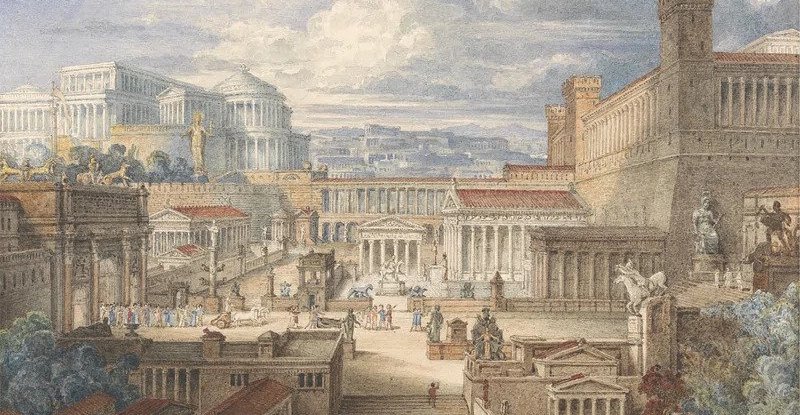
Beyond the literal roads, “all roads lead to Rome” was also an accurate reflection of the empire’s political and cultural centralization. Rome was not just a city—it was the administrative, economic, and spiritual core of the ancient world.
Every province was governed in a way that maintained allegiance to the capital. Governors, legions, merchants, and scholars all operated within a system that pointed back to Rome as the ultimate source of authority.
Culturally, the influence of Rome was equally inescapable. Latin became the lingua franca of the Western world, Roman law shaped the legal systems of Europe, and Roman architecture inspired everything from aqueducts to amphitheaters.
Whether one lived in Gaul, Egypt, or Hispania, Rome’s presence was felt daily in language, infrastructure, and governance.
Rome as the Metaphorical Center of Civilization

As centuries passed and the Western Roman Empire fell, the phrase took on a broader, metaphorical meaning.
Even after its political collapse, Rome remained the center of the Christian world as the seat of the papacy. Pilgrims from across Europe traveled—quite literally—along old Roman roads to reach the holy city.
Today, “all roads lead to Rome” is used to suggest that there are many ways to reach the same goal or truth.
The endurance of this metaphor reflects how deeply the Roman model of connection and centralization shaped human thought.
In modern contexts, the phrase reminds us of the enduring legacies of Rome’s organization, communication, and unity—concepts that continue to influence urban planning, transportation, and global relations.
The Echoes of Ancient Roads in Modern Times
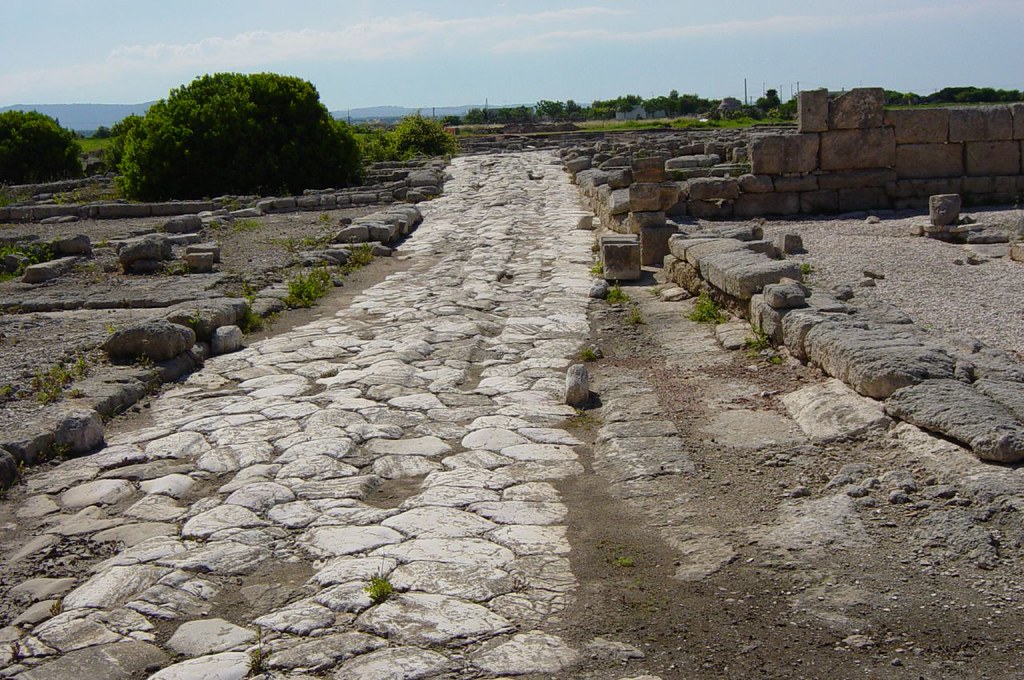
Even in the modern era, traces of Rome’s road system remain visible across Europe. Many modern highways still follow the paths originally laid out by Roman engineers. Cities that once formed key waypoints on the Roman network have evolved into major modern hubs.
The European route system, with its intricate connections between capitals, is conceptually reminiscent of the Roman model, where every route ultimately tied back to a single center of power.
This continuity across millennia is what makes the phrase more than just a metaphor. It is a testament to Rome’s enduring ability to connect and organize vast territories under a common system—one that, in many ways, shaped the modern world’s idea of connectivity and order.


