


Amid the heat of the 16th-century spice trade routes, a stone once stood on the banks of the Ciliwung River. It was no ordinary stone, it was the Padrão Sunda Kelapa or the Luso-Sundanese Padrão, a marker of the agreement between the Sunda Kingdom and the Portuguese.
Established on August 21, 1522, this monument marked the first international treaty between a kingdom in the Indonesian Archipelago and a European power, long before the colonial era began.
Sunda Kelapa, a Port Contested by the World
Sunda Kelapa at that time was far from a small port on the western tip of Java. It was the heart of the pepper trade, the most valuable commodity in the world.
According to Portuguese explorer and writer Tomé Pires in his Suma Oriental, the port produced about 1,000 bahar of pepper annually — equivalent to thousands of tons of high-quality spice, even surpassing that of India.
Ships from Sumatra, Malacca, Makassar, Arabia, and China anchored here. Pepper, rice, slaves, and gold were traded under the scorching Sunda Kelapa sun.
Unsurprisingly, the Portuguese, who had just conquered Malacca in 1511, set their sights on this strategic port as their next foothold in Asian trade expansion.
When the King of Sunda Sought an Ally
Meanwhile, King Surawisesa of the Sunda Kingdom faced a rising threat. Two Islamic powers in Java, Demak and Cirebon, were expanding their influence westward.
Knowing his vital port could fall without strong support, Surawisesa sent envoys to Malacca in 1521 seeking an alliance with the Portuguese, then recognized as the strongest naval power in Asia.
Governor Jorge d’Albuquerque welcomed the proposal eagerly, a new ally meant direct access to Sunda’s pepper. He then dispatched Henrique Leme to Sunda territory to negotiate a trade and defense treaty.
The Birth of the Sunda–Portuguese Treaty
The negotiations resulted in a formal agreement signed on August 21, 1522, in the port of Kalapa (present-day Jakarta).
The Sunda Kingdom granted the Portuguese permission to build a trading fortress in Sunda Kelapa, while the Portuguese promised military assistance should the kingdom come under attack. In return, Sunda would supply 1,000 bags of pepper each year.
To commemorate this crucial moment, the Portuguese erected a Padrao, their iconic stone pillar symbolizing treaties, recognition, and the official presence of Portugal on foreign soil. This monument became known as the Padrao Sunda Kelapa, or the Luso-Sundanese Padrão.
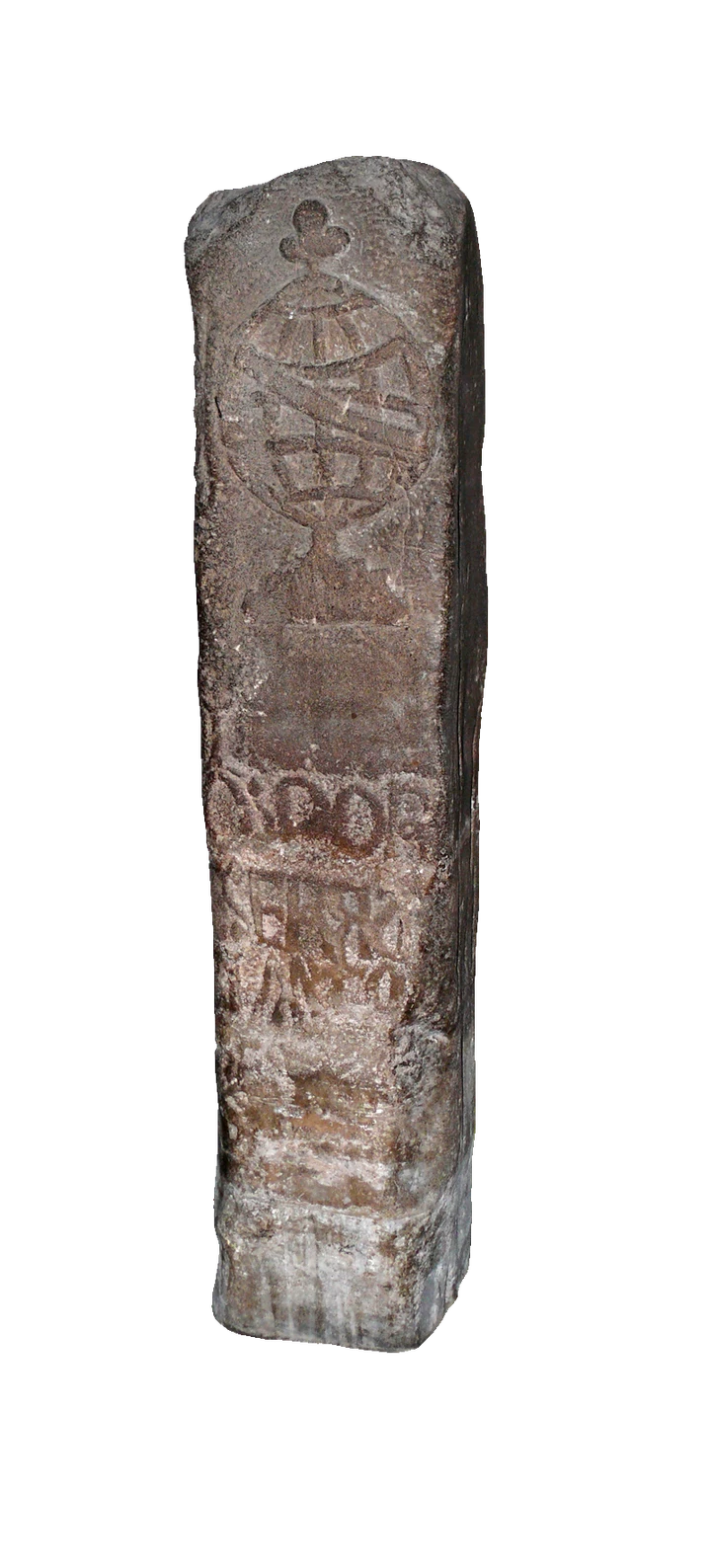
In Portuguese tradition, a Padrao is far more than a memorial stone. Since the era of the great maritime explorations in the 15th century, explorers carried these pillars from their homeland and raised them in newly reached territories.
Each Padrao served as a formal marker of Portuguese presence, proof that a place had been visited, a relationship established, or even a territory claimed on behalf of the King of Portugal.
The Symbols and Secrets of the Andesite Stone
The Padrao was installed at the mouth of the Ciliwung River in Kalapa as a sign of the newfound relationship between Portugal and the Sunda Kingdom. Made of andesite and standing nearly two meters tall, the monument takes the shape of a four-sided pillar.
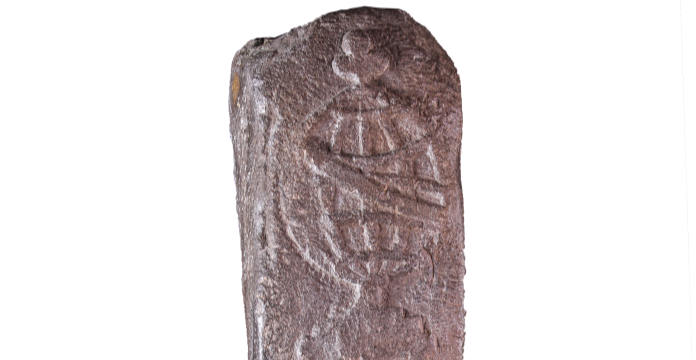
One of the sides is carved with the globe symbol, the emblem of King Manuel I. Beneath the sphere are the inscriptions "DSPOR" (Do Senhorio de Portugal), meaning "under the dominion of Portugal," and "ESFERA DO MUNDO," meaning "the sphere of the world" or "the hope of the world."
A Treaty That Was Never Realized
Unfortunately, the long–anticipated agreement never materialized. Before the Portuguese could finish constructing their fortress, Fatahillah’s forces from the Sultanate of Demak attacked Sunda Kelapa in 1527.
Their victory not only thwarted the Portuguese plan but also marked the end of the Sunda Kingdom’s control over Java’s northern coast. The city was then given a new name: Jayakarta, the origin of today’s Jakarta.
A Legacy Rediscovered
The Padrao of Sunda Kelapa was rediscovered in 1918 near Kali Besar in West Jakarta, at the intersection of Jalan Cengkih and Jalan Kali Besar Timur. Today, this historic stone is preserved at the National Museum of Indonesia under inventory number 18423/26.
The monument has four sides, but only two bear inscriptions and Portuguese symbols. The other two sides are plain, showing only scratches and rough carvings, believed to have been made by human hands long ago.
Despite the damage and erosion, the Padrao of Sunda Kelapa remains a uniquely important relic in world history. Among the many Padrao stones placed across Portuguese territories in Africa and Asia, this is the only one that stands as a symbol of cooperation and diplomatic agreement, not conquest.