

In the heart of Mosul’s old city, two of its most significant Christian churches—Mar Toma Church and Al‑Tahira Church—have re-opened after years of devastation under Islamic State rule.
Their rebirth is a powerful symbol not only for the Christian community but for the city’s multi-faith heritage.
When ISIS seized Mosul in 2014 and held it until 2017, the city suffered immense cultural and religious destruction. Holy places were converted to prisons or destroyed outright, and countless residents fled, particularly members of Christian minorities
Mar Toma Church

Mar Toma Church, sometimes referred to as St. Thomas’s, is among the oldest Christian sites in Mosul. According to tradition, it stands on the spot where the Apostle Thomas once stayed.
The church traces its roots back to perhaps the 7th century, though the present structure reflects multiple renovations across centuries.
During the ISIS occupation and subsequent battle for Mosul, this church was severely desecrated—used as a prison and court by militants, its historic gate, the “Door of the Twelve Apostles”, damaged.
The restoration of Mar Toma has been part of the “Mosul Mosaic” program, which combines local craft, heritage-techniques, and international funding to rehabilitate the site.
In October 2025 a formal re-inauguration ceremony marked the re-opening of the church to worship and public life.
Al-Tahira Church

Al-Tahira Church (also known as the Church of the Immaculate Conception) has its own long history in Mosul’s Christian quarter.
Constructed in the late 19th century (1862) on the site of earlier Christian presence, the church was one of the main Chaldean Catholic places of worship.
When ISIS dominated Mosul, Al-Tahira was heavily damaged: roof collapsed, arcades destroyed, walls reduced to rubble.
The extensive restoration, led by UNESCO and funded by international partners, aimed to revive not just the building but the memory and identity of Mosul’s Christians.
Its re-consecration and re-opening came in 2025, heralding the return of church bells and worship to a place that had been silent.
What It Means for Christians in Mosul

The re-opening of these two churches carries deep significance. For displaced Christians, it signals that home can be reclaimed, a tangible sign that the city’s plural identity is not lost.
As one Christian craftsman involved in the restoration said: “The re-opening of these churches is a sign of hope. It tells the world and especially Christians abroad that things are better here now, that they can come home again.” According to C News Live English.
Moreover, the church bells ringing again in Mosul’s old city are more than an auditory restoration—they are a metaphor for resilience and the return of communal life.
Coexistence and Heritage

These restorations are not only about Christian heritage—they reflect the broader project of reconstructing Mosul’s identity after years of trauma.
The work was undertaken with a recognition that Mosul’s history is diverse and that rebuilding must include all communities.
The international partnerships, local craftsmen, heritage specialists and government involvement show a model of rebuilding not just buildings but social fabric.
Ongoing Challenges
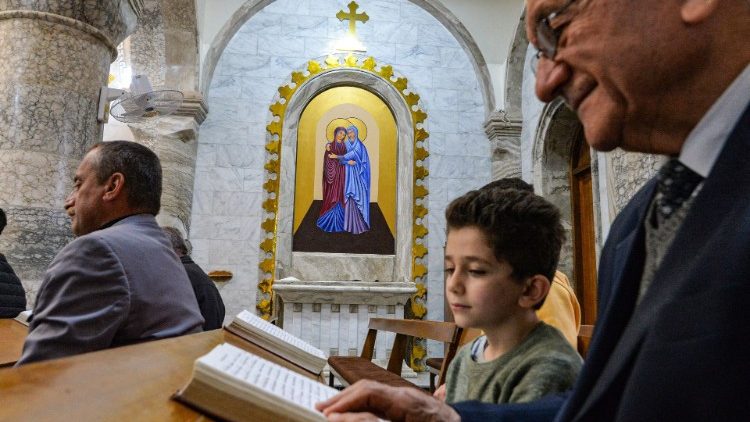
Despite the reopening of these churches, challenges remain. Mosul’s Christian population is a fraction of what it once was; many families have not returned, and the process of rebuilding lives, livelihoods and security continues.
Maintaining restored heritage sites in a city still healing from war demands sustained investment and community engagement. For these churches to fulfil their promise, worship, community gathering, cultural heritage and everyday life must converge.
Iraqi Christians Resilience and Perseverance

The re-opening of Mar Toma and Al-Tahira churches in Mosul is a powerful story of return and restoration. These buildings bear the scars of war, yet through meticulous work and collective will they have risen anew.
More than architecture, they embody faith, memory and the enduring presence of Christians in Mosul. As the city continues to rebuild, these churches stand as markers of hope, anchors of a plural heritage and testimony to the fact that even after destruction, restoration is possible.