


Among Earth’s many unique creatures, the echidna is possibly one of the most baffling—both to scientists and nature enthusiasts. It sports spines like a porcupine, a face reminiscent of an anteater, yet it’s a mammal that lays eggs.
Egg-Laying Mammals with a Temporary Pouch
Echidnas are one of only two groups of egg-laying mammals, alongside the platypus. As monotremes, they do not give birth to live young like other mammals.
A female produces just one soft-shelled egg, then curls her body so the egg slips into a fold on her abdomen, forming a temporary pouch. After about 10 days, the egg hatches and a tiny jelly-bean-sized baby emerges.
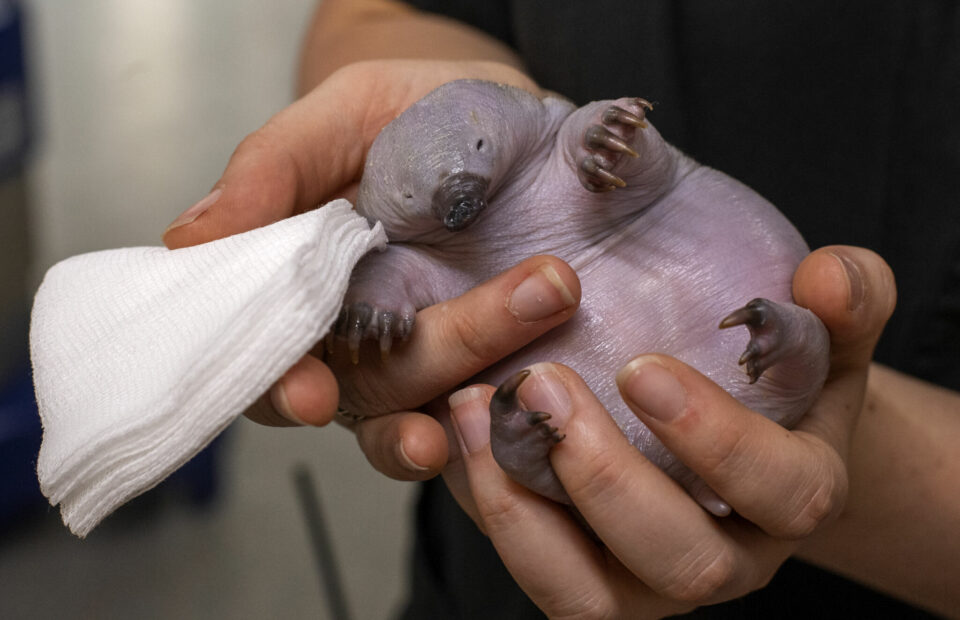
This baby—called a puggle—is born hairless and spineless, spending the first several months of its life inside its mother’s pouch until strong enough to venture out.
Unusual Physical Form
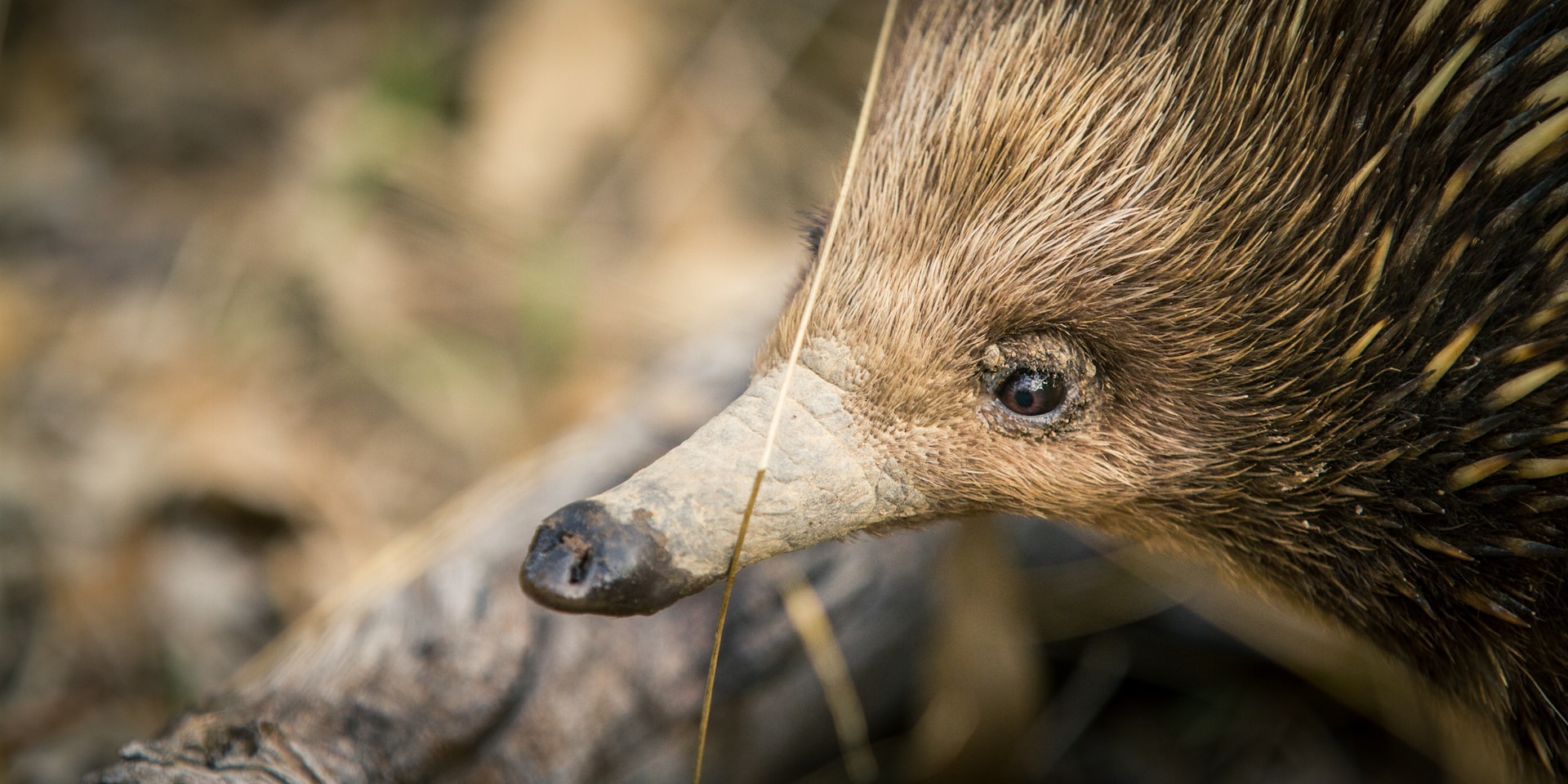
An echidna’s body is covered in spines, which are actually modified hairs. Between these spines is a thick layer of fur that, in some populations, can grow dense enough to partly conceal the spines.
Short-beaked species typically measure 30–52 centimeters long and weigh up to 6 kilograms, while long-beaked echidnas can grow even larger.
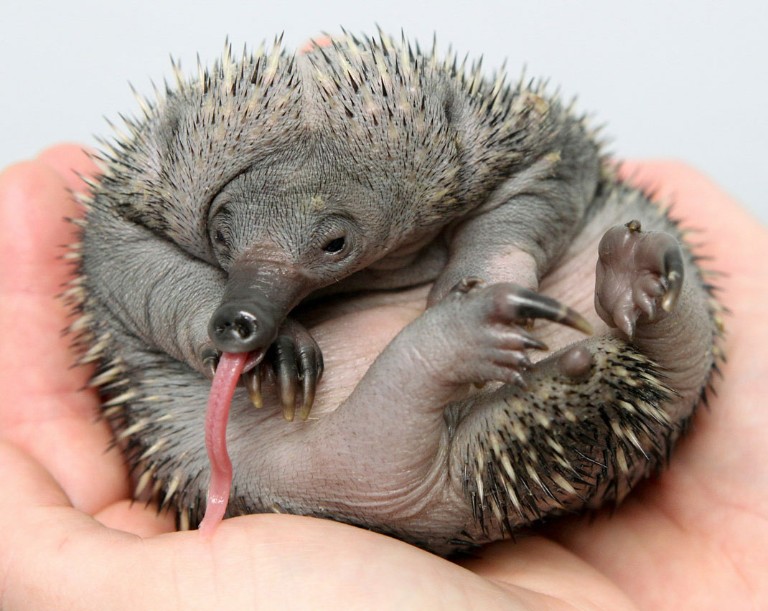
Its distinctive beak or “snout” plays a crucial role in its survival. At the tip are small nostrils and a tiny mouth just wide enough for its long tongue, which can reach up to 17 centimeters.
This sticky, mucus-coated tongue allows it to snatch ants, termites, or worms, depending on the species. Some echidnas even possess electroreceptors in the skin of their snout, enabling them to sense electrical signals from small prey underground.
Where They Live and How They Behave
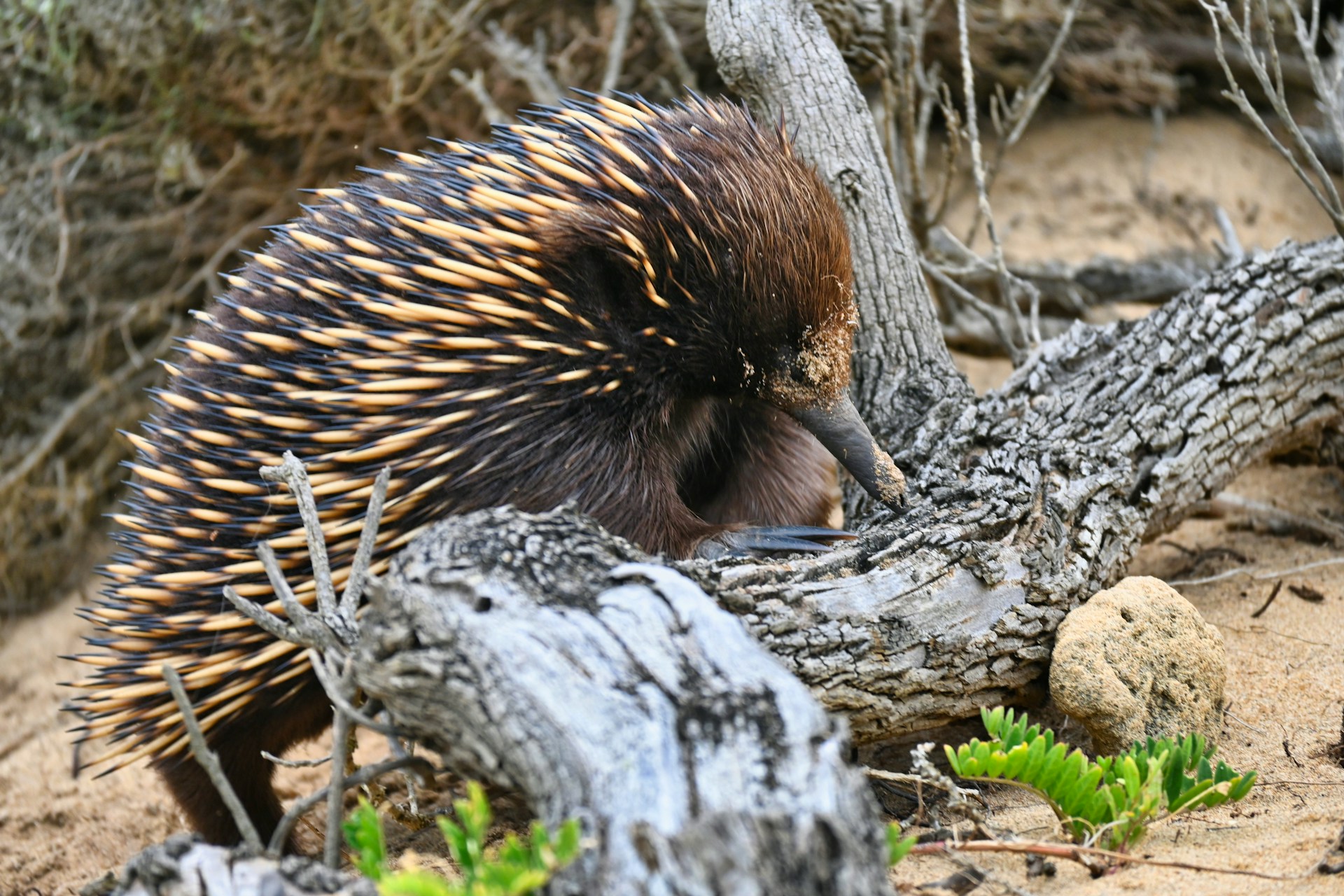
Echidnas occupy a wide range of landscapes, from mountain forests and deserts to lowland plains. Despite this, they are highly sensitive to extreme temperatures.
To avoid midday heat, they are usually active in the early morning and late afternoon, then shelter in caves, under fallen logs, or inside soil burrows. They are also surprisingly strong; a thick layer of muscle beneath their skin allows them to dig or wedge themselves between rocks and roots.
Interestingly, echidnas are capable swimmers, yet they strongly avoid rain. They may even stay hidden for days until conditions dry up.
Their metabolism is slow, meaning a single large meal—such as a termite-infested log—can sustain them for several days.
Specialized Self-Defense
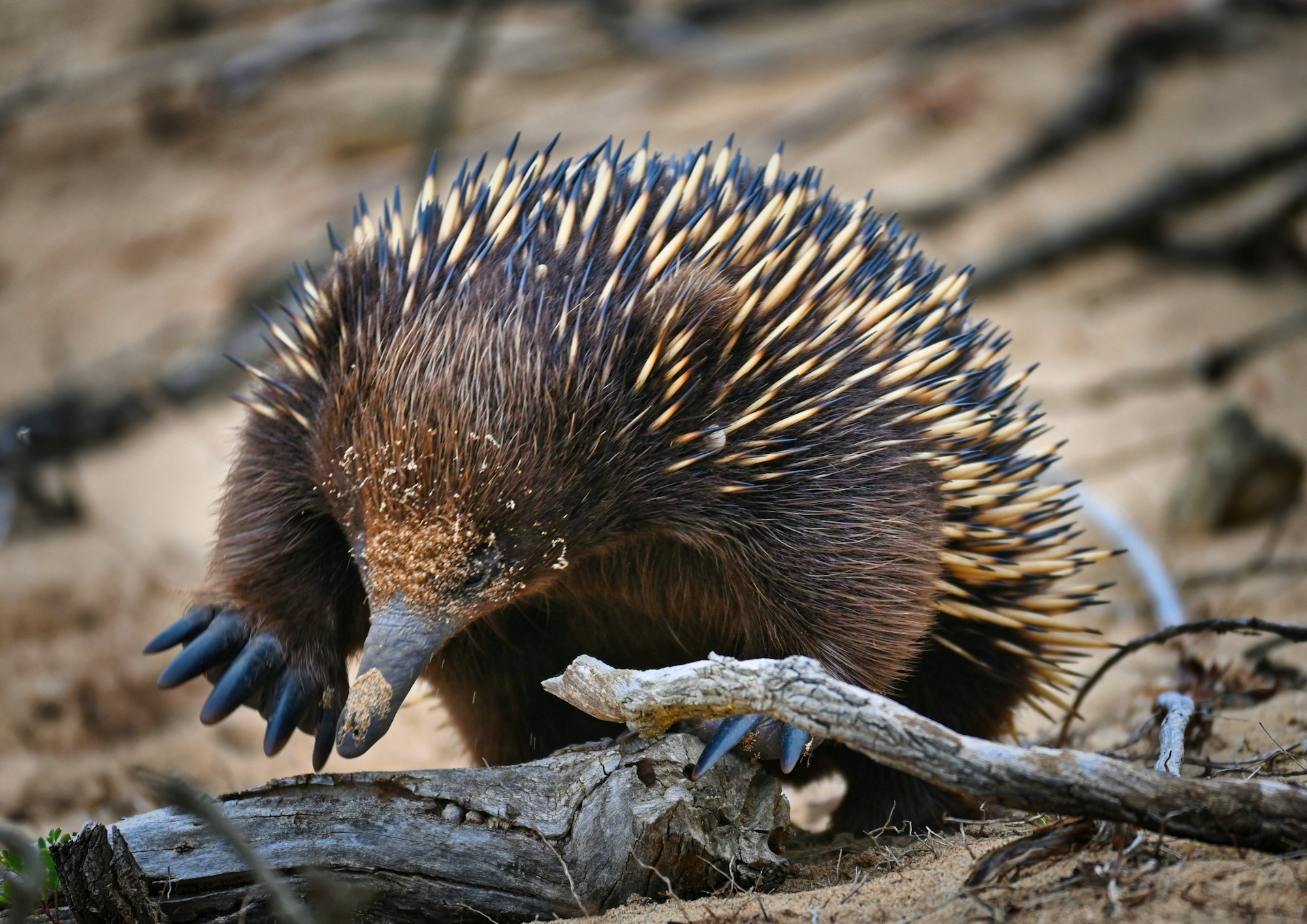
When threatened, echidnas employ several strategies to protect themselves. On hard surfaces, they curl their bodies so that only their sharp spines are exposed.
On soft ground, however, they immediately dig downward and bury themselves, leaving their spines as a protective shield. Predators such as dingoes, goannas, feral cats, and foxes can still pose risks, while snakes often prey on puggles in their nests.
Courtship Oddities: How Echidnas Reproduce
During the breeding season, echidnas display unusually eccentric behavior. Several males may form a “mating train,” lining up behind a single female until she chooses a partner.
The gestation period lasts about 23 days before the egg is deposited into the pouch. Once the puggle develops spines and fur, the mother moves it into a dedicated burrow and returns to the nest roughly once a week to nurse it.
Conservation Challenges
There are four living echidna species: one short-beaked species and three long-beaked species, all native to New Guinea.
Long-beaked echidnas are generally larger and feed primarily on earthworms, with variations in spine size and fur color. Most inhabit remote mountain forests, which makes them difficult to study and leaves many aspects of their biology unknown.
Unfortunately, three of the four species—particularly the long-beaked group—are listed as threatened or critically endangered due to hunting and habitat loss. Though physically resilient, they are highly vulnerable to environmental change.


