


Saint Nicholas, a 3rd-century bishop from Myra, became legendary for his kindness, especially the story of secretly giving gold to save three sisters from servitude.
His generosity spread across the Eastern Mediterranean and inspired celebrations of his feast day on December 6th throughout Europe.
In the Netherlands, he became Sinterklaas, whose traditions were brought to America by Dutch settlers. Over time, Sinterklaas evolved into Santa Claus, preserving the spirit of Saint Nicholas’s enduring compassion and charity.
The Early Life of a Generous Bishop

Saint Nicholas, the historical figure who later inspired the modern Santa Claus, was born in the 3rd century in the ancient port city of Patara, located in what is now Turkey.
Orphaned at a young age and left with substantial wealth, Nicholas chose to dedicate his life to Christian service and charity.
He eventually became the Bishop of Myra, a role that deepened his reputation as a spiritual leader known for compassion, humility, and remarkable generosity.
His acts of kindness resonated throughout the Eastern Mediterranean, turning him into a beloved figure long before he became a global symbol of Christmas giving.
Secret Gift of Gold

Among the many stories surrounding Saint Nicholas, one stands out as the most famous and enduring. It tells of a poor father with three daughters. In those times, a woman could not marry without a dowry, and lacking these, the daughters were at risk of being sold into servitude.
The desperate father was unable to save them from such a fate, and news of his sorrow reached the ears of Bishop Nicholas.
Moved by compassion but determined to help without attracting attention, Nicholas visited the family’s home under the cover of night. He quietly tossed a bag of gold through the window, providing a dowry for the eldest daughter.
On the second night, he returned and gave another bag of gold for the second daughter. When he arrived with a third bag on the following night, the father stayed awake, hoping to discover the identity of his mysterious benefactor.
When he saw Nicholas placing the gold inside, he fell to his knees in gratitude. Nicholas urged the man to remain silent, insisting that acts of charity should be done modestly and without seeking praise.
This story became legendary across the Eastern Mediterranean and later throughout Europe. It captured the spirit of selfless giving and cemented Saint Nicholas’s association with generosity, protection, and care for the vulnerable.
His Legendary Kindness Spread Across Europe

Saint Nicholas’s reputation spread rapidly after his death on December 6th, 343. His feast day, celebrated each year on December 6th, became one of the most beloved festivals in medieval Europe.
He was revered not only as a patron of children but also as the protector of sailors, merchants, and the poor.
Churches were built in his honor, relics were treasured, and countless stories of his miracles and kindness circulated from the Balkans to Scandinavia.
The traditions surrounding his feast day varied across regions, but in many parts of Europe, children would place shoes by the hearth or outside their doors on the eve of December 6th.
They did it hoping that Saint Nicholas would fill them with small gifts or sweets. This early custom became a cornerstone for later Christmas traditions.
Sinterklaas and His Journey to America
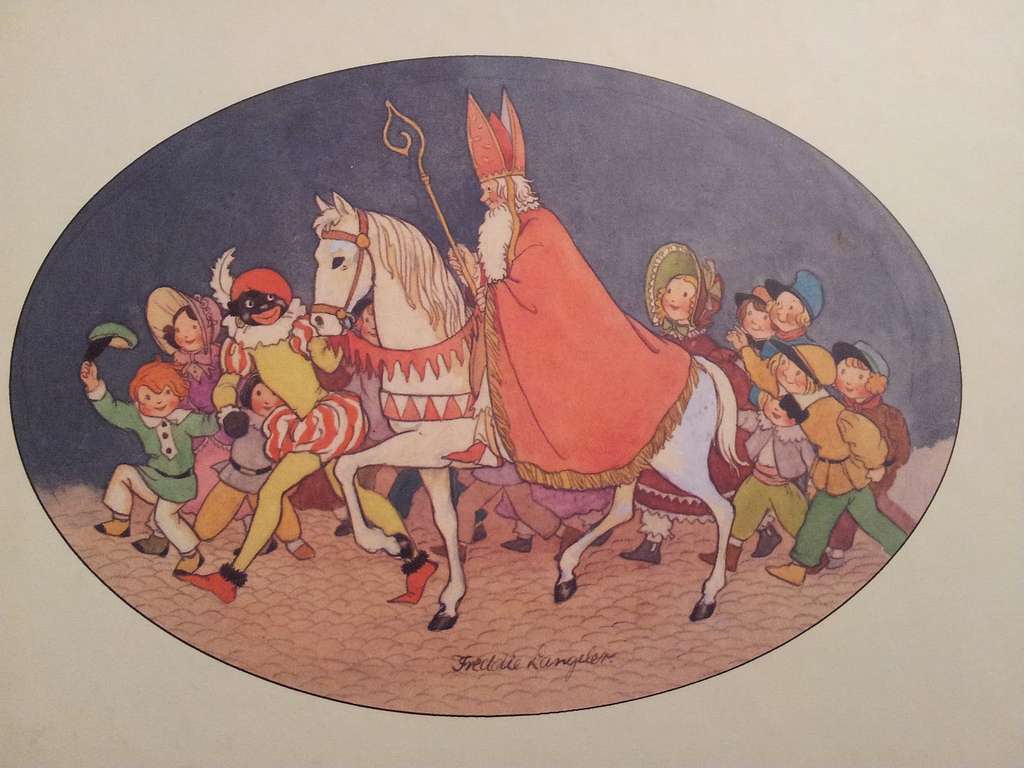
Nowhere in Europe did the celebration of Saint Nicholas become as culturally significant as in the Netherlands. There, he became known as Sinterklaas, a bishop dressed in red robes who arrived by boat from Spain each year to visit children.
He carried a large book recording which children had been good or misbehaved, and he rode a white horse across rooftops, leaving treats or small presents in children’s shoes.
This distinctly Dutch tradition became the direct ancestor of the modern Santa Claus. When Dutch settlers migrated to the New World in the 17th century, they brought Sinterklaas with them.
In the growing city of New Amsterdam, which later became New York, the legend blended with local customs and gradually transformed.
English-speaking settlers adapted the name Sinterklaas into Santa Claus, and American writers and illustrators reshaped his appearance and behavior for wider audiences.
From Saint to Global Icon

By the 19th century, Santa Claus had become a central figure in American holiday celebrations. Writers like Washington Irving and Clement Clarke Moore added new layers to the legend, including the idea of a sleigh pulled by reindeer and a workshop full of toys.
Artists such as Thomas Nast then popularized his iconic red suit and jolly demeanor. Yet even with all the creative embellishments, the heart of the Santa Claus tradition still reflects the spirit of the man who inspired it.
Saint Nicholas’s legacy endures not because of myth alone, but because his real acts of kindness continue to resonate across centuries.
From a humble bishop secretly delivering gold to a needy family to a worldwide symbol of generosity, his story reminds us that compassion, charity, and goodwill are timeless gifts that never lose their power to inspire.


