


As the world faces mounting pressures from population growth, climate change, and food insecurity, the search for efficient and sustainable protein sources has become increasingly urgent. Conventional livestock farming—while deeply embedded in global food systems—requires vast amounts of land, water, and feed, and contributes significantly to greenhouse gas emissions. In this context, scientists and food experts are revisiting an option that has long existed on the margins of modern diets: insects.
In Indonesia, this discussion has gained renewed attention through a series of public forums and academic discussions, including the talk show “Melacak Jejak Pangan Nusantara” held in Jakarta in December 2025. Among the speakers was entomologist Dr. Dadan Hindayana, who highlighted insects as one of the most promising protein sources for the future, particularly for countries rich in biodiversity like Indonesia.
Why Scientists Are Looking at Insects
Dr. Dadan Hindayana, an academic and entomology expert, explained that insects stand out because of their nutritional density and production efficiency. According to him, certain insects such as crickets, grasshoppers, and sago larvae contain high-quality protein, essential amino acids, and important micronutrients.
“Insects are superior in terms of protein content and production efficiency compared to conventional livestock,” Dadan noted during the discussion. “It is not impossible that insects will become a major source of protein in the future.”
Scientific data supports this claim. Research cited by the Food and Agriculture Organization (FAO) shows that edible insects provide protein levels comparable to beef, chicken, or fish, while also containing beneficial fats, vitamins, and minerals. FAO has repeatedly identified insects as a viable alternative protein source, especially as global demand continues to rise.
Efficiency That Matters in a Climate Crisis
One of the strongest arguments for insects lies in their efficiency. To produce the same amount of protein, crickets require approximately six times less feed than cattle, four times less than sheep, and about half the feed required by pigs and broiler chickens. This makes insect farming significantly less resource-intensive.
In addition to feed efficiency, insects produce far lower greenhouse gas emissions and ammonia compared to conventional livestock. This characteristic is increasingly important as agriculture is under pressure to reduce its environmental footprint. For countries committed to climate targets and sustainable development goals, alternative proteins such as insects offer a practical pathway forward.
Globally, this potential is already being explored. China, for example, has developed large-scale grasshopper farming using relatively simple technology and limited land, with products even reaching export markets. In contrast, Indonesia’s insect consumption remains largely traditional and localized, limiting its economic and nutritional impact.
Edible Insects in Indonesia: Tradition Meets Science
Indonesia is no stranger to entomophagy—the practice of eating insects. Communities in eastern Indonesia and Papua have long consumed sago larvae, while grasshoppers and crickets are familiar foods in parts of Java and other regions. However, modernization and shifting lifestyles have gradually pushed these foods aside in favor of processed and imported products.
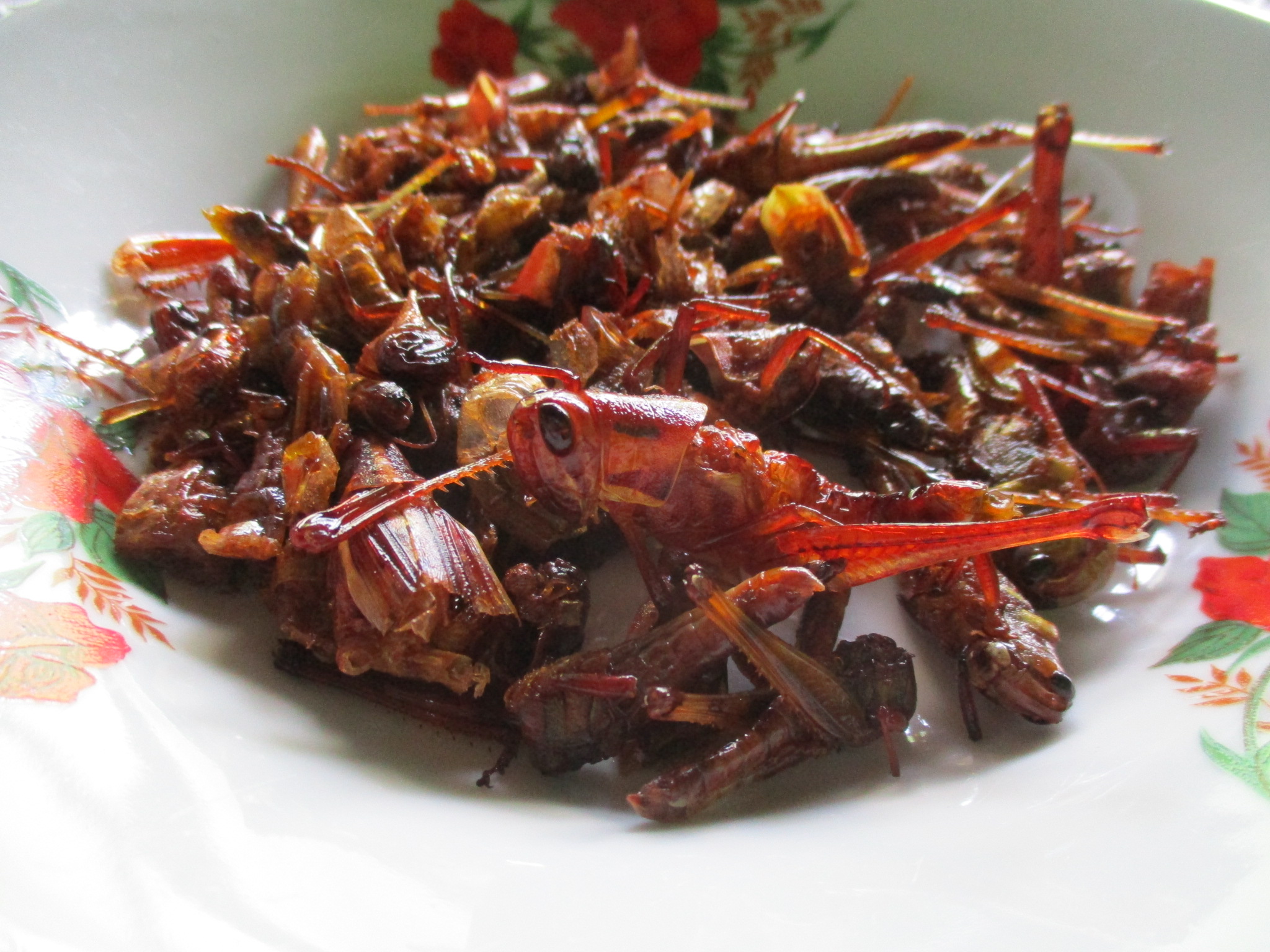
Dr. Dadan emphasizes that not all insects are edible. In scientific classification, only certain species are categorized as edible insects, including crickets, grasshoppers, teak caterpillars, sago larvae, and winged termites (laron). These insects are not only safe but also nutritionally valuable when properly prepared.
Interestingly, many people describe the taste of crickets and grasshoppers as similar to shrimp—an observation supported by biology, as both belong to arthropods and share evolutionary similarities.
Food, Culture, and “Politics of Taste”
Beyond nutrition and sustainability, food choices are deeply cultural. Repa Kustipia, Research Director at the Center for Study Indonesian Food Anthropology (CS-IFA), explains that local food systems are shaped by long historical processes—from hunter-gatherer societies to agrarian kingdoms, colonial trade networks, and modern industrial food systems.
According to Repa, colonialism played a significant role in reshaping dietary preferences, often marginalizing local foods. He describes this phenomenon as “gustatory politics”—a situation where food choices are influenced not just by taste, but by power, policy, and global supply chains.
“In many cases, local foods were displaced not because they lacked value, but because they were excluded from dominant economic systems,” he said. In this context, reintroducing insects as food is not just about nutrition, but also about reclaiming food sovereignty and cultural knowledge.
Research, Policy, and the Role of Institutions
From a research perspective, Indonesia holds vast genetic and biological resources that can support food diversification. Dr. Dwininta Wikan Utami, Head of Horticulture and Plantation Research at the National Research and Innovation Agency (BRIN), stresses the importance of collaboration between researchers, local governments, and communities.
“Research should not stop in laboratories,” Dwininta said. “It must be translated into practices that strengthen local food systems and benefit society.”
BRIN has conducted studies on a wide range of local food sources, from tubers and sorghum to bananas and underutilized plants with nutritional potential. Integrating insects into this broader research agenda could strengthen Indonesia’s long-term food resilience.
Habits, Acceptance, and the Road Ahead
Despite strong scientific backing, the main challenge remains social acceptance. As Dr. Dadan points out, food preferences are shaped by habit. What feels “strange” today can become normal over time—just as sushi or cheese once did in societies where they were previously unfamiliar.
“In Papua, people are already used to eating sago larvae,” he noted. “It is clean, natural, and free from chemical inputs. The issue is not nutrition—it’s familiarity.”
Education, public discussion, and responsible innovation will be key. By presenting insects not as a novelty, but as part of Indonesia’s rich food heritage backed by modern science, experts believe public perception can gradually shift.
Rethinking Protein for the Future
As global food systems search for solutions that balance nutrition, sustainability, and cultural relevance, insects offer a compelling option. They are efficient, environmentally friendly, nutritionally rich, and already embedded—though often overlooked—in Indonesia’s culinary history.
Rather than replacing conventional foods outright, edible insects could complement existing diets and contribute to a more diverse, resilient, and sustainable food future. In doing so, they may help reconnect modern society with local knowledge—proving that some answers to tomorrow’s challenges have been close to home all along.


