


Long before Indonesia emerged as a modern nation-state, a political entity in the form of a republic had already taken shape in what is now West Kalimantan. It was known as the Lanfang Republic.
Founded in 1777, the republic grew out of a community of Chinese gold miners who established a self-governing political system, complete with elected leadership, written rules, and administrative institutions.
This has led historians to describe Lanfang as the first republic in the Indonesian archipelago, and possibly even in Southeast Asia, during the era of Dutch colonial rule.
The origins of the Lanfang Republic can be traced to a large wave of Chinese migration to West Kalimantan in the mid-18th century. This movement was not spontaneous but occurred through formal arrangements with the Sultanates of Mempawah and Sambas, which sought labor to develop gold and tin mining operations.
From Gold Mines to Self-Governing Mining Communities
The Sultanate of Mempawah was the first to recruit workers from China, beginning in 1740. The region had previously been a Dayak polity before evolving into a Malay sultanate following the spread of Islam. Its location was strategic, stretching along the Karimata Strait between present-day Pontianak and Sambas.
In 1750, the Sultanate of Sambas followed a similar path. The discovery of new gold deposits sharply increased labor demand.
The migrants, most of them from the Hakka ethnic group, were widely known for their mining expertise. Their numbers expanded rapidly, from several thousand to tens of thousands by around 1767.
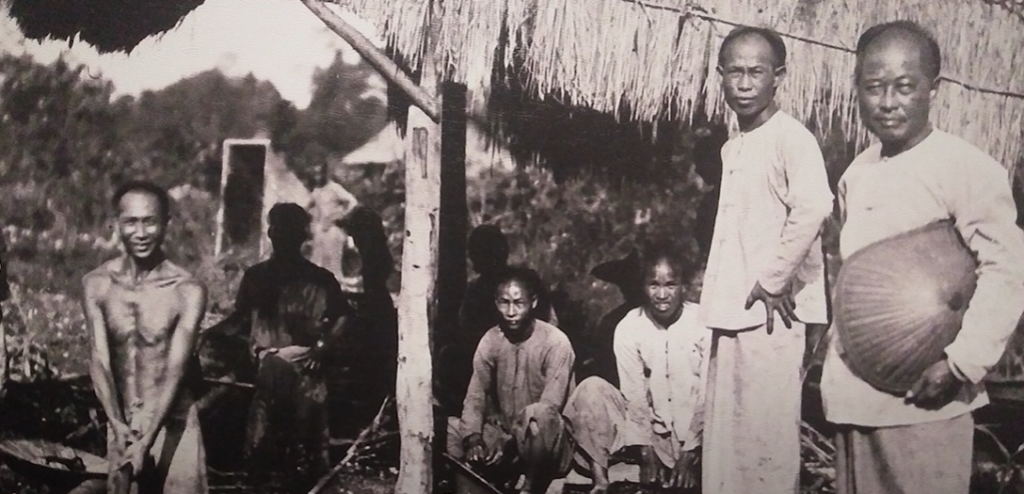
To organize mining operations and daily life, the miners established autonomous mining communities based on specific mining areas. These communities functioned not merely as economic units, but as self-administered settlements.
Within them, residents lived according to Chinese customary practices, elected their own leaders, regulated economic activity, and maintained internal security. Initially, there were eight such communities, a number that later increased as migration continued.
Although these communities operated under the nominal authority of the Sultanates of Sambas and Mempawah, they enjoyed extensive autonomy in managing their internal affairs. Their only formal obligation was to deliver a monthly tribute of one kilogram of gold to the sultanates.
Defiance, Conflict, and the Roots of a Republic
Tensions began to surface around 1770, when the number of Chinese-led mining communities had grown to ten groups. These communities refused to pay the full amount of tribute demanded by the sultanates, agreeing instead to deliver only half of their previous obligation.
Their defiance was fueled by growing economic strength, which by then exceeded that of many local Malay and Dayak communities. The standoff escalated into armed conflict. Several sultanate officials from the Dayak ethnic group were killed during the clashes.
In response, the Sultanate of Sambas, under Sultan Umar Aqamaddin II, dispatched troops to suppress the resistance. Skirmishes lasted for eight days before the miners ultimately surrendered.
Notably, harsh punishment was avoided. The miners were allowed to resume their activities under the condition that they continue paying a monthly tribute of one kilogram of gold, as previously required.
After the conflict subsided, the number of mining communities continued to grow. By 1776, there were 14 such communities, with a combined Chinese population exceeding 20,000 people in West Kalimantan.
In 1777, these fourteen communities formed an alliance known as Hee Soon, aimed at strengthening unity and preventing internal disputes. The creation of this organization marked the institutional foundation of what would later become the Lanfang Republic.
Declaring a Republic amid the Sultanates
The central figure behind the emergence of Lanfang was Lo Fang Pak, a relatively recent migrant from China who arrived in Sambas in 1775. He maintained ties with the Qing Dynasty and actively promoted unity among Chinese communities in Borneo.
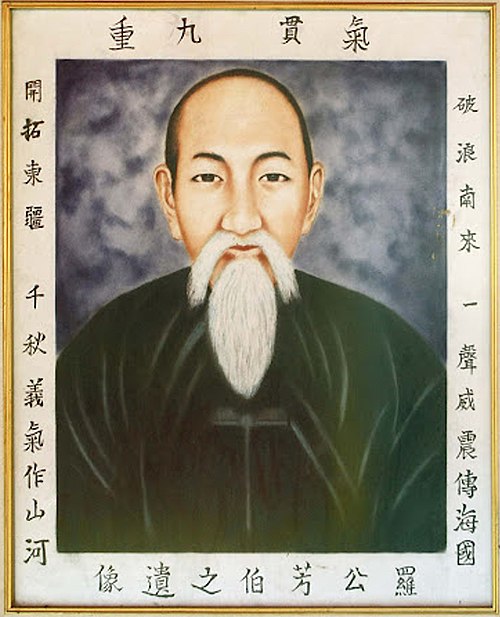
Broader geopolitical developments also created new opportunities. The establishment of the Sultanate of Pontianak in 1778, backed by the Dutch East India Company (VOC), provided a new layer of political protection for the Chinese mining communities. Lo Fang Pak successfully built diplomatic relations with Sultan Syarif Abdurrahman Al Qadri of Pontianak.
In 1789, the Sultanate of Pontianak, with Dutch support, seized control of Mempawah. The Hee Soon alliance actively supported this campaign.
From 1793 onward, Lo Fang Pak was granted extensive authority to oversee the Chinese mining communities. Soon after, the Lanfang Republic was formally declared, with Lo Fang Pak elected as president through a general election—the first of its kind in the region.
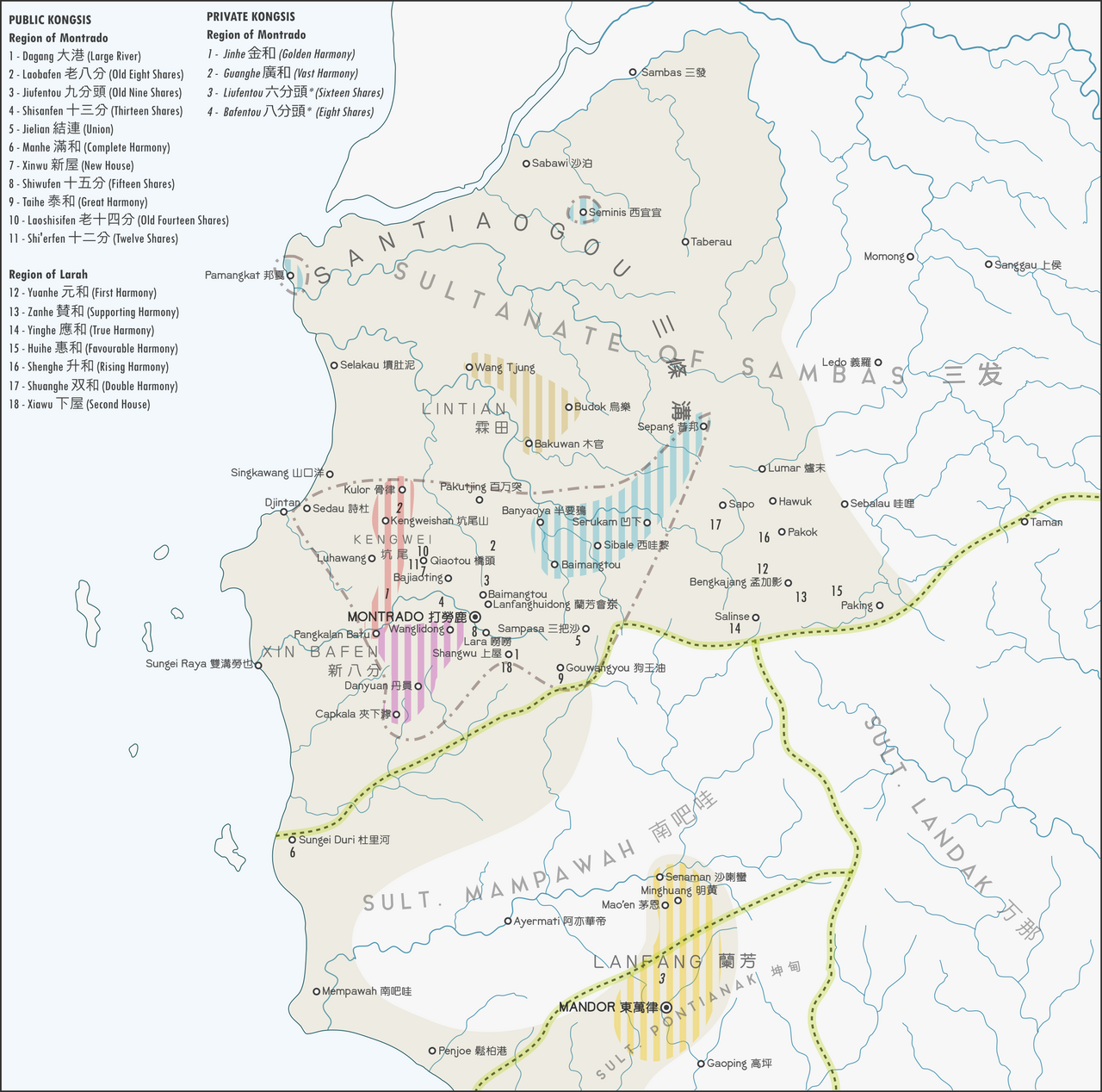
Although operating under the nominal protection of the Sultanates of Pontianak and Sambas, the Lanfang Republic functioned as a de facto independent state. It possessed its own laws, governing council, courts, prisons, armed forces, taxation system, and even banking institutions.
The republic also received recognition from the Qing Dynasty and regularly sent tribute missions to China, underscoring its standing within the regional political order of the time.
The Fall of Lanfang and Its Place in History
The Lanfang Republic endured for 107 years and was led by 13 presidents elected by the people. From 1880 onward, however, Dutch colonial pressure intensified. The president of Lanfang was forced to sign an agreement in Batavia that placed the republic under Dutch control.
Resistance followed. Several Chinese-led mining communities rejected the agreement, leading to armed opposition. The Dutch responded with a large-scale military campaign, and in 1884, the Lanfang Republic was defeated. Its last president, Liu Ah Sin, was killed, and the republic’s political structure collapsed entirely.
In the aftermath, many residents fled to other regions, including Singapore. Some sources suggest that Lee Kuan Yew, who would later become Singapore’s first prime minister, was among the descendants of Lanfang settlers—though this claim remains a matter of historical debate.
The Lanfang Republic thus came to an end. Yet its legacy endures: a democratically governed republic that once existed in the Indonesian archipelago long before Indonesia gained independence.


