


San Agustin Church, located inside the historic walls of Intramuros in Manila, is one of the most important religious and architectural landmarks in the Philippines. Completed in 1607, it is the oldest stone church still standing in the country.
Built during the Spanish colonial period, the church has silently witnessed centuries of change, from colonial rule to independence, from peace to destruction.
What makes San Agustin Church truly remarkable is not only its age, but the fact that it continues to stand strong despite numerous earthquakes and the devastation of war.
Baroque Architecture, Built for Survival

San Agustin Church is designed in the Baroque style, a European architectural form known for its grandeur, symmetry, and dramatic visual impact. However, the Baroque style used in the Philippines was adapted to local conditions.
In an earthquake-prone country, Spanish architects and builders developed what is often called Earthquake Baroque. The church features thick stone walls, massive buttresses, and a low, wide structure that helps distribute weight evenly.
These design choices were not merely aesthetic; they were practical solutions meant to withstand constant seismic activity.
Defying Earthquakes Through the Centuries

Manila has experienced many strong earthquakes since the seventeenth century, several of which destroyed nearby churches and buildings.
San Agustin Church, however, remained largely intact. Its solid foundation and reinforced walls absorbed seismic shocks that caused other structures to collapse.
While minor cracks and repairs were inevitable, the core structure survived each disaster. Over time, this resilience earned the church a reputation for being nearly indestructible, a rare achievement in a region frequently shaken by natural forces.
It Survived War Too

The church’s endurance was tested again during World War II, when Manila became one of the most heavily damaged cities in Asia.
In the Battle of Manila in 1945, Intramuros was almost completely destroyed by bombardment and fighting. San Agustin Church stood in the middle of this chaos.
While its interior suffered damage and the adjacent monastery was reduced to ruins, the main structure of the church remained standing. It was the only building in Intramuros to survive the battle relatively intact, further reinforcing its image as an invincible structure.
Art, Craftsmanship, and Faith Inside the Walls

Beyond its strength, San Agustin Church is also a masterpiece of art and devotion. The interior is adorned with trompe-l'œil ceiling paintings that create the illusion of three-dimensional sculptures and architectural details.
Carved wooden choir stalls, stone reliefs, and centuries-old altars reflect the craftsmanship of Filipino and Spanish artisans. The church also houses the tombs of notable historical figures, linking it not only to religious life but to the broader narrative of the nation’s past.
A World Heritage Site

In recognition of its cultural, historical, and architectural significance, San Agustin Church was declared a UNESCO World Heritage Site in 1993 as part of the Baroque Churches of the Philippines.
This designation highlights its global importance and the success of its design in adapting European architecture to a tropical, earthquake-prone environment.
The church stands as a model of how human creativity and engineering can work in harmony with nature rather than against it.
A Beautiful Symbol of Resilience and Continuity
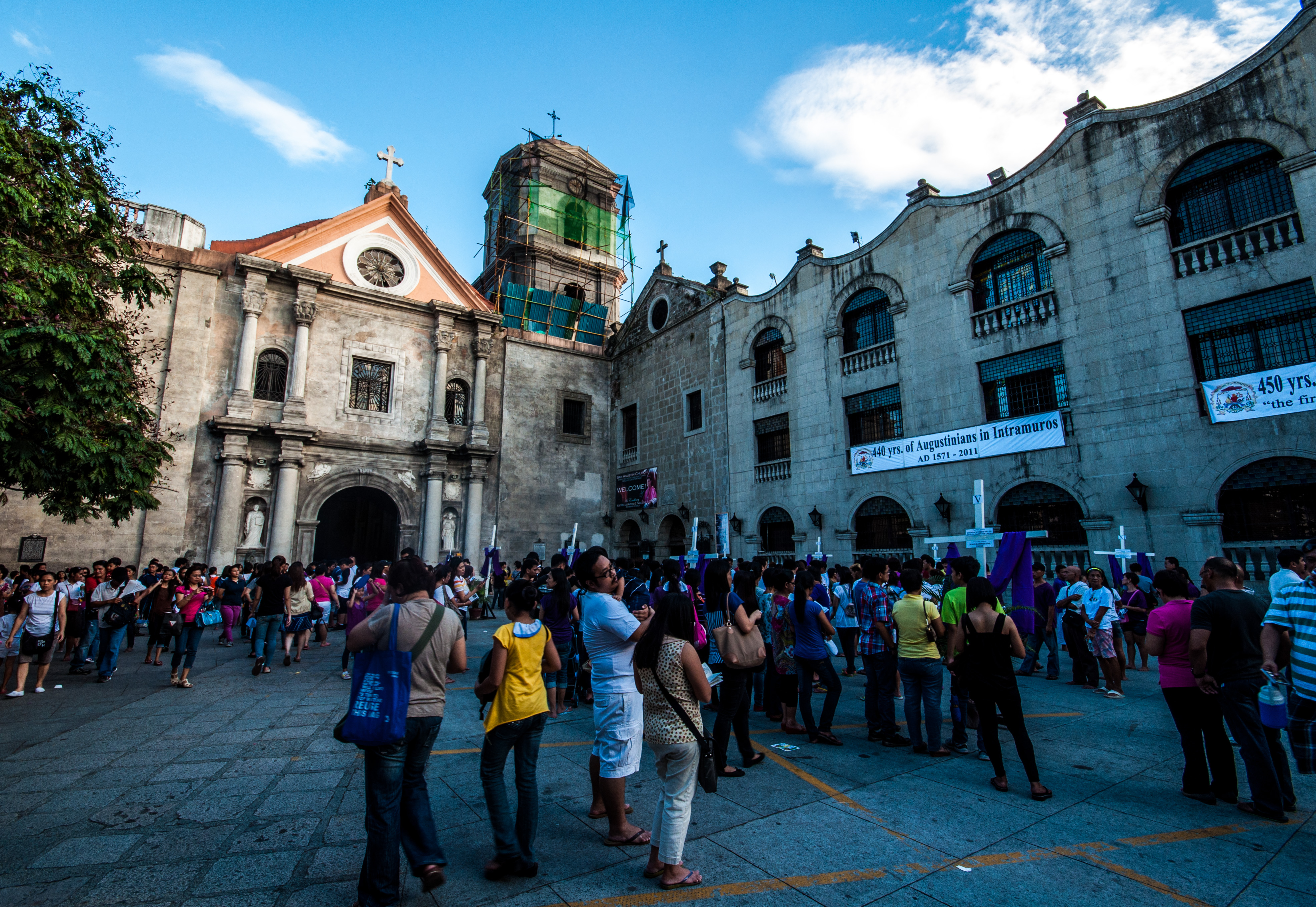
San Agustin Church is more than an old building; it is a symbol of resilience. Through earthquakes that shattered cities and a war that reduced Manila to rubble, it remained standing, offering a sense of continuity amid destruction.
Its survival reminds visitors that strength does not always come from modern technology, but from thoughtful design, deep faith, and respect for the environment.
In a rapidly changing world, San Agustin Church continues to stand as a powerful reminder that history, when carefully preserved, can endure almost anything.


