


Morning in Intramuros often feels strangely detached. Behind stone walls that are centuries old, the roar of Manila’s traffic seems muted. Narrow grid-patterned streets, aging churches, and old defensive bastions stand like fragments of a past that has not fully receded.
It is difficult to imagine that this area, less than one square kilometer in size, once served as the center of Spanish colonial power in Asia, and as a stage for global rivalry for more than four centuries.
Intramuros, which literally means “within the walls,” is more than an old town. It is the core of modern Philippine history, where trade, religion, education, and colonial violence intersected and shaped one another.
Before Spain: A Trading Port Ready for War
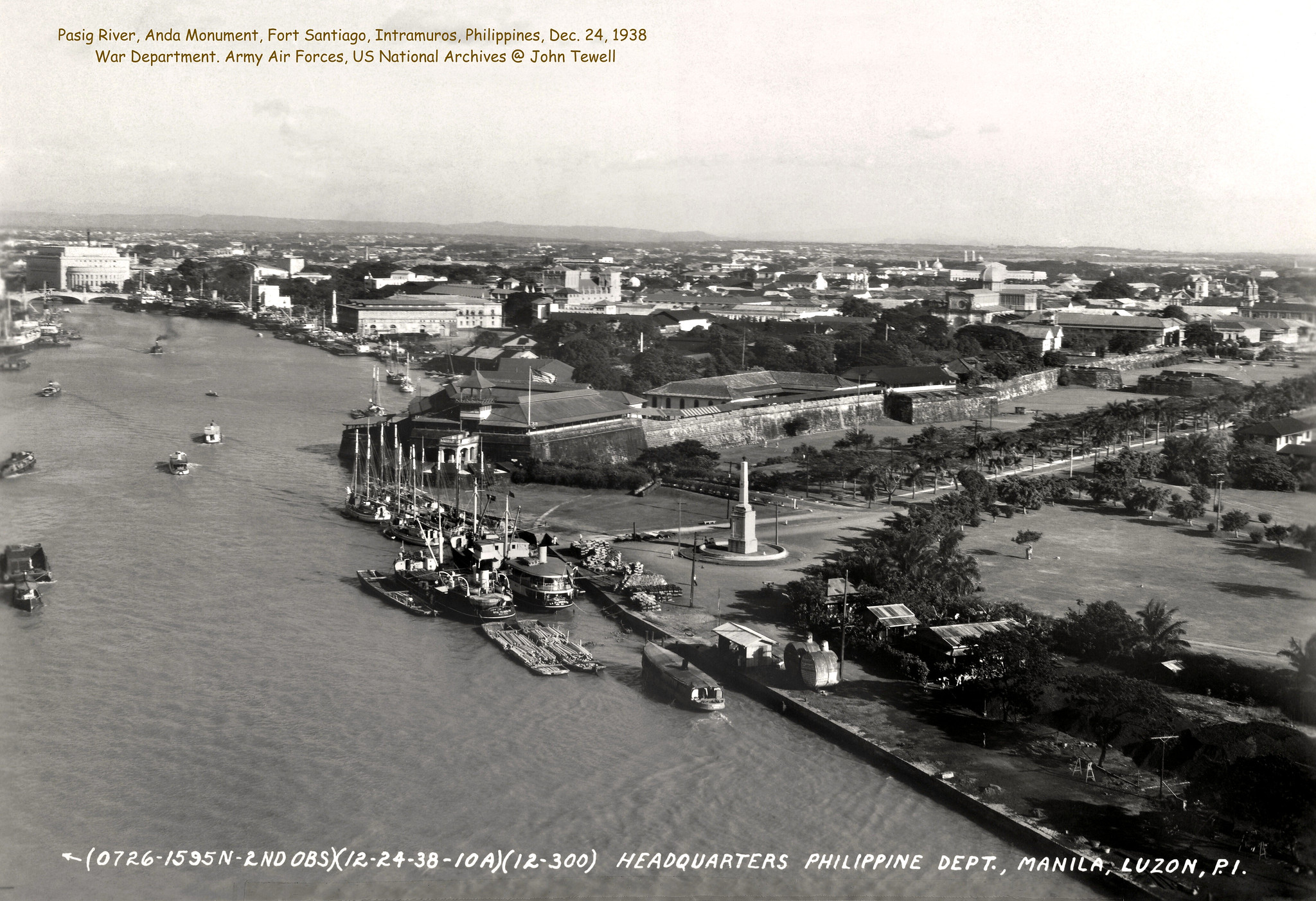
Long before stone walls rose, Manila (then known as Maynilad) was a prosperous Islamic Tagalog settlement. Its location was strategic: at the mouth of a river flowing into Manila Bay and connected to inland lakes, making it a meeting point for inter-island and inter-regional Asian trade.
As a major port, the settlement already possessed wooden fortifications and cannons, signaling both commercial importance and military readiness.
The Spanish recognized Manila’s value from the outset. When they conquered it in 1571, they seized not merely territory, but a critical trading hub. Wooden defenses were quickly replaced with stone structures made of volcanic tuff. Fort Santiago was built, followed by defensive walls that encircled the city.
Intramuros emerged as a walled city, designed to withstand naval attacks, local uprisings, and foreign invasions alike.
An Imperial Capital at the Edge of the World
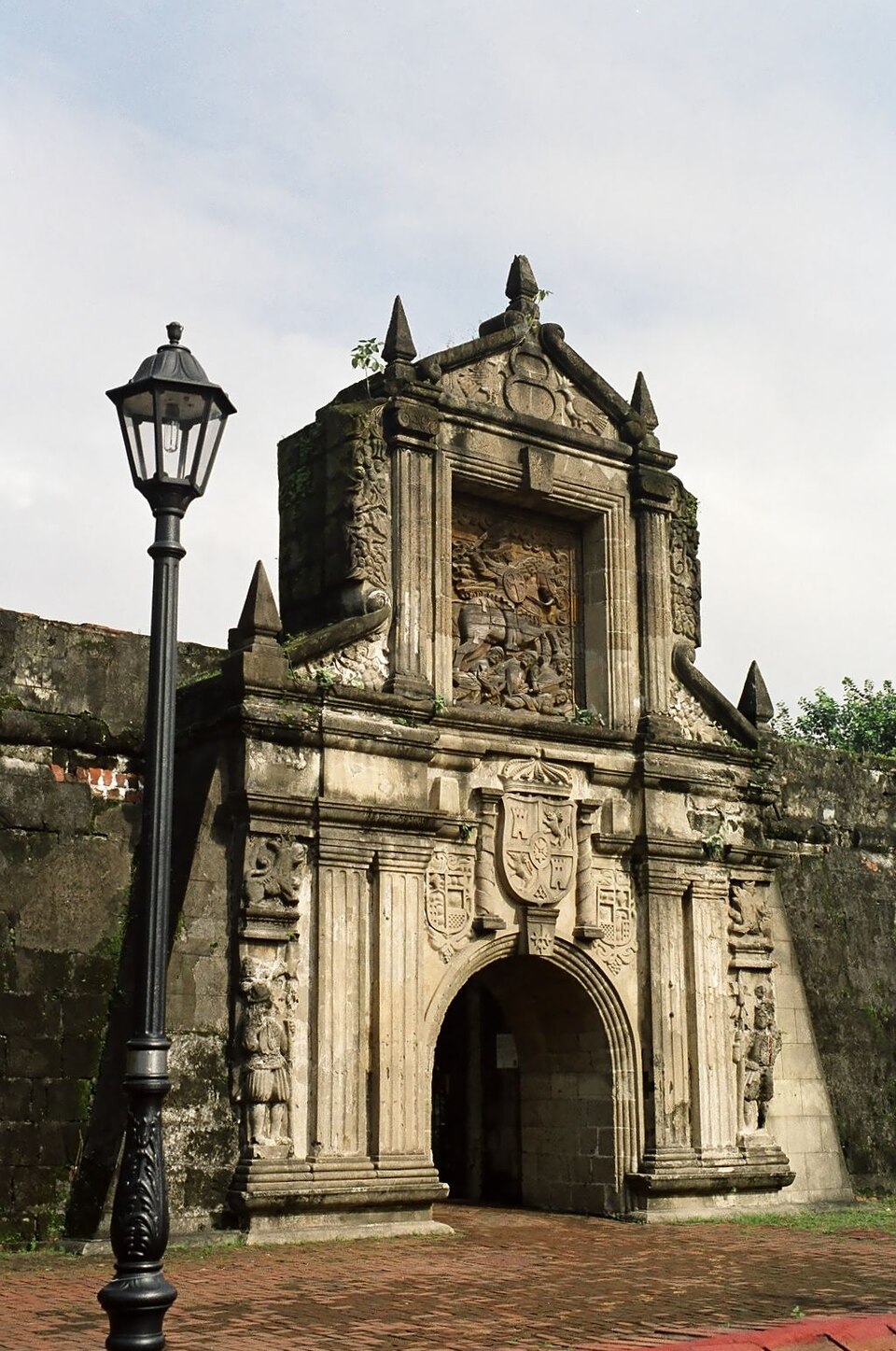
For more than three centuries, Intramuros served as the colonial capital of Spain in the Far East. From here, authority was exercised, taxes collected, and Catholicism spread across the archipelago. Yet its most significant role lay in global trade.
Through the Manila–Acapulco Galleon trade, Intramuros connected Asia, the Americas, and Europe. Silver from Spanish colonies in the New World flowed into Manila to pay for silk, porcelain, and spices from across Asia.
Merchants from China, Southeast Asia, Europe, and the Americas converged in the city. Despite its location on the imperial periphery, Intramuros became a vital node in the global economy of the western Pacific.
The city’s layout reflected these ambitions. Streets were arranged in a 16th-century grid, centered on a main plaza surrounded by churches and government buildings. This model later became the blueprint for colonial cities throughout the Philippines.
A City That Fell Again and Again
Intramuros was rarely, if ever, a place of lasting peace. Over the centuries, it endured pirate raids, a period of British occupation, and eventually a transfer of power to the United States.
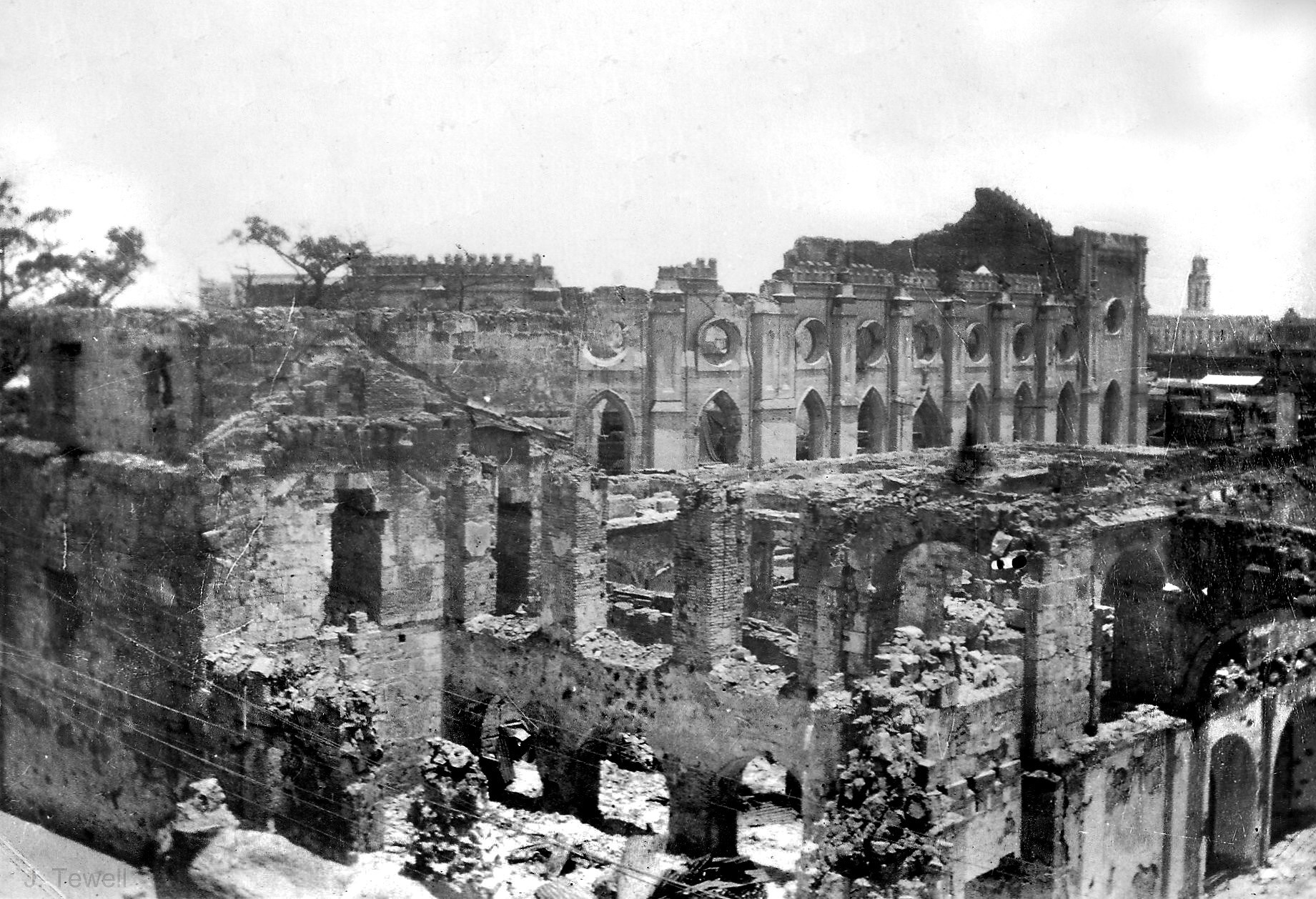
Its darkest chapter came during the Japanese occupation in World War II. Civilians were massacred, and when American forces moved to retake Manila in 1945, Intramuros was subjected to devastating bombardment.
Much of the city was reduced to rubble. Churches, homes, and government buildings collapsed. Intramuros nearly vanished from the map, leaving behind fractured walls and fields of ruins.
Under American rule, its military function was dismantled. Defensive moats were turned into a golf course, and government offices moved beyond the walls. Intramuros faded into neglect—until 1979, when the Philippine state intervened to restore it as a historical monument of the Spanish colonial era.
The Collective Memory
Intramuros was not only a center of power, but also the heart of Philippine Catholicism. San Agustin Church, which survived the wartime destruction, and Manila Cathedral stand as symbols of institutional and spiritual endurance. The cathedral itself has been rebuilt multiple times, rising again with each collapse of the city around it.
The area was also home to some of the oldest European-founded educational institutions in Southeast Asia: Universidad de San Ignacio, University of Santo Tomas, and Colegio de San Juan de Letran. From these institutions, colonial education shaped local elites and left a lasting imprint on Philippine society and culture.
A City That Never Fully Disappeared
With walls stretching roughly 4.5 kilometers and once forming the most extensive defensive system in Southeast Asia, Intramuros stands today as a city that survived not because it was never defeated, but because it was rebuilt time and again.
It carries the wounds of colonialism, yet also preserves the collective memory of how the Philippines came to be.