


In Thailand, there are almost no truly empty buildings. Even before furniture is moved in or a signboard is installed, one “resident” is usually given a place first.
This presence is not listed on land certificates, pays no rent, and cannot be seen, yet it is considered essential. It is known as phi: spirits, ghosts, or guardian beings believed to share space with everyday life.
From private homes and hotels to hospitals, universities, and shopping malls, buildings in Thailand almost always set aside space for a guardian spirit. This takes the form of a small spirit house placed at a corner of the property, decorated with flowers, fruit, incense, and brightly colored sweet drinks.
Belief in phi is not a marginal practice. It exists alongside Buddhism and is shaped by animist traditions, Hindu influences, and Chinese beliefs. Many Thais casually acknowledge that spirits are everywhere—in the land, trees, buildings, and even in construction projects that are never completed.
Even Thailand’s former prime minister (2014–2023), General Prayuth Chan-ocha, openly collected sacred amulets that he believed brought success.
Making Space for the Unseen
Spirit houses, or san phra phum, are built as dwellings for guardian spirits of the land. The underlying idea is simple: when humans construct homes, offices, or malls, they are considered guests on territory already occupied by spirits.
To ensure safety and harmony, the spirits must be given a proper place. Their placement is not random. The date, time, and location are carefully calculated according to astrology.
Many people consult monks, fortune-tellers, or Brahmin priests before installing a spirit house, especially when it is dedicated to Hindu deities such as Brahma.
The size and design often reflect the owner’s economic means. Shopping malls and government buildings tend to have large, shrine-like spirit houses, while family homes usually suffice with modest versions.
Yet luxury is not the priority. Attention is.
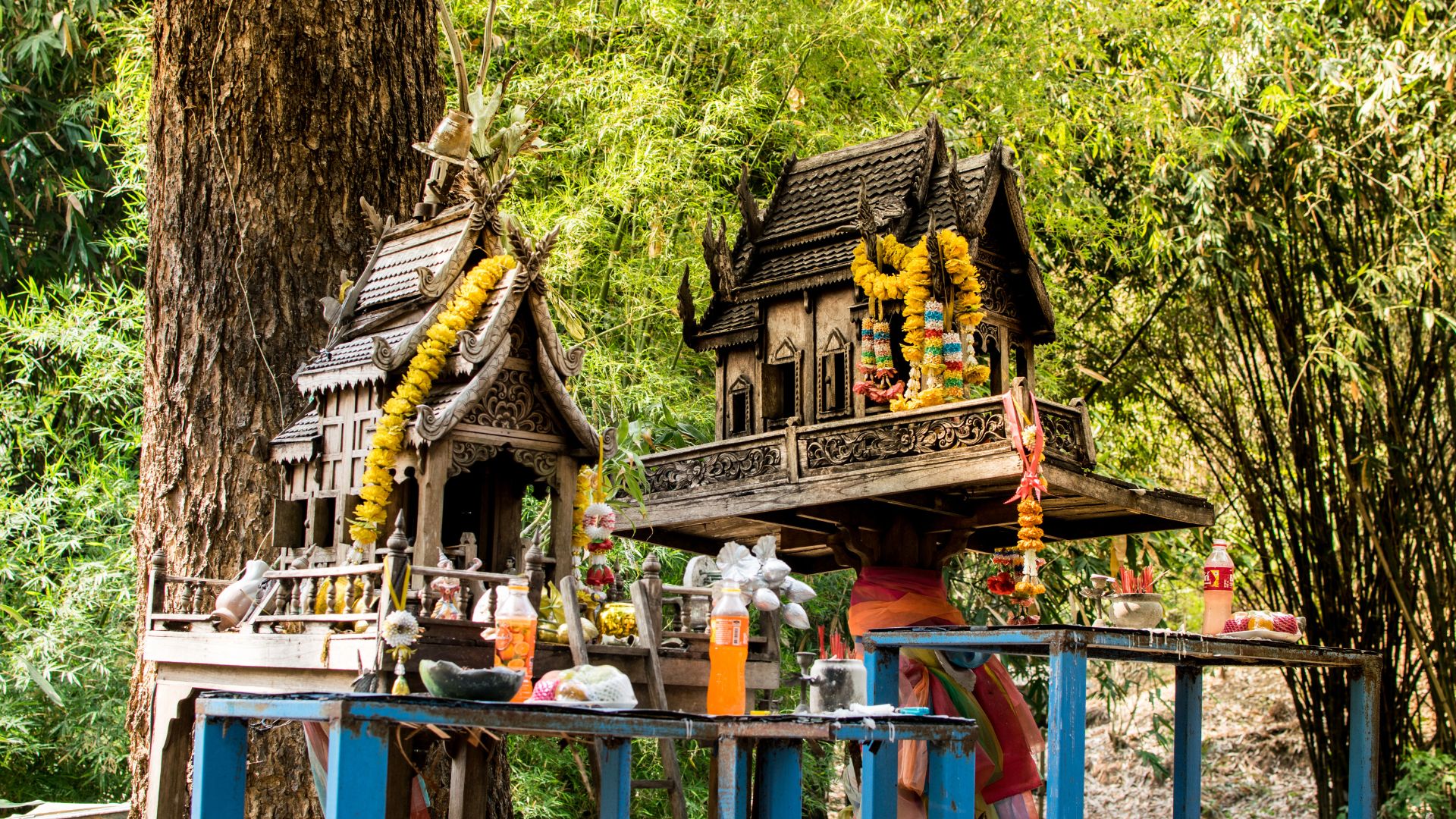
Daily, or on Buddhist holy days, offerings are placed: rice, fruit, sweets, water, flowers, and often bottles of strawberry Fanta. No one knows exactly why this flavor became a favorite, but the pink bottles have become a familiar sight in front of spirit houses across Thailand.
Appeasing Spirits, Safeguarding Fate
This belief system is deeply pragmatic. A common Thai saying goes, “Do not believe—but do not offend—the spirits.” Many people choose caution: it is better to give a little than to risk misfortune.
The consequences of offending spirits are believed to take many forms. Sudden illness, traffic accidents, fires, and storms that tear off rooftops are often linked to spiritual imbalance. In older accounts, even cholera outbreaks were interpreted as signs of angered spirits.
Yet phi are not always harbingers of bad luck. They are also associated with fortune, especially when something unusual occurs. A banana blossom resembling a human head can become a site of visits and prayers for blessings.
Conversely, tragic events—such as the discovery of a fetus on vacant land—can give rise to beliefs in kuman thong, infant spirits thought to possess great power and frequently petitioned for help, including lottery numbers.
Spirits That Shape the City
Belief in spirits extends beyond the personal sphere; it influences how cities grow. The 1997 financial crisis left many unfinished buildings on the outskirts of Bangkok and Chiang Mai.
These abandoned structures are believed to harbor ithaygo, or negative energy, as construction was halted and often associated with the deaths of migrant workers.
People report seeing moving shadows or falling ill simply by passing by, leading entire areas to be avoided.
In Chiang Mai, this belief has produced a distinctive urban pattern: a vibrant city center, newer developments further out, and a ring of residential land in between that remains largely empty.
A hotel once operated in this area but quickly shut down. The building is now known through stories of wrecked cars and spirits that never left.
For many Thais, living in a place where progress once “stalled” is believed to invite a similar fate.
A Modern City with Additional Inhabitants
Even as Thailand fully embraces the digital age, these traditions endure. Feng shui is still considered in construction, fortune-tellers offer online consultations, and spirit houses continue to stand amid concrete and glass.
In Thai cities, buildings are not designed solely for humans. They are also prepared for unseen inhabitants.
And perhaps that is why, amid traffic congestion and the rapid rhythm of urban life, there is always a small corner where people pause—bow their heads, offer a greeting, and ensure that all residents, visible and invisible alike, coexist in harmony.


