


The fifteenth day after Lunar New Year always marks the conclusion of the festive cycle for Chinese communities. This moment is known as Cap Go Meh. In Singkawang, West Kalimantan, Indonesia, Cap Go Meh is not merely the final night of celebration—it becomes the stage for the largest ritual of all: the Tatung Parade.
Thousands of people line the city streets. The procession begins at temples with prayers and offerings, before moving through the city center in a ritual known as “street cleansing.” The purpose is to purify the city from malevolent spirits and to ward off misfortune for the coming year.
When Spirits Are Believed to Walk the Streets
Tatung refers to individuals believed to be possessed by ancestral spirits, deities, or supernatural forces. In the Hakka dialect, tatung literally means a person who is possessed.
During the procession, Tatung enter a trance state after prayers and spirit-invocation rituals led by religious priests. Before taking part, they observe strict preparations: fasting, abstaining from meat, and maintaining personal discipline to remain ritually pure.
Not everyone can become a Tatung. In many cases, there is a lineage—fathers or grandfathers who were Tatung before them. Participants are also required to hold official clearance letters from local authorities and to be formally registered with Taoist organizations to join the parade.
Their performances are the most striking part of the event. Some stand barefoot on sword blades, walk across broken glass, pierce steel skewers through their cheeks, or step on sharpened machetes.
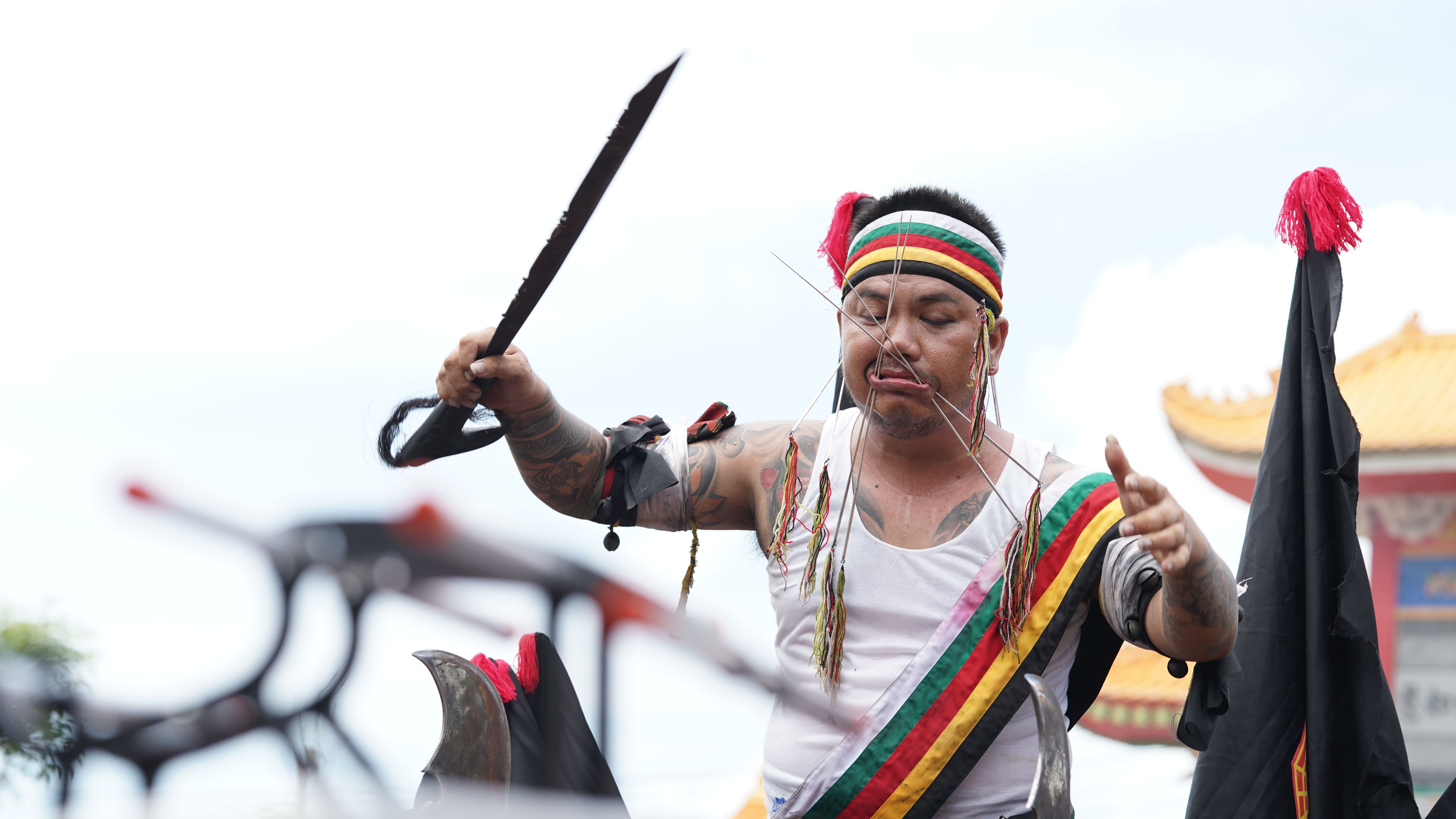
Some Tatung walk the route on foot, while others are carried on palanquins. They wear traditional Dayak attire or old-style Chinese costumes, complete with ritual attributes.
According to local belief, their bodies remain unharmed because they are protected by the spirits inhabiting them during the ritual.
A Tradition Believed to Bring Protection
The Tatung tradition traces its origins to the Hakka communities who arrived in West Kalimantan around the 18th century and worked in the gold mines of Monterado during the era of the Sultanate of Sambas.
When disease outbreaks struck their settlements, the community performed a ritual of warding off calamity known as Ta Ciau on the fifteenth day of the first month of the Lunar calendar.
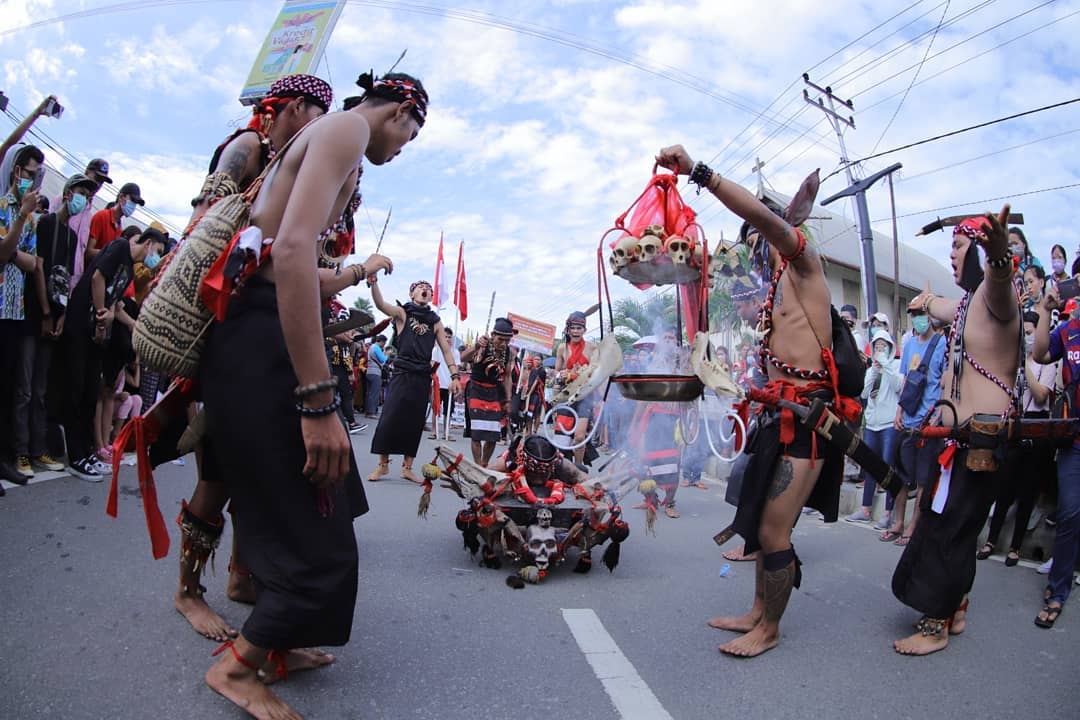
The ritual was believed to have successfully alleviated the outbreak. Because it was seen as bringing protection and safety, the practice was repeated annually and passed down across generations.
Over time, the ritual blended with local Dayak and Malay cultures and became an integral part of Cap Go Meh celebrations in Singkawang. The citywide procession known as “street cleansing” is carried out by parading the Tatung through the urban center, symbolizing the purification of the area from malevolent spirits and impending danger.
Today, the Tatung Parade has expanded and is no longer celebrated exclusively in Singkawang. Even so, the heart of the tradition—and its most vibrant and elaborate celebrations—remains firmly rooted there.
This format is not found in China or in other countries. While Cap Go Meh is celebrated globally, the Tatung tradition represents a cultural expression that has grown, evolved, and reached its fullest form in Indonesia.


