


Rising dramatically from the outskirts of Kuala Lumpur, Batu Caves is one of Malaysia’s most recognizable landmarks. Its towering golden statue and 272 rainbow-colored steps have become symbols of faith, heritage, and adventure.
Beyond the vibrant staircase lies a limestone cave system estimated to be 400 million years old, blending geology and spirituality in one remarkable destination.
A Natural Wonder Formed a Very Long Time Ago

Batu Caves is believed to have formed approximately 400 million years ago, during a time when much of the region was submerged under ancient seas. Over millions of years, the accumulation of coral, shells, and marine sediments gradually transformed into limestone.
Tectonic movements then uplifted these deposits, and erosion carved out the cavernous interiors that visitors see today.
The caves are located in Selangor, just north of Kuala Lumpur, and are part of a larger limestone hill that rises nearly 100 meters above ground.
The main cave, often referred to as Temple Cave or Cathedral Cave, features a high vaulted ceiling with natural skylights that allow beams of sunlight to filter dramatically into the space below.
Stalactites and stalagmites, formed by centuries of mineral deposits, add to the sense of timelessness inside the cavern.
Geologists regard the site as one of the most significant limestone formations in the region. Its age alone places it among some of the oldest natural formations accessible to the public in Southeast Asia.
The Iconic Rainbow Steps
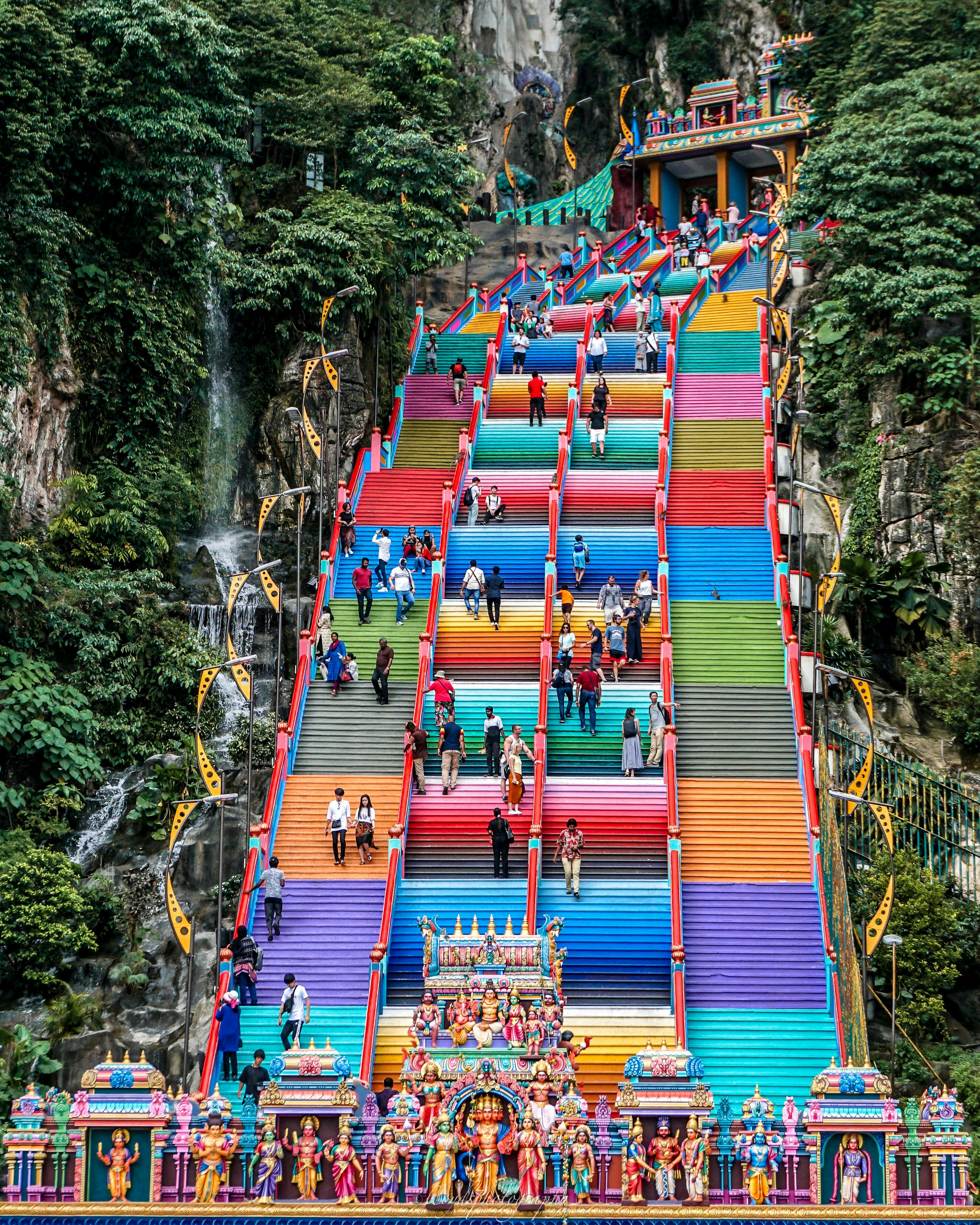
The approach to Batu Caves is as memorable as the cave itself. Visitors must climb 272 steep steps to reach the entrance of the main cave. In 2018, the staircase was repainted in vivid shades of red, blue, yellow, and green, transforming it into a striking visual landmark.
The rainbow steps quickly gained global attention on social media, drawing photographers and travelers eager to capture its colorful symmetry.
Climbing the staircase is both a physical and symbolic journey. For many devotees, each step represents an act of devotion and perseverance.
The ascent offers expanding views of the surrounding area, with the skyline of Kuala Lumpur visible in the distance on clear days. Playful macaques often linger along the steps, adding a lively but sometimes mischievous presence to the climb.
The vibrant staircase contrasts beautifully with the natural gray limestone cliffs above, creating a fusion of nature and contemporary aesthetic appeal that defines the modern image of Batu Caves.
A Sacred Site for Hindus

While its geological history is ancient, Batu Caves’ spiritual significance is more recent yet deeply rooted.
In the late 19th century, the caves were established as a Hindu temple complex dedicated to Lord Murugan. Today, it stands as one of the most important Hindu pilgrimage sites outside India.
At the base of the staircase stands a towering 42.7-meter golden statue of Lord Murugan, one of the tallest statues of a Hindu deity in the world. The statue’s gleaming surface reflects sunlight, creating a dramatic welcome for worshippers and tourists alike.
Each year, Batu Caves becomes the focal point of Thaipusam, a major Hindu festival celebrated by Malaysia’s Tamil community.
During this event, hundreds of thousands of devotees gather to offer prayers, carry elaborate kavadis, and undertake acts of penance. The festival transforms the site into a vibrant scene of music, chanting, and devotion, reinforcing Batu Caves’ role as a living center of faith.
Tourism, Culture, and Conservation

Batu Caves has evolved into one of Malaysia’s top tourist attractions, drawing visitors from around the world. Its proximity to Kuala Lumpur makes it an easy half-day excursion, yet the experience feels worlds away from the city’s modern skyscrapers.
The site offers more than just the main Temple Cave. There are smaller caves, including the Dark Cave, known for its ecological importance and unique species of flora and fauna.
Conservation efforts have been introduced to protect the fragile limestone ecosystem and the wildlife that inhabits it.
Managing the balance between tourism and preservation remains an ongoing challenge, particularly during peak travel seasons and major festivals.
Local vendors and small businesses around the entrance contribute to a vibrant cultural atmosphere.
Visitors can sample Malaysian snacks, purchase religious items, and explore nearby temples that showcase intricate carvings and colorful architecture. The blend of commerce, culture, and devotion adds layers to the visitor experience.
An Enduring Symbol for Malaysia
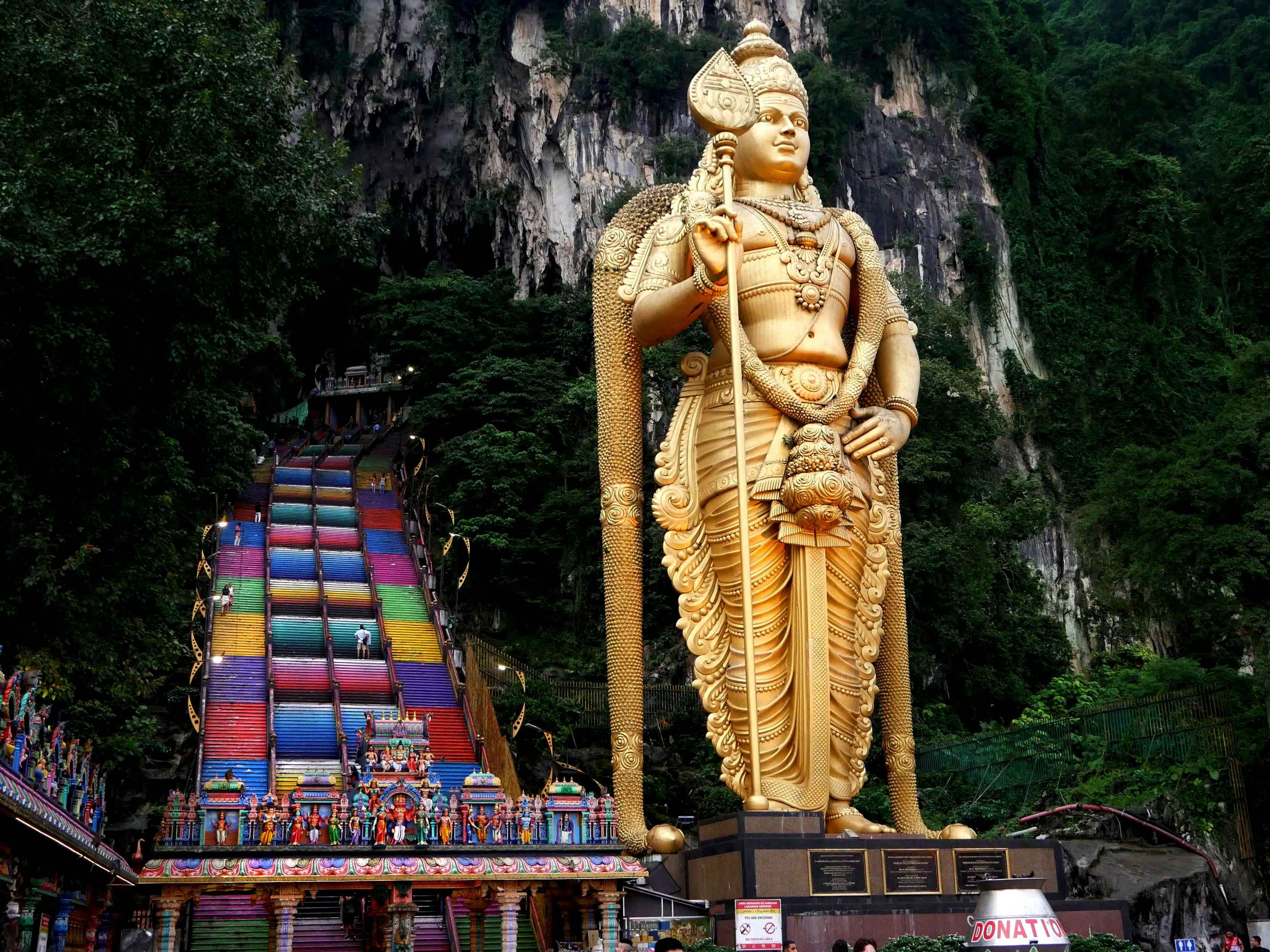
Batu Caves represents more than a tourist attraction or a religious site. It symbolizes Malaysia’s multicultural identity, where natural heritage and spiritual traditions coexist harmoniously.
The 272 rainbow steps have become a modern emblem of the country, while the 400-million-year-old cave serves as a reminder of the Earth’s vast history.
For travelers, the climb is both literal and metaphorical, leading from bustling city life into a space shaped by time, faith, and community. Whether drawn by geology, photography, or pilgrimage, visitors leave with a sense of having encountered something enduring.
Batu Caves stands as a testament to the power of nature and belief, rising above Kuala Lumpur as a landmark that continues to inspire awe across generations.


