


The United States military attack on Kuala Batu, Aceh, in February 1832 stands as one of the earliest overseas operations to demonstrate the use of naval power as an instrument of political pressure. This episode would later be recognized as an early example of what came to be known as gunboat diplomacy.
At the same time, in Indonesian history—particularly that of Aceh—the attack marked a significant chapter, leaving long-lasting traces in regional dynamics.
The operation was led by John Downes, acting under the direct orders of President Andrew Jackson. Its target was Kuala Batu (then known as Quallah Battoo), located on the western coast of Sumatra.
At the time, the area lay within the sovereignty of the Sultanate of Aceh, an independent polity that maintained formal relations with the Ottoman Empire and United Kingdom in the 19th century.
Origins: The Friendship Incident
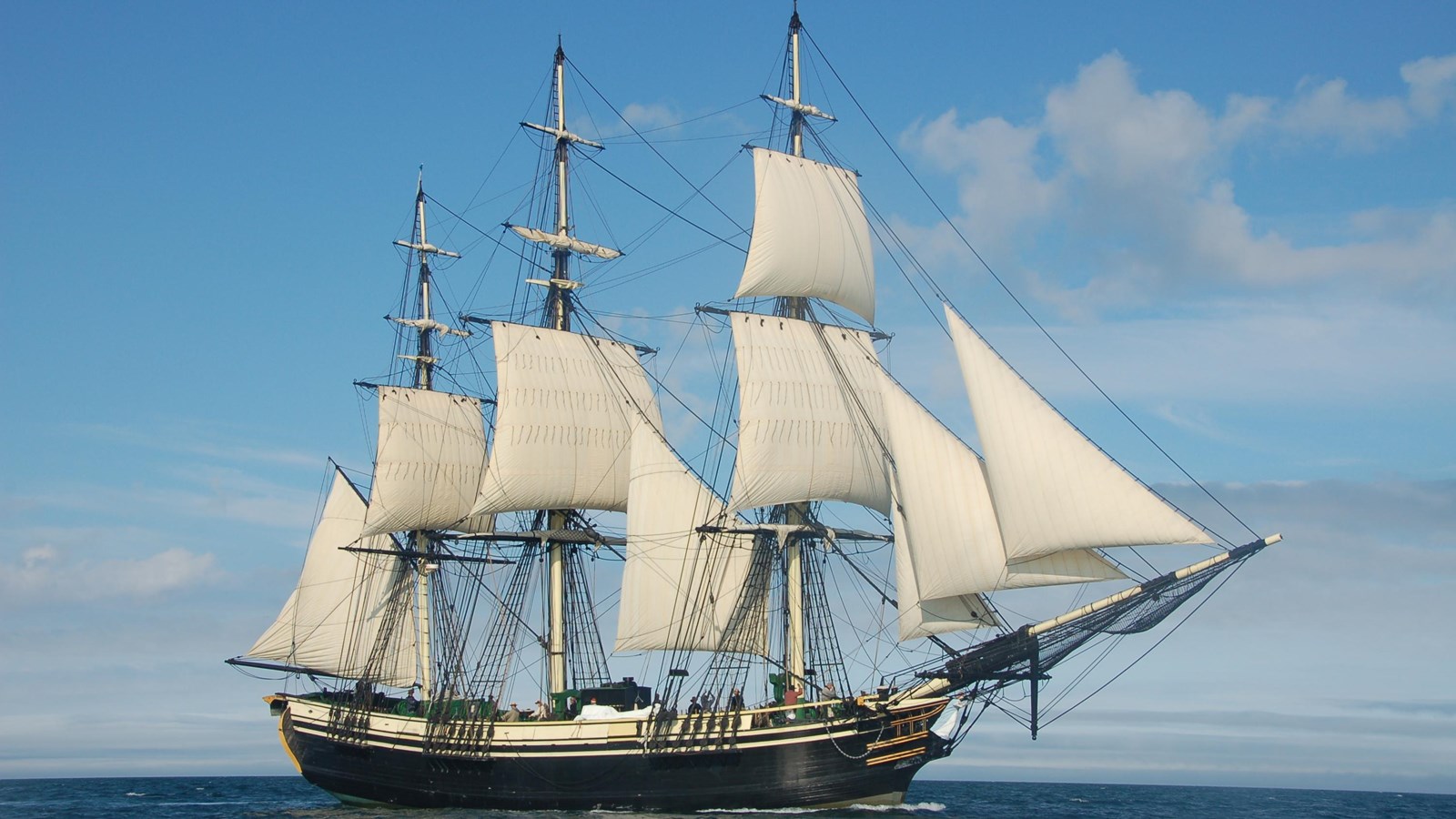
The chain of events began in February 1831, when the American merchant ship Friendship, commanded by Charles Endicott, anchored at Kuala Batu to purchase pepper and palm oil, two of Sumatra’s most important commodities in the early 19th century.
While Endicott and part of the crew went ashore to conduct trade, they were attacked by a group loyal to a local leader, Po Muhammad. At the same time, three proa boats assaulted the Friendship. The first officer and two crew members were killed, the cargo was looted, and the ship was briefly seized by the attackers.
Endicott and the surviving crew managed to escape with the assistance of another local leader, Po Adam. With the support of three other American merchant captains, Endicott succeeded in retaking his ship and returned to Salem.
News of the attack sparked public outrage in the United States. Backed by Senator Daniel Webster, Endicott pressed President Andrew Jackson to dispatch a naval force to demand compensation.
The U.S. government subsequently ordered its newly commissioned frigate, USS Potomac, to sail to Sumatra and “remedy the situation as he saw fit.”
Toward Aceh: Mission and Disguise
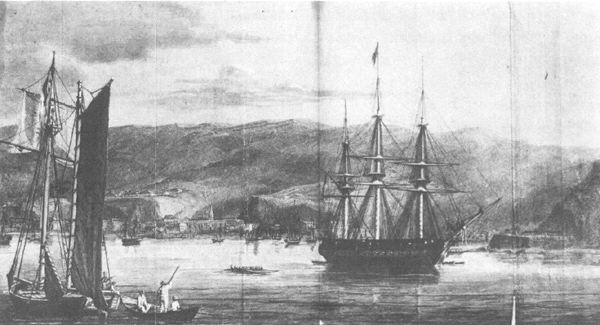
The USS Potomac departed from New York on 19 August 1831. Under the command of John Downes, the ship carried roughly 400 crew members, including 80 U.S. Marines—the largest Marine detachment ever assigned to an American warship at the time.
Although officially rated as a 44-gun frigate, Potomac was in fact more heavily armed, carrying dozens of carronades and long guns across two gun decks.
After rounding the Cape of Good Hope and linking up with the Pacific Squadron in Ceylon, Potomac arrived off the coast of Kuala Batu on 5 February 1832. Downes first met with Po Adam, who informed him that the uleëbalang (local chiefs) refused to pay compensation for the attack on the Friendship.
Downes then opted for deception. The warship was disguised as a Danish merchant vessel to preserve the element of surprise. Cannons were concealed and the ship’s true identity hidden.
The ruse worked. Local traders boarded the vessel without suspicion to conduct business—only to be detained immediately, preventing any warning from reaching the shore.
A Marine reconnaissance team led by Alvin Edson mapped Kuala Batu’s defenses. They identified three proa vessels in the harbor and five fortifications—four along the coastline and one positioned behind the town.
A Dawn Attack That Turned Deadly
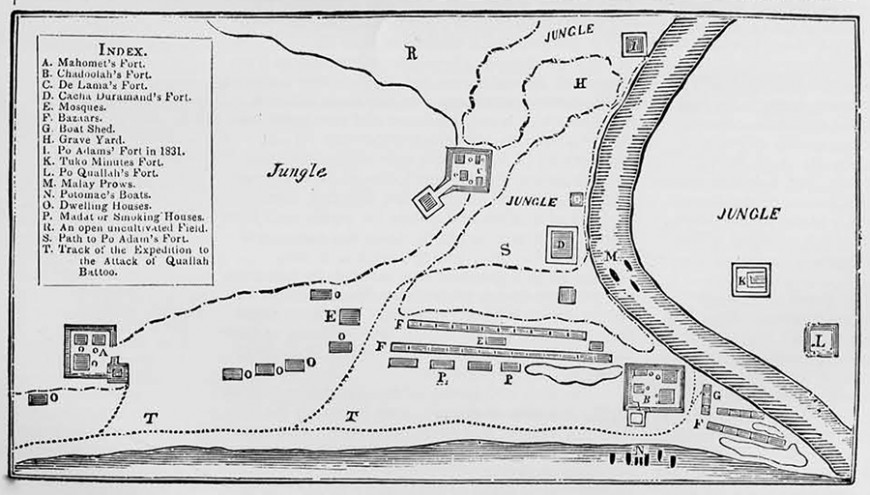
Before dawn on 6 February 1832, 282 armed sailors and Marines landed using small boats fitted with light cannons. This operation became one of the earliest U.S. Navy amphibious assaults since the War of 1812.
The four coastal forts were assaulted simultaneously, with naval gunfire from Potomac suppressing initial resistance. The battle lasted roughly two and a half hours and devolved into close-quarters combat. American forces, equipped with breech-loading rifles, held a clear advantage over the matchlock firearms used by local fighters.
Approximately 150 uleëbalang were killed in the fighting at the forts. No Marines were killed, though two sailors died and around eleven men were wounded. After the coastal defenses fell, local forces withdrew to the fifth fort located behind the town.
Rather than launching a direct assault, Edson ordered the destruction of the settlement. Looting and arson followed, resulting in heavy civilian casualties.
Once the landing force withdrew to the ship, Potomac moved closer to shore and unleashed broadsides against the fifth fort and surrounding residential areas. Some accounts report an additional 300 deaths from the bombardment, while others estimate that civilian casualties may have reached as many as 500.
The Aftermath That Echoed Beyond Aceh
In the aftermath of the attack, local leaders pledged that American-flagged vessels would no longer be targeted. For the next six years, no major incidents involving U.S. ships were recorded in the area.
Within the United States, however, public reaction was deeply divided. While Commodore Downes’ actions were initially praised, they later came under sharp criticism, particularly from a Congress dominated by the Whig Party.
Critics condemned the use of deception, the pre-dawn assault on an unprepared population, and the civilian casualties, including women and children. Despite this backlash, President Andrew Jackson continued to defend the operation.
The expedition later became known as the First Sumatran Expedition, and is widely regarded as one of the earliest examples of naval power being used to coerce foreign territories in pursuit of national interests—a practice that would later be termed Gunboat Diplomacy.
For Aceh, the implications were far-reaching. The attack was carried out against a still-independent and sovereign kingdom, not a Dutch colony. Ironically, in the years that followed, foreign interventions in the region continued, gradually paving the way for a much longer and more destructive period of conflict in Aceh.


