


In the modern business world, a company that survives for more than a century is already considered extraordinary. Yet in Japan, there is a construction company whose age far exceeds that standard.
Its name is Kongo Gumi, a firm founded in 578 CE in Osaka. This means the company has existed for more than 1,400 years, dating back to the era of Muhammad (570–632 CE).
In 578 CE, the world was in a very different historical phase. Germanic tribes were still competing over the remnants of the Roman Empire, the Maya civilization was flourishing in Central America, and in Mecca a boy named Muhammad was likely around eight years old.
It was during this time that a Korean wood craftsman named Shigetsu Kongō arrived in Japan and began the enterprise that would later become the world’s oldest construction company.
Beginning with a Buddhist Temple
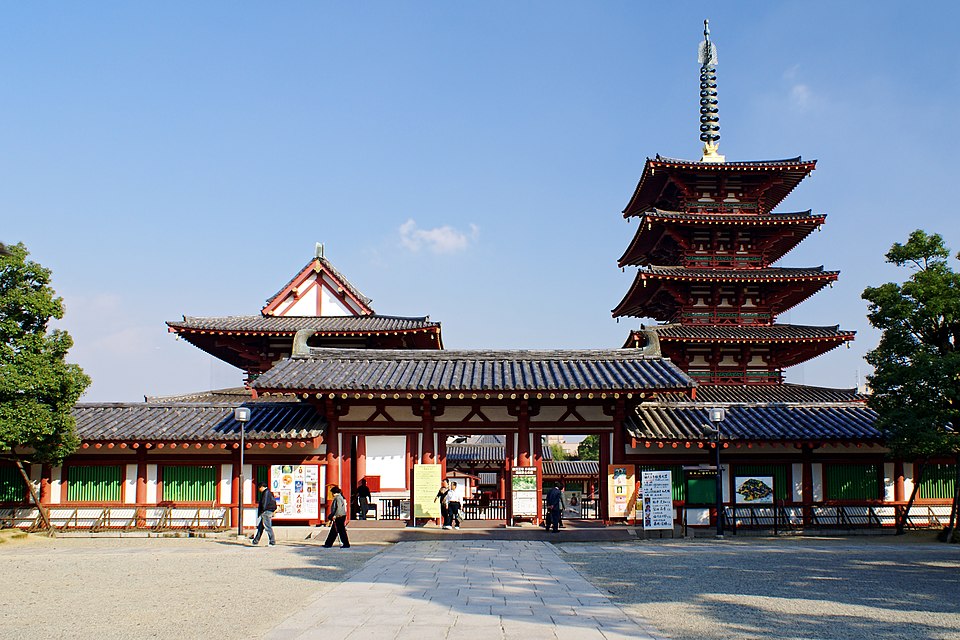
Kongō Gumi originated from the construction of Shitennō-ji, one of the oldest Buddhist temples in Japan, commissioned by Prince Shōtoku in the late 6th century. Because Japan did not yet have craftsmen specialized in building Buddhist temples, three carpenters from the kingdom of Baekje on the Korean Peninsula were invited to assist with the project, including Shigetsu Kongō.
The construction of Shitennō-ji became the foundation of the Kongō family business. For centuries, the maintenance and reconstruction of the temple, often damaged by wars and natural disasters, served as the company’s main source of income.
As Buddhism spread across Japan during the Asuka period (592–710), the demand for temple construction increased. Kongō Gumi later participated in major projects such as Hōryū-ji (607), Mount Kōya (816), and Osaka Castle (1583).
From the beginning, the company’s business model was highly specialized: focusing on the construction and maintenance of religious buildings, a relatively stable sector because temples hold deep spiritual and cultural significance in Japanese society.
The Tradition Behind Longevity
The longevity of Kongo Gumi for more than 14 centuries has been supported by a combination of craft tradition, family management, and long-term relationships with customers.
One key factor is the quality of workmanship. Temple carpenters (miyadaiku) undergo extremely rigorous training—around 10 years of apprenticeship to master the basic techniques and another 10 years to become a master carpenter. Their expertise includes traditional wood-joining techniques without nails, a distinctive feature of Japanese temple architecture.
The Kongō family also established a work ethic guide known as Shokuke kokoroe no koto, which contains 16 principles covering work quality, customer satisfaction, and personal discipline, including how to dress, control alcohol consumption, and treat others with respect.
The guidelines also emphasize the importance of customer relationships: listening to clients’ needs, providing honest price estimates, and maintaining respectful communication. Long-term relationships with temples as primary clients helped ensure a steady flow of projects for centuries.
In terms of leadership, the company has also shown flexibility. Although it is usually led by family members, leadership is not automatically passed to the eldest son. If the heir is considered unqualified, leadership can be transferred to another family member or even to an adopted son-in-law to continue the family name.
Resilience Across Japanese History
For more than a millennium, Kongō Gumi has endured major shifts in Japanese history, from political turmoil during the Heian period (794–1185) and social transformations in the Kamakura period (1185–1333), to frequent earthquakes and fires that damaged temples.
During the Meiji Restoration (1868–1912), when Japan underwent rapid modernization, the company began combining traditional carpentry techniques with new materials such as brick, tiles, steel frames, and later concrete, as well as modern architectural design software.
The company’s leadership history also includes unique episodes. The 37th leader, Haruichi Kongō, committed ritual suicide after feeling he had failed to provide for the families of the craftsmen. Leadership then passed to his widow, Yoshie Kongō, who in 1934 became the first and only woman to lead the company.
Under Yoshie’s leadership, the company implemented major reforms: separating managerial roles from carpentry work and expanding its business activities, including producing wooden coffins to help the company survive.
The End of Independence, but Not the End of the Journey
In the 20th century, Kongo Gumi briefly expanded into a publicly listed company after conducting an IPO in 1955 under the leadership of its 39th generation. However, during Japan’s economic bubble, the company made large investments in the real estate sector using significant debt.
When the Japanese property bubble burst in the 1990s, the value of those investments collapsed while income from temple construction declined. This combination eventually pushed the company into financial difficulties.
In 2006, after more than 1,400 years of operating independently, Kongo Gumi was acquired by Takamatsu Construction Group and became one of its subsidiaries. Despite this change, the company retained its name, craft traditions, and specialization in the construction of Buddhist temples.
Today, around 100 traditional temple carpenters still work at the company, and a member of the Kongō family remains involved as a symbol of the continuity of the family’s legacy.


