

If you type “Southeast Asia” into the search bar of a major online bookstore like Amazon, the results are revealing. Shelves are filled with titles on history, culture, and anthropology—many of them written by Western authors. The region is often portrayed through an outsider’s gaze, framed as exotic, diverse, and at times enigmatic. It is, in many ways, a tourist’s perspective.
What is much less common, however, are books about Southeast Asia written by Southeast Asians themselves—works that not only describe the region but also advocate for it, presenting it as a unified economic, political, and cultural entity.
It is within this gap that Gita Wirjawan’s first book, What It Takes: Southeast Asia—From Periphery to Core of Global Consciousness (Endgame Publishing, 2025), finds its importance.
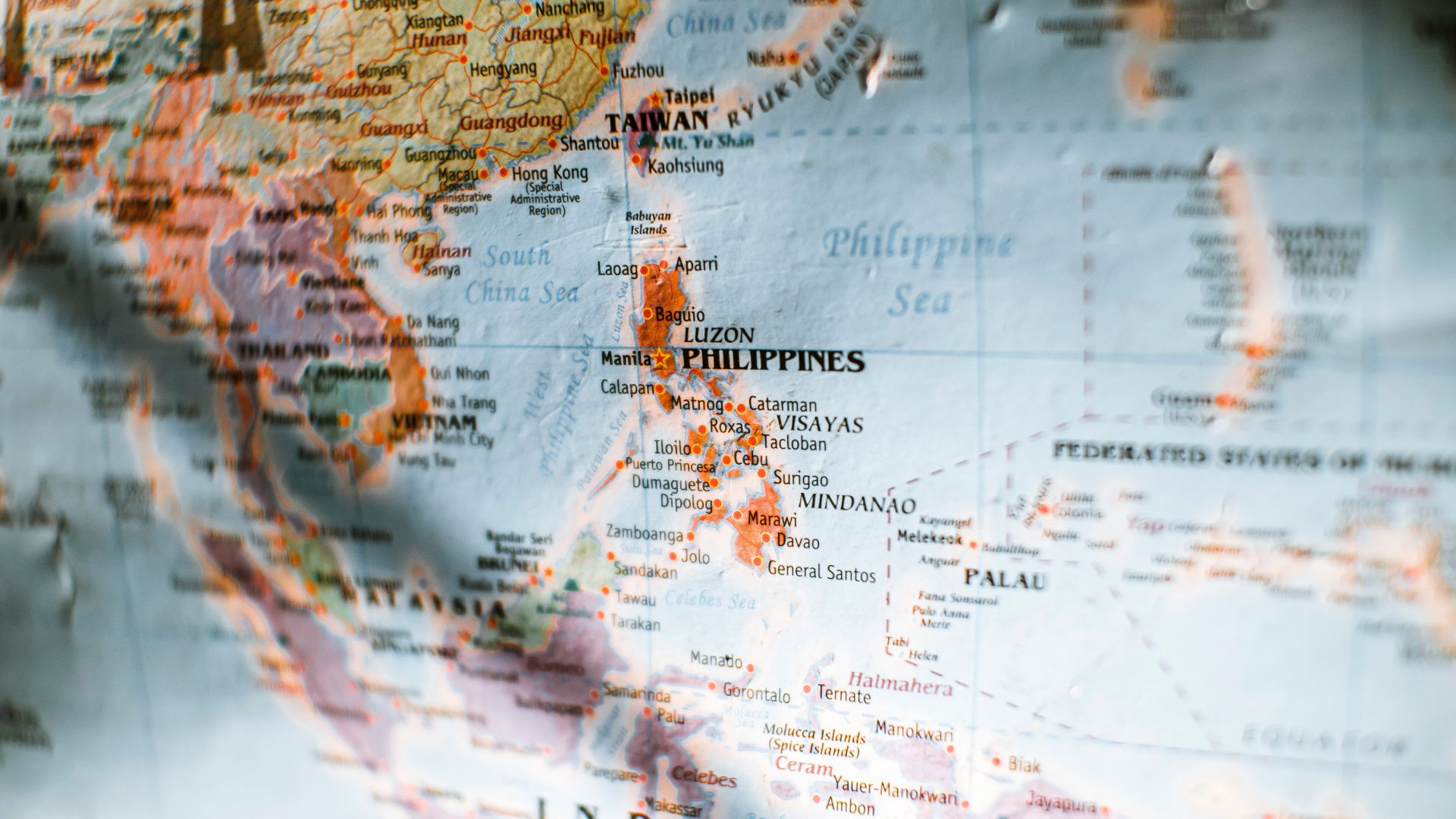
The book opens with a striking premise: Southeast Asia, despite its enormous economic and demographic weight, remains on the periphery of global consciousness. With a population of around 700 million—making it the third largest after India and China—and a combined economic output of approximately US$4 trillion, the region theoretically commands a seat at the world’s major decision-making tables. Yet in practice, it is often relegated to the role of spectator.
According to Wirjawan, this marginalization is not simply the result of external dynamics. Rather, it reflects an internal shortcoming: Southeast Asia has not effectively projected its collective hard and soft power.
Whether in politics, diplomacy, economics, or technology, the region has struggled to articulate a unified narrative that resonates globally. There exists, in his view, a vacuum—a lack of a compelling story told by Southeast Asians about Southeast Asia.
The book traverses a wide intellectual terrain. It moves fluidly across history, economics, geopolitics, and education, before extending into contemporary issues such as the internet and artificial intelligence. This breadth reflects an understanding that Southeast Asia’s challenges—and opportunities—are interconnected, spanning multiple domains rather than existing in isolation.
One of the more resonant concepts introduced by Wirjawan is “expectation fatigue.” For decades, Southeast Asia has been described as a region of immense potential. Analysts, policymakers, and commentators have repeatedly highlighted its strategic location, youthful population, and economic dynamism.
Yet for many within the region, this constant emphasis on “potential” has become exhausting, especially when tangible outcomes seem slow to materialize. The promise of Southeast Asia, it appears, has been perpetually deferred.
At the same time, the book does not shy away from confronting the region’s internal complexities. Southeast Asia is far from homogeneous. Disparities in education, economic development, and governance are stark, raising a fundamental question: Which Southeast Asia are we talking about?
It is difficult, for instance, to place Singapore and Timor-Leste within the same analytical frame without acknowledging their vastly different realities.
Singapore’s world-class education system is the result of decades of deliberate policy and investment, and it serves as a cornerstone of the city-state’s competitive advantage. While Singapore has extended scholarships and educational support to neighboring countries, it is also rationally invested in maintaining its lead.
These differences complicate any attempt to formulate region-wide recommendations. When Wirjawan advocates for investments in education or the democratization of internet access, an immediate question arises: Who will implement these initiatives? Where does the balance lie between regional aspirations and national interests? To what extent are individual states willing to align their strategic priorities with a broader Southeast Asian agenda?
It is precisely within these unresolved tensions that the book derives its intellectual vitality. Instead of providing definitive answers, Wirjawan’s work encourages debate. It challenges readers—policymakers, scholars, and citizens alike—to think more critically about what it means to build a cohesive regional identity amid diversity.
Ultimately, Wirjawan’s first book makes an important contribution to the discourse on Southeast Asia. It doesn’t claim to provide a comprehensive roadmap for the region’s future, nor does it attempt to resolve all its contradictions. Instead, it takes on a more fundamental task: reclaiming the narrative.
In a global environment where Southeast Asia is often spoken about rather than spoken for, this is no small accomplishment. By placing the region at the center of its own story—and by articulating both its promise and its challenges—Wirjawan’s work serves as a timely reminder that Southeast Asia’s future will not be defined solely by external perceptions, but by how it chooses to see and present itself to the world.



