


At the northeastern edge of Indonesia, hidden behind dense tropical rainforest, lies a small village called Dodinga. It consists of around 80 modest houses, a few mosques, one elementary school, and a small shop selling daily necessities.
Yet nearly 170 years ago, in this remote village in Halmahera, the theory of natural selection was first conceived, a groundbreaking idea that would forever change how humanity understands life on Earth.
When Fever Struck, a Great Idea Emerged
Nearly 170 years ago, a self-taught naturalist lay in a small hut in Dodinga, his body trembling and drenched in sweat from malaria. Unbeknownst to anyone, in a village that did not even appear on major maps at the time, one of the greatest intellectual breakthroughs in human history was taking place.
That naturalist was Alfred Russel Wallace.
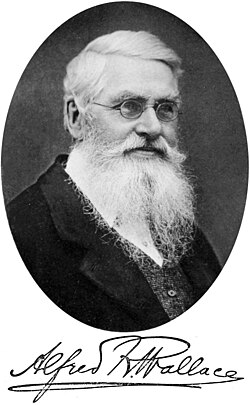
He arrived in Ternate on January 8, 1858, after nearly four years of exploring the region he called the Malay Archipelago. Together with his assistants, he had collected tens of thousands of specimens—from orangutans and birds-of-paradise to thousands of beetle species.
Shortly after reaching Ternate, he crossed over to Halmahera. After a brief stop in Sedingole, which he found unpromising, he eventually settled in Dodinga.
It was there that malaria struck him.
In his essay Natural Selection and Tropical Nature, Wallace described the moment:
“…there suddenly flashed upon me the idea of the survival of the fittest—that the individuals removed by these checks must be on the whole inferior to those that survived. In the two hours that elapsed before my ague fit was over I had thought out almost the whole of the theory, and the same evening I sketched the draft of my paper, ....”
In a leaking hut, whose owner refused to repair the roof, in a village unknown to the wider world, a theory that would shake the foundations of science was born.
Two Hours That Changed Everything
Malaria forced Wallace to lie down. In that state, his mind drifted to Thomas Malthus, a Georgian-era thinker he had read years earlier. Malthus argued that human populations are regulated by "positive checks": war, disease, and famine.
Wallace then asked himself: what if the same logic applied to animals? From that question came another, why do some die and some live? And the answer, as he later wrote, came like a flash: the best fitted live.
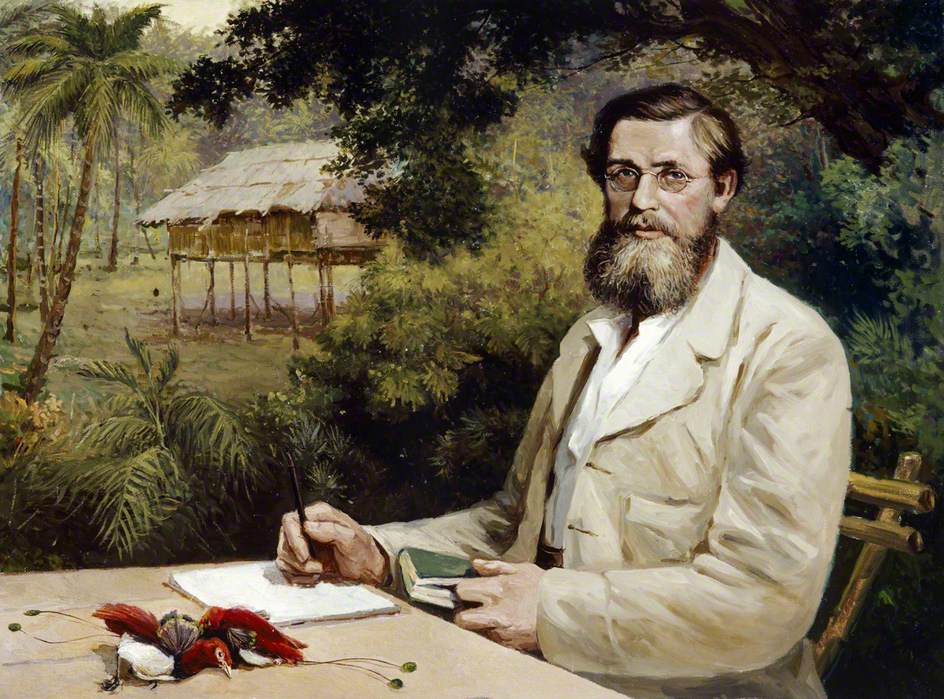
Two hours. In the span of just two hours before his fever subsided, nearly the entire theory had taken shape.
What remained was a crucial question: who should he send it to? Alfred Russel Wallace understood that his thesis was controversial, challenging both the prevailing understanding of nature and the religious doctrines of the time. He needed someone with a strong enough reputation to validate and help publish the idea.
His choice fell on Charles Darwin, a naturalist he had previously encountered and respected. It was not an unfamiliar choice, Wallace had earlier sent his 1855 Sarawak Law paper to the same scientific community, a work that Giacomo Bernardi considered as significant to the development of evolutionary thought as Darwin’s visit to the Galápagos Islands.
Field Notes that Changed Science
Wallace’s field journals, preserved at the Linnean Society of London, confirm that he was in Halmahera throughout February 1858, only returning to Ternate on March 1. This detail is crucial, as for many years the world mistakenly believed the discovery took place in Ternate, since his paper was signed “Ternate, February 1858.”
Researchers now believe Wallace used Ternate simply because it was his postal address. Dodinga, a village barely marked on maps, was the true setting of this historic breakthrough.
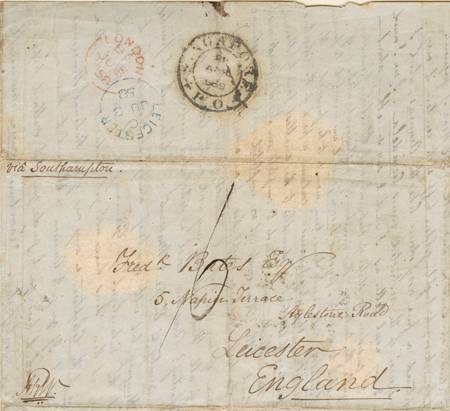
The paper was sent to Charles Darwin and later became known as The Ternate Essay.
Dr. George Beccaloni of the Natural History Museum described it as “probably the most important scientific paper in the history of biology”, an extraordinary assessment for a work written in a leaking hut by a man suffering from severe illness in a remote village.
A Turning Point in History
When Wallace’s letter reached England on June 18, 1858, Darwin was shaken. He had been developing his own theory for nearly two decades. Yet in just a few pages, a man writing from an obscure village in Halmahera had arrived at the same idea.
Darwin’s colleagues arranged for both papers to be presented jointly at the Linnean Society on July 1, 1858—without Wallace present, as he was still in the Indonesian archipelago. Darwin then rushed to publish On the Origin of Species in November 1859.
His name became immortalized in history. Wallace, whose discovery had prompted Darwin to finally publish, gradually faded into the background.
Some scholars have even argued that “Darwin and his influential friends in the scientific community conspired to rob Wallace of credit for natural selection,” calling it “one of the greatest wrongs in the history of science.”
The irony runs deep: Wallace himself chose to remain in the shadows. When Darwin proposed naming the theory “Darwin–Wallace,” Wallace insisted instead on calling it "Darwinism".
A Legacy Recognized Too Late
Wallace returned to England in 1862 with 125,660 specimens, including more than 83,000 beetles. In 1869, he published The Malay Archipelago, a book that has never gone out of print. It inspired Joseph Conrad and sparked a lifelong fascination with nature in a young David Attenborough.
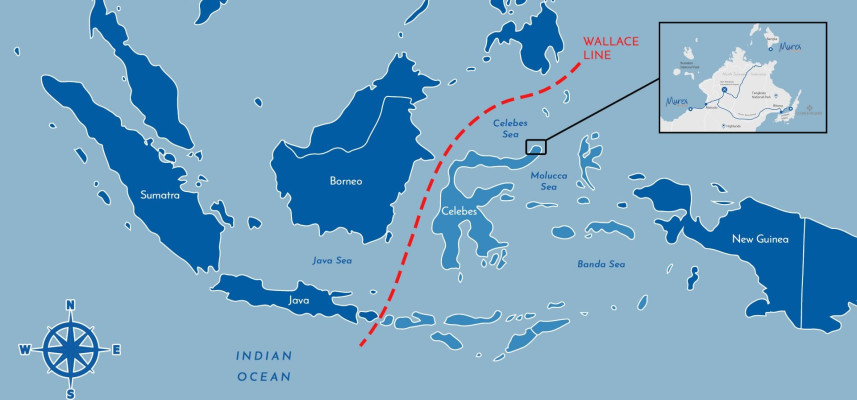
He also left a lasting mark on science with the identification of the "Wallace Line", a biogeographical boundary separating Asian and Australian fauna, stretching from the Lombok Strait to the Makassar Strait. Around 250 species have been named in his honor.
The most tangible recognition of what happened in Dodinga came much later: a simple plaque installed at the junction leading to the former site of his house. Not in London. Not in a prestigious scientific institution. But at the end of a small lane, facing a village mosque, in Dodinga.


