


You may not realise it, but if you visit different churches, you will notice that their orientation is not always the same. Some face the main road, while others follow the contours of the land. However, a striking pattern emerges when looking at old churches, especially in Europe: many of them were built with the main altar facing east.
This is no coincidence. It is a tradition that has endured for nearly two thousand years.
The Symbolism of the East
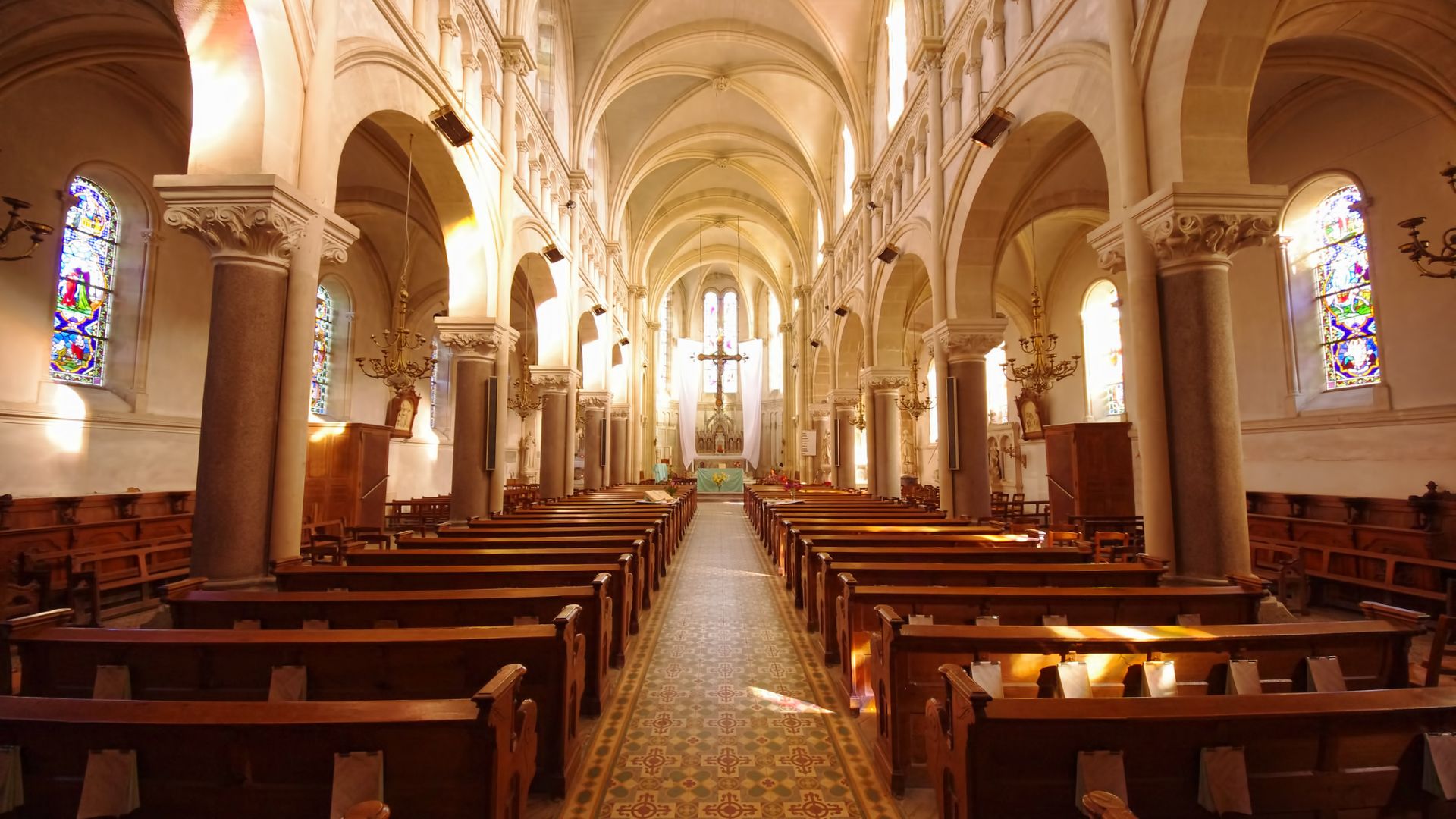
In early Christian tradition, the east held profound significance. Churches were oriented toward the rising sun as a symbol of the resurrection of Jesus Christ.
According to this belief, the resurrection took place in the morning, so the sunlight illuminating the altar was seen as representing the triumph of light over darkness and life over death.
This meaning is further reinforced by eschatological belief. In the Gospel of Matthew 24:27, the return of Christ is likened to lightning flashing from the east to the west. For this reason, the east came to symbolize hope for the future and the anticipation of divine return.
The oldest known church, a house of worship in Dura-Europos, Syria, dating back to the early third century CE, already reflects this pattern, its altar was placed against an east-facing wall.
Practical Reasons: Natural Light and Guidance for Pilgrims
Beyond symbolism, the eastward orientation also served practical purposes. In times before electricity, sunlight was the primary source of illumination. With the altar facing east, the morning light could directly illuminate the most sacred part of the church, creating an atmosphere that was both dramatic and reverent.
This effect of light also contributed to the spiritual experience of worshippers. As sunlight gradually entered the space, it created a sense of sacredness and depth, enhancing the religious atmosphere during liturgical celebrations.
Moreover, the orientation of church buildings also aided pilgrims. In the Middle Ages, religious journeys were often undertaken on foot to holy cities such as Rome or Jerusalem, without the help of modern maps.
In such conditions, churches facing east—aligned with the sunrise—helped travelers determine direction in unfamiliar territories. The movement of shadows cast by church buildings throughout the day also served as a natural and reliable guide for navigation.
The Shift in Worship Orientation
For centuries, Christian worship was conducted with both the priest and the congregation facing east, a practice known as ad orientem. This orientation emphasized that prayers were directed toward God, rather than toward fellow human beings.
However, a significant shift occurred in the 20th century, particularly after the Second Vatican Council. Many churches began adopting the versus populum practice, in which the priest faces the congregation during the Mass. The aim was to increase participation and make the liturgy more accessible and understandable.
Even so, this change did not completely erase the older tradition. Officially, facing east remains permissible, especially in traditional liturgical celebrations.
In fact, some theologians argue that this orientation more strongly emphasizes worship as an act directed toward God.
Debates on Worship Orientation
Despite these developments, the change in liturgical orientation has not been without controversy. Some believers feel that the traditional practice creates a more sacred atmosphere and keeps the focus on God. Others believe that facing the congregation is more relevant and communicative.
In certain cases, efforts to return to the eastward orientation have even sparked debates and tensions within church communities. This shows that the direction of worship is not merely a matter of design or positioning, but also reflects how believers understand the spiritual meaning of worship itself.
Although modern churches are not always built facing east, the tradition has not entirely disappeared. In many instances, it continues to be preserved—either physically or symbolically.


