


The Strait of Hormuz has just proven something that, until now, largely lived in geopolitical textbooks: a narrow maritime corridor can cripple the global economy in a matter of weeks.
When Iran closed Hormuz at the end of February, global energy prices surged, supply chains were shaken, and policymakers around the world were abruptly reminded that dependence on a single narrow passage on the map is a very real vulnerability.
The question now quietly lingering in many minds is this: could the Strait of Malacca be the next crisis point?
It is not an exaggerated concern. In fact, Malacca is busier, narrower at several critical chokepoints, and far more deeply embedded in sustaining the global economy than Hormuz.
Read also: The Malacca Strait Could Be a Cash Machine, So Why Is It Free?
Numbers That Make Anyone Pause
Stretching roughly 900 kilometers between the Malay Peninsula and the island of Sumatra in Indonesia, the Strait of Malacca is anchored at its southern end by Singapore, one of the world’s busiest ports and largest bunkering hubs, handling over 40 million containers annually.
The scale of traffic is staggering. Throughout 2025, more than 102,500 vessels passed through the strait, up from around 94,300 in 2024.
In just the first half of 2025, approximately 23.2 million barrels of oil per day transited this route, equivalent to 29 percent of total global seaborne oil flows. By comparison, the Strait of Hormuz, long regarded as the “world’s oil tap,” recorded about 20.9 million barrels per day over the same period.
The U.S. Energy Information Administration (EIA) has even formally classified the Strait of Malacca as the largest oil chokepoint in the world, surpassing Hormuz.
And it is not just oil. The strait carries around 24 percent of global maritime trade by volume, including more than 25 percent of all internationally traded cars, 23 percent of dry bulk cargo such as grains and soybeans, and a substantial share of electronics, footwear, toys, and industrial goods flowing from Asia to Europe.
Why This Strait Is Nearly Irreplaceable
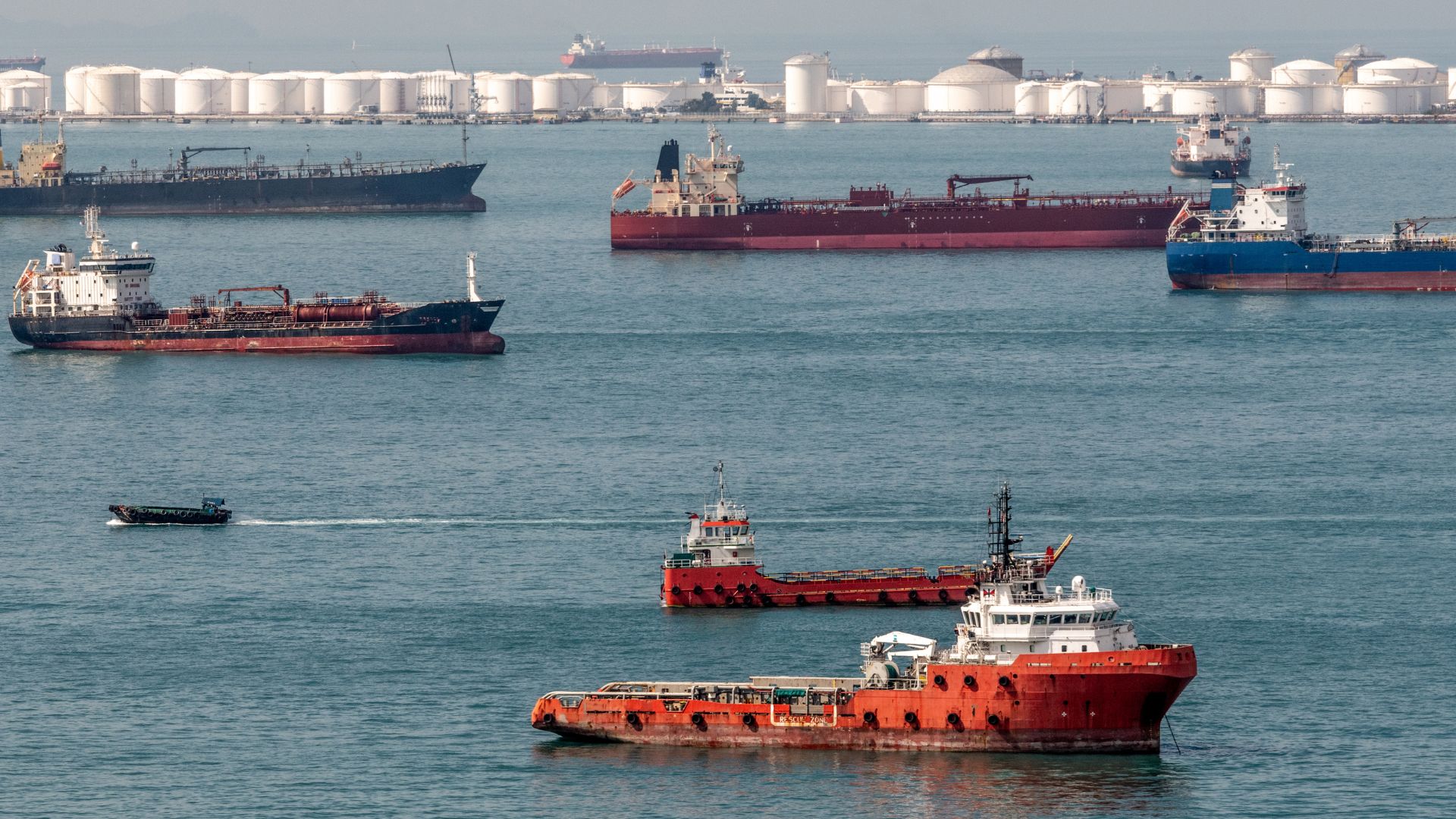
At its narrowest point, the Malacca Strait, specifically the Phillips Channel near Singapore, measures only about 2.7 to 2.8 kilometers across. By comparison, the Strait of Hormuz narrows to roughly 55 kilometers.
This means that, physically, Malacca is far more vulnerable to congestion, collisions, and oil spills.
Alternative routes do exist, but none are truly comparable.
The Sunda Strait and the Lombok Strait, both within Indonesian waters, each add roughly 1,000 to 1,500 nautical miles to a journey—equivalent to an additional three to five days of travel, higher fuel consumption, and the loss of access to Singapore’s world-class bunkering infrastructure.
Further east, the Torres Strait near Papua New Guinea is too shallow for large vessels with drafts exceeding 12 meters. Ships attempting to bypass all these routes would need to circumnavigate Australia, adding an estimated 10 to 15 days to transit time.
These geographic realities make the Strait of Malacca extraordinarily difficult to replace. It is not simply the preferred route—it is, in practical terms, the only efficient one.
Malacca Dilemma: When Dependence Meets Great Power Rivalry
No country feels this vulnerability more acutely than China. Former President Hu Jintao famously described it as the “Malacca Dilemma” in 2003, a situation in which around 75 to 80 percent of China’s oil imports must pass through a single narrow sea lane beyond Beijing’s control.
China has invested heavily in alternatives. An oil pipeline from Kyaukpyu in Myanmar to Yunnan Province was built to reduce reliance on Malacca, but its capacity—around 440,000 barrels per day—falls far short of China’s oil import demand, which stands at roughly 11 million barrels per day.
The China-Pakistan Economic Corridor, linking Gwadar Port to Xinjiang, remains incomplete, constrained by difficult terrain and persistent security challenges in parts of Pakistan. Rail routes to Europe are significantly more expensive and severely limited in capacity. Arctic shipping lanes, meanwhile, remain seasonal and marginal.
The conclusion is straightforward. As of today, no alternative matches the scale and efficiency of the Strait of Malacca for China.
Amid this structural vulnerability, geopolitical tensions are intensifying. On April 14, the United States and Indonesia announced a “major defense cooperation partnership,” alongside reports that Washington is seeking broader access to Indonesian airspace.
This development does not occur in a vacuum.
The Strait of Malacca is increasingly becoming a stage for great power competition: the United States expanding its reach through base access and naval deployments, China through a growing network of ports and a strengthened fleet, and India leveraging its strategic position in the Andaman and Nicobar Islands near the strait’s western entrance.
The Strait Remains Open, But This Stability Comes at a Cost
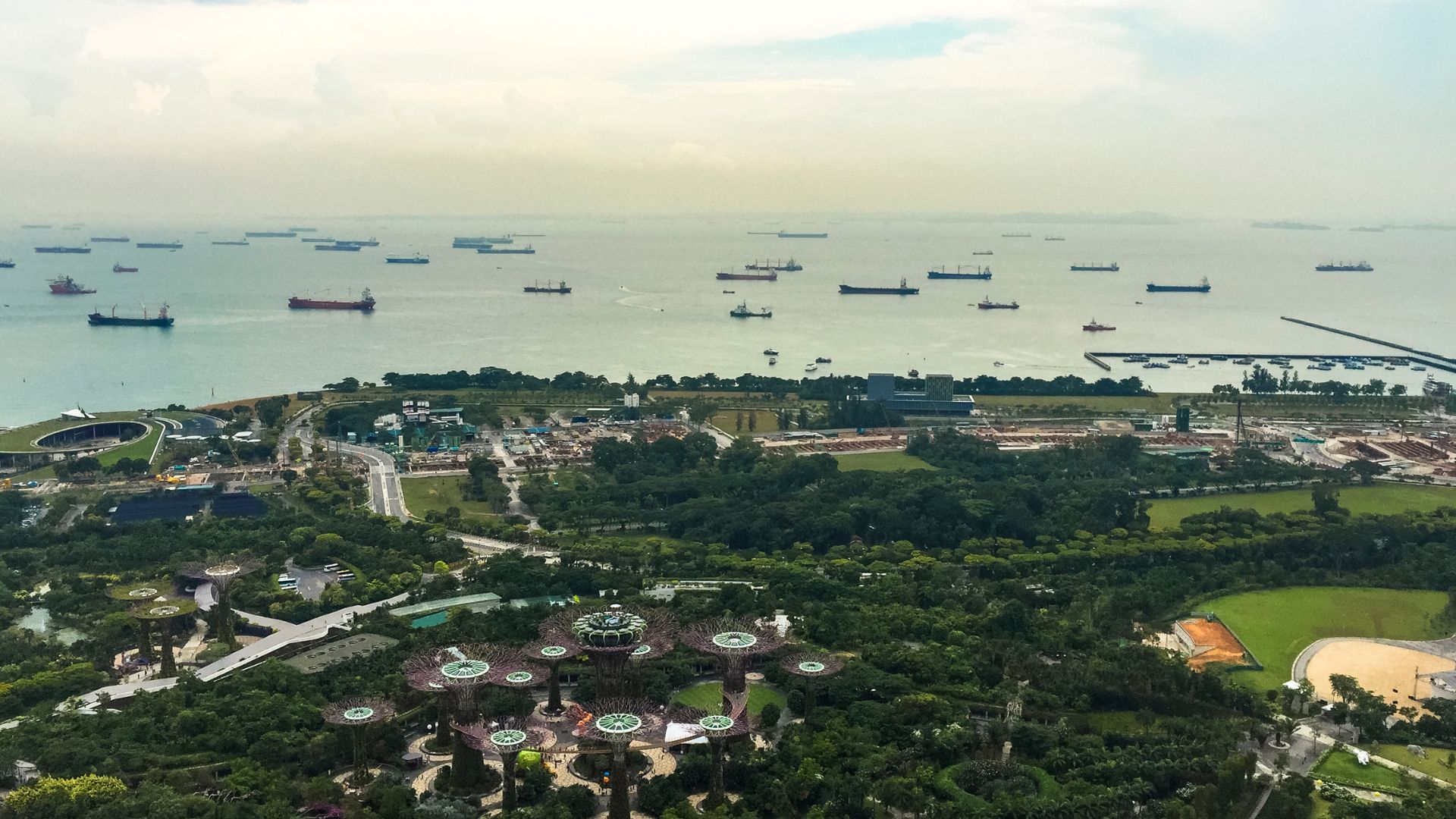
Amid rising anxiety following the Hormuz crisis, Indonesia’s Finance Minister Purbaya Yudhi Sadewa briefly floated the idea of imposing a levy on vessels transiting the Strait of Malacca, before later retracting the statement.
Even so, the remark was enough to rattle markets and trigger swift diplomatic responses from neighboring countries.
Singapore’s Foreign Minister Vivian Balakrishnan emphasized, “Transit access rights are guaranteed for all. We will not participate in any effort to close, restrict, or impose tolls in our waters.”
Malaysia’s Foreign Minister Mohamad Hasan likewise stressed that no unilateral decision can be made over the strait, noting that joint patrols remain in place.
Indonesia’s Foreign Minister Sugiono added that such a levy would contradict the United Nations Convention on the Law of the Sea.
Under international law, the Strait of Malacca is classified as an international strait. This means the right of transit passage applies to all ships and aircraft, allowing them to pass freely without obstruction. Coastal states cannot suspend this right or impose charges simply for transit.
Yet the brief episode around the proposed levy revealed something deeper: just how fragile global confidence in the stability of this route truly is. A single statement from a finance official was enough to trigger concern at an international scale.
The Strait of Malacca may remain open and stable today, but that stability is not automatic. It is the product of a carefully maintained geopolitical balance, one that can shift at any time.
If Hormuz is the world’s oil tap, then Malacca is its distribution pipeline. Disruption in Hormuz constrains supply. Disruption in Malacca could fracture the logistical backbone of the global economy.


