


In 1904, a small state on the Malay Peninsula produced 50,000 tons of tin in a single year. That figure accounted for more than half of the world's total tin output.
The driving force behind this boom was a simple invention that was transforming the way people consumed food: tin-plated cans used for food preservation. Demand surged from Europe and the United States, with American consumers alone accounting for roughly a quarter of global demand.
Today, that same country produces around 5,000 tons of tin annually, less than two percent of global output, according to the February 2026 edition of the U.S. Geological Survey's Mineral Commodity Summaries.
Between those two figures lies a century-long story of how a single commodity can build cities, attract colonial powers, and gradually become depleted in the very land that first made it famous.
A Malay Enterprise in the Beginning
Until around 1820, tin mining was almost entirely a Malay enterprise with relatively limited production. The methods were simple: lampan, which involved channeling river water to separate ore from sediment, and panning with large wooden trays.
Tin ore itself even served as a medium of exchange during the era of the Malay sultanates, where it was known by names such as pitis, tra, and tampang.
The center of this activity was the Kinta Valley in Perak, one of the most productive tin fields within the Malay Peninsula's tin belt. It was here that, when production declined sharply because of a prolonged drought in 1776, Dutch administrators proposed allowing Chinese workers to open mines in the interior. The Sultan of Perak approved the proposal.
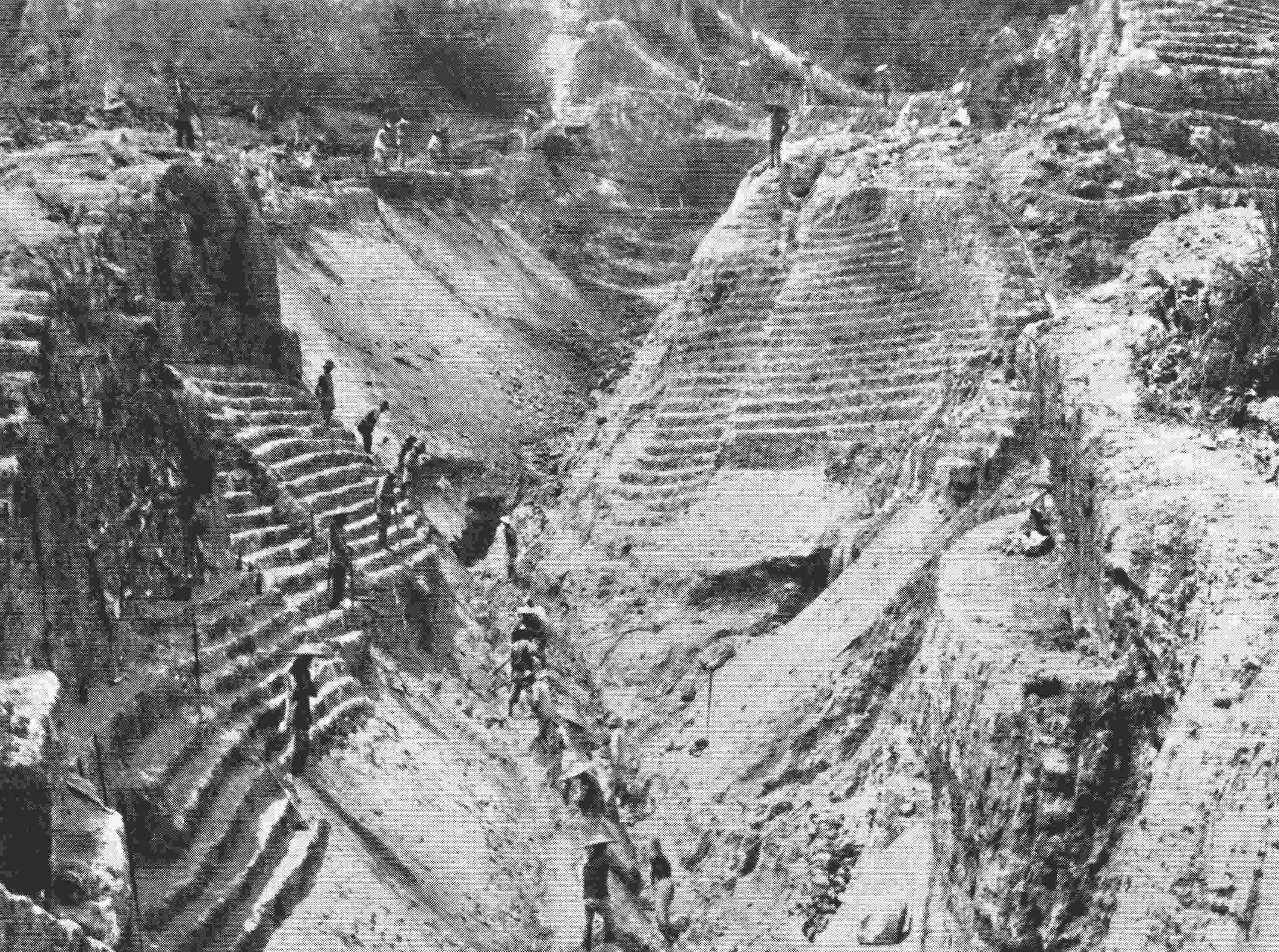
The Golden Age of Chinese Miners
That decision opened the door to a major transformation. The discovery of rich tin deposits in Perak and Selangor during the first half of the nineteenth century attracted capital from wealthy Chinese merchants in the Straits Settlements, as well as a growing flow of migrant laborers from mainland China.
The period from 1874 to 1914 is often described as the "golden age" of the Chinese tin industry in Malaya. Its scale was so immense that it reshaped the region's geography and economy.
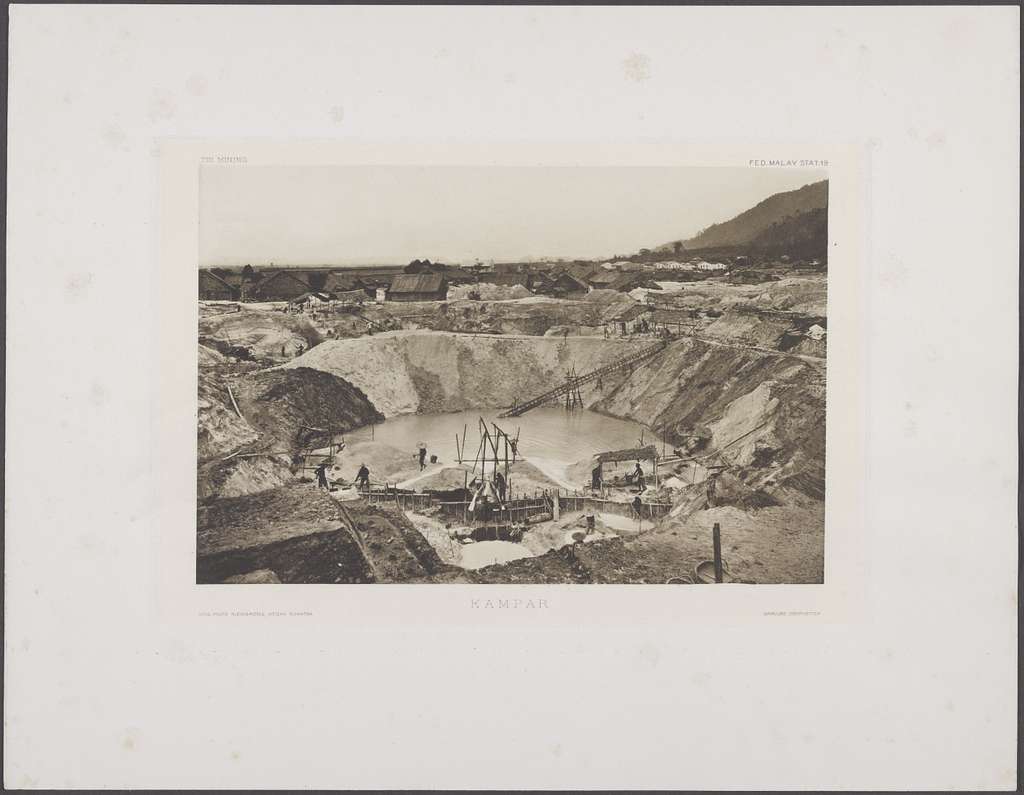
Sungai Ujong, the Kinta Valley, and the Klang Valley became the principal mining centers. From these mining districts emerged cities such as Taiping, Ipoh, and Kuala Lumpur, supported by roads and railways built specifically to transport tin.
At its peak in 1904, annual production surpassed 50,000 tons. Even as late as 1912, approximately 80 percent of that output remained under Chinese management.
When the British and Machines Took Over
That dominance, however, did not last. Backed by the British colonial administration and facing rising labor costs, European companies injected large amounts of capital into the industry and introduced technologies such as hydraulic mining.
The turning point came with the arrival of the dredge. Introduced in 1912 by the Malayan Tin Dredging Company, dredging technology dramatically increased output while shifting the industry's advantage away from labor-intensive Chinese-owned mines and toward well-capitalized British enterprises.
The transition was both rapid and measurable. By 1931, British companies controlled more than 65 percent of total tin production, a sharp reversal from a period when the industry had been almost entirely dominated by Chinese operators.
The colonial government reinforced this shift by investing in railways and roads that reduced production costs, while granting land concessions to newly established mining companies.
A Peak Beginning to Crack
Yet growing control at home did not guarantee continued dominance abroad. During the same period, new competitors began to emerge.
Production from Bolivia, Indonesia, Thailand, and China steadily eroded Malaya's market share, which had fallen to 37 percent by 1930 from more than 50 percent at the beginning of the century.
The industry experienced a revival after World War II through extensive rehabilitation efforts, reaching 55,000 tons in 1949 and continuing to grow through the 1960s. However, during the final three decades of the twentieth century, tin's importance to the Malaysian economy gradually declined as the country's exports became increasingly diversified.
What Remains Today
The industry's decline was driven by a combination of factors: shrinking reserves, falling prices, and high operating costs. Malaysia produced 5,460 tons of mined tin in 2024 and, according to preliminary U.S. Geological Survey estimates, around 5,000 tons in 2025, out of a global total of approximately 290,000 tons.
Meanwhile, China now leads global production with 71,000 tons, followed by Indonesia with 61,000 tons and Peru with 33,000 tons.
But Malaysia's story does not end with mining. This is where the narrative takes a different turn: the ore in the ground may be running out, but the expertise required to process it has endured.
Malaysia Smelting Corporation remains one of the world's largest producers of refined tin metal, with a refining capacity of up to 60,000 tons. Its output rises and falls with the constraints of a tightly supplied global market, but its position in the industry has remained intact.


