To many moviegoers, IMAX simply means a bigger screen, booming speakers, and a more expensive movie ticket.
Across Southeast Asia, IMAX theaters have become increasingly common. Singapore, Malaysia, Thailand, Vietnam, Indonesia, and the Philippines all have IMAX screens in commercial cinemas. But there's one detail most audiences never notice.
Almost every IMAX theater operating in Southeast Asia today is digital.
Long before digital IMAX became the industry standard, Indonesia was home to Southeast Asia's only IMAX 70mm theater, a format that projected movies from enormous analog film reels rather than digital files.
Located inside Jakarta's Taman Mini Indonesia Indah (TMII), Keong Mas Theater offered one of the world's most advanced cinema experiences when it opened in 1984.
So, What is IMAX?
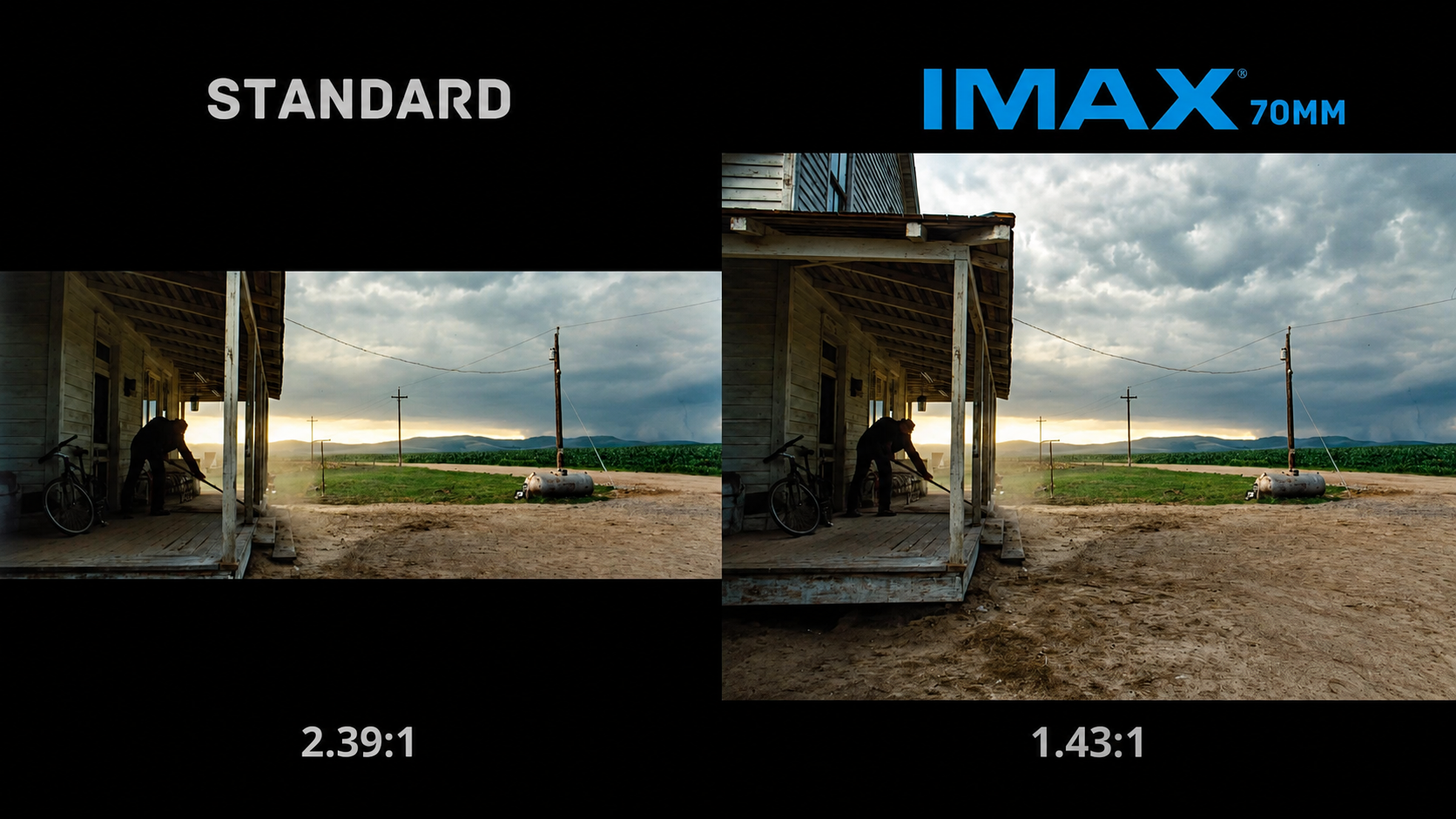
Many people think IMAX simply means a larger screen. In reality, IMAX is an entire cinema system.
Compared with a standard auditorium, IMAX typically offers a much larger screen, a steeper seating layout, custom designed audio, brighter projection, and a viewing angle that fills more of the audience's field of vision.
But the biggest difference isn't the screen. It's the projection technology.
Now, What Exactly is IMAX 70mm?
Nearly every IMAX theater people visit today uses digital projection.
Instead of physical film, movies are delivered as encrypted Digital Cinema Packages (DCPs) stored on servers and projected digitally. That makes distribution fast, efficient, and consistent across thousands of theaters worldwide.
IMAX 70mm is fundamentally different.
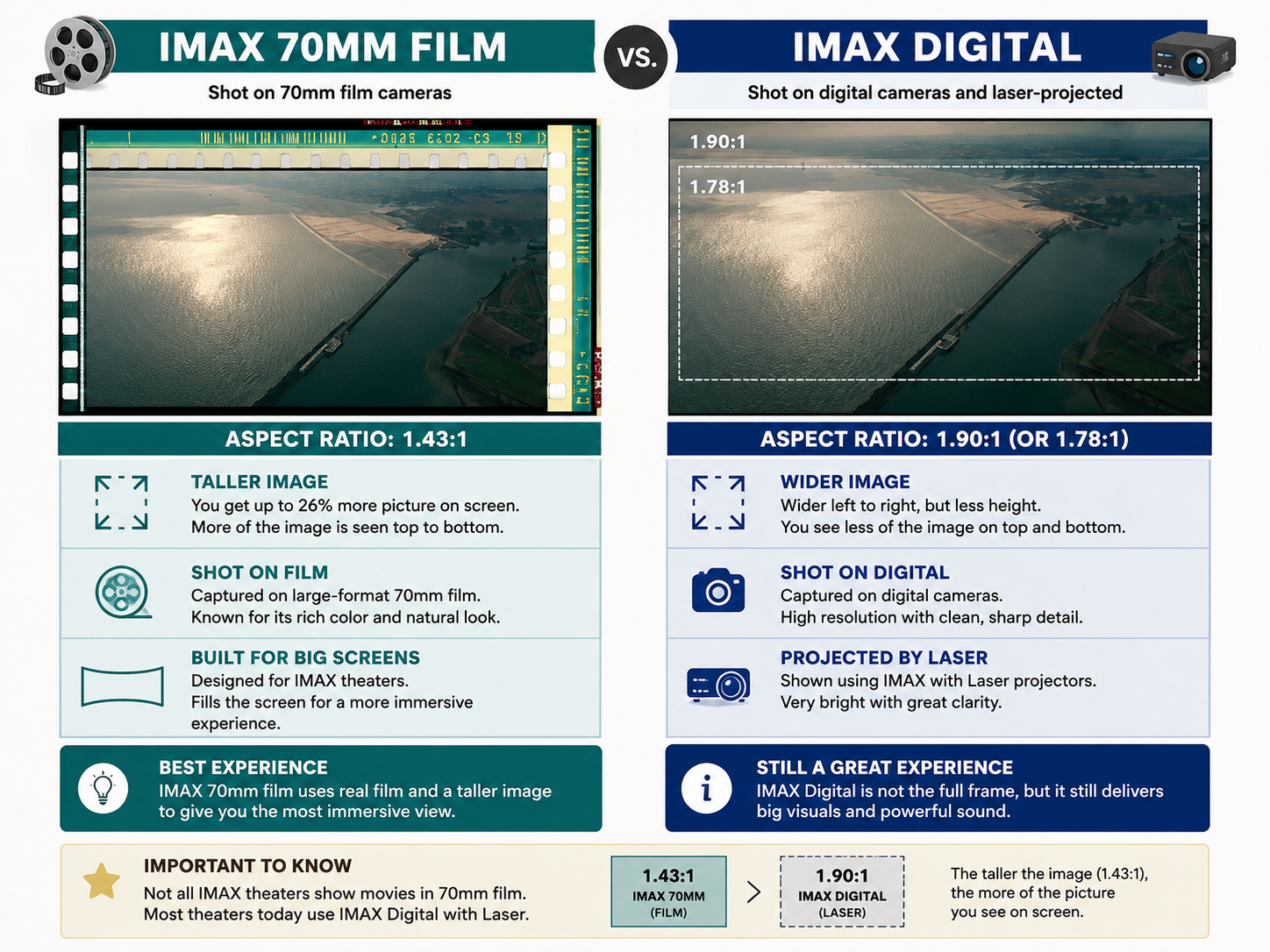
Instead of projecting a digital file, it projects a massive analog film print, a continuous strip of photographic film running through a specialized IMAX projector. In other words, audiences aren't watching pixels projected onto a screen.
They're watching light pass through an actual roll of film, frame by frame, just as cinemas did decades ago, only on a much larger and more advanced scale.

This is why Christopher Nolan, a longtime advocate of IMAX 70mm, continues to champion the format. Speaking to the Associated Press ahead of Oppenheimer in 2023, Nolan said the format captures an extraordinary amount of visual information thanks to its enormous film negative.
That level of quality also comes with exclusivity. While IMAX operates more than 1,800 theaters worldwide, only around 30 are still equipped with true IMAX 70mm film projection systems.
As a result, movies specifically mastered for IMAX 70mm can only be shown at a small number of theaters around the world.
Why Not Just Go Fully Digital?
If digital projection is cheaper, easier, and used by almost every cinema today, why do filmmakers like Christopher Nolan still insist on IMAX 70mm?
The answer comes down to image quality.
Unlike digital projection, IMAX 70mm uses massive photographic film prints. Each frame is significantly larger than conventional 35mm film and can capture far more visual information, allowing the image to retain exceptional detail even when projected onto giant IMAX screens.
The trade off, however, is enormous.
After filming, the footage must be developed, scanned into a computer for editing, and then recorded back onto 70mm film before it can be screened in an IMAX 70mm theater. Producing and transporting these giant film prints is also far more expensive than sending a digital file.
For most studios, the extra cost simply isn't worth it. But for a handful of filmmakers, the format remains the closest thing to the highest possible theatrical image quality.
Indonesia's Forgotten IMAX 70mm Pioneer
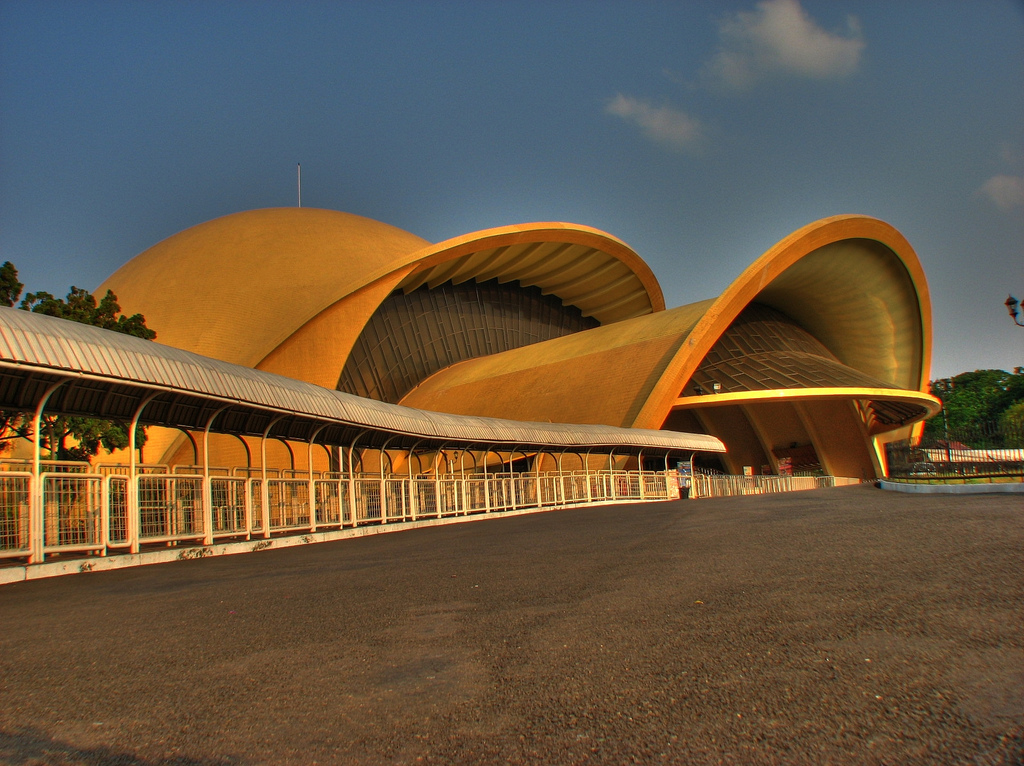
Keong Mas opened at Taman Mini Indonesia Indah (TMII) on 20 April 1984 and became Southeast Asia's only IMAX 70mm theater. At a time when IMAX was still a relatively rare technology, Jakarta was one of the few places in the world where audiences could watch movies projected from giant 70mm film reels.
That detail is what separates Keong Mas from the IMAX theaters found across Southeast Asia today. Modern IMAX cinemas in Singapore, Malaysia, Thailand, Vietnam, Indonesia, and the Philippines all use digital projection. Movies are delivered as digital cinema files and played through digital projectors.
Keong Mas was built around a different system entirely, an IMAX 70mm projector that ran enormous rolls of photographic film.
The theater mainly screened documentaries, educational films, nature productions, and other large format content designed for IMAX audiences. In 2004, it also adopted IMAX DMR (Digital Media Remastering), which allowed selected 35mm movies to be converted for IMAX presentation.
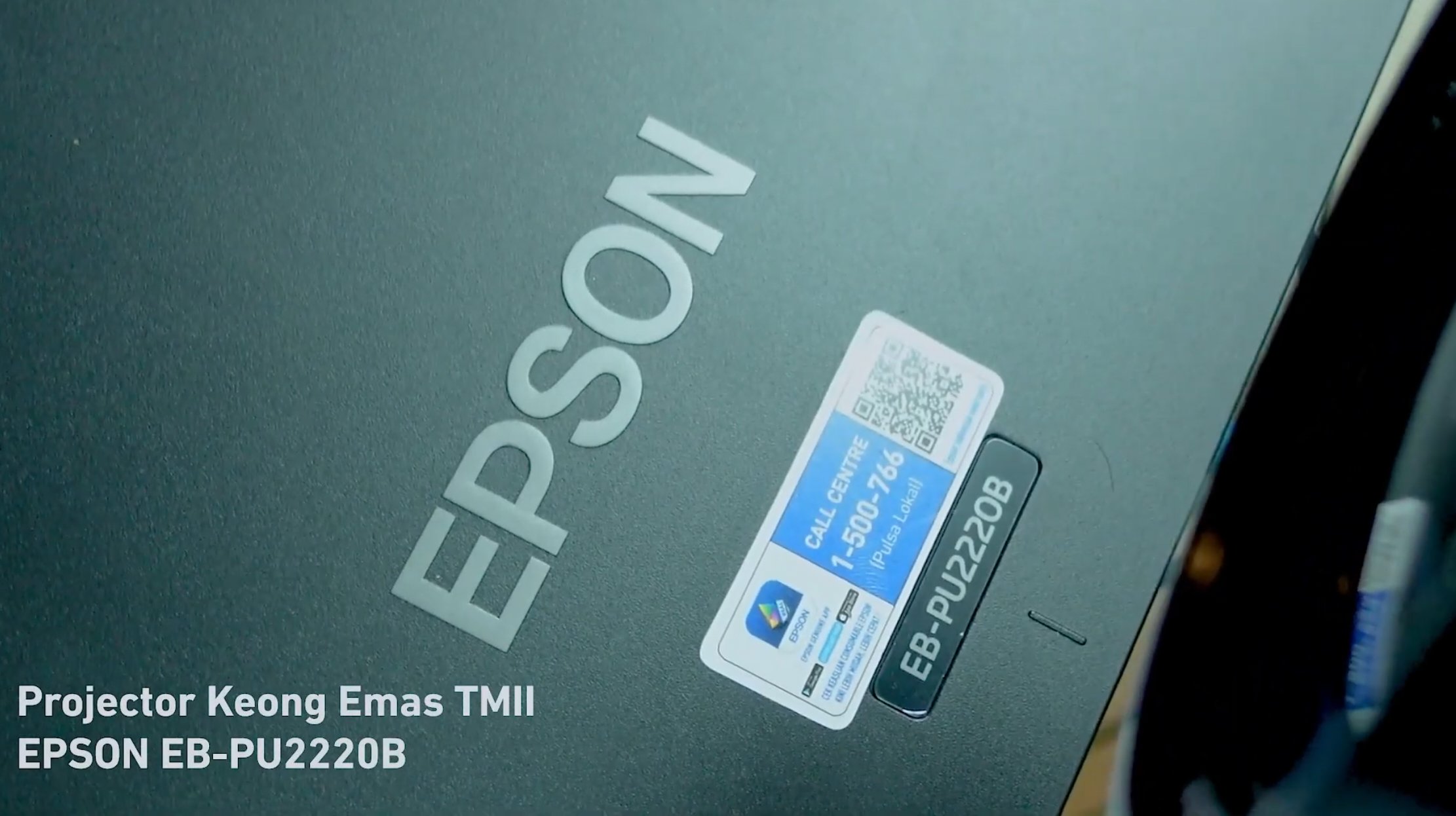
According to TMII's current public information, Keong Mas now uses modern digital projection. The original IMAX 70mm presentation is no longer part of its regular operation, although TMII does not publicly state what ultimately happened to the original projection equipment.
A Legacy Few People Remember
Today, IMAX theaters are no longer rare in Southeast Asia. But while the region now has dozens of IMAX screens, they all rely on digital projection.
Keong Mas belongs to a different chapter of cinema history. Long before IMAX 70mm became widely known, Jakarta was already home to Southeast Asia's only theater capable of projecting movies from giant 70mm film reels.