


The fourth day of ICOM CECA Annual Conference 2026, held on 13 November, took delegates beyond Jakarta’s conference venues and into the city’s diverse cultural landscapes. From archaeological islands and Betawi traditions to the collections of Taman Mini Indonesia Indah (TMII), the day offered a closer look at Indonesia’s heritage before concluding with international discussions at the Goethe-Institut Jakarta on the role of museums in a divided world.
The programme brought together cultural experiences and professional exchange under the conference theme, “Museums in Divided Times: How to Foster Dialogue, Caring and a Sense of Belonging?” Organised by Musee ID in collaboration with the Jakarta Provincial Government, Good News From Indonesia (GNFI), and ICOM Germany, with support from ICOM Indonesia, the conference was expected to attract more than 200 museum professionals from over 50 countries. Its wider context was equally significant: UNESCO estimated approximately 104,000 museums worldwide in 2021, while Indonesia recorded 516 museums as of April 2026, including 373 nationally registered institutions and 234 that had achieved standardisation.
Onrust, Cipir and Kelor: Exploring Jakarta’s Maritime Past
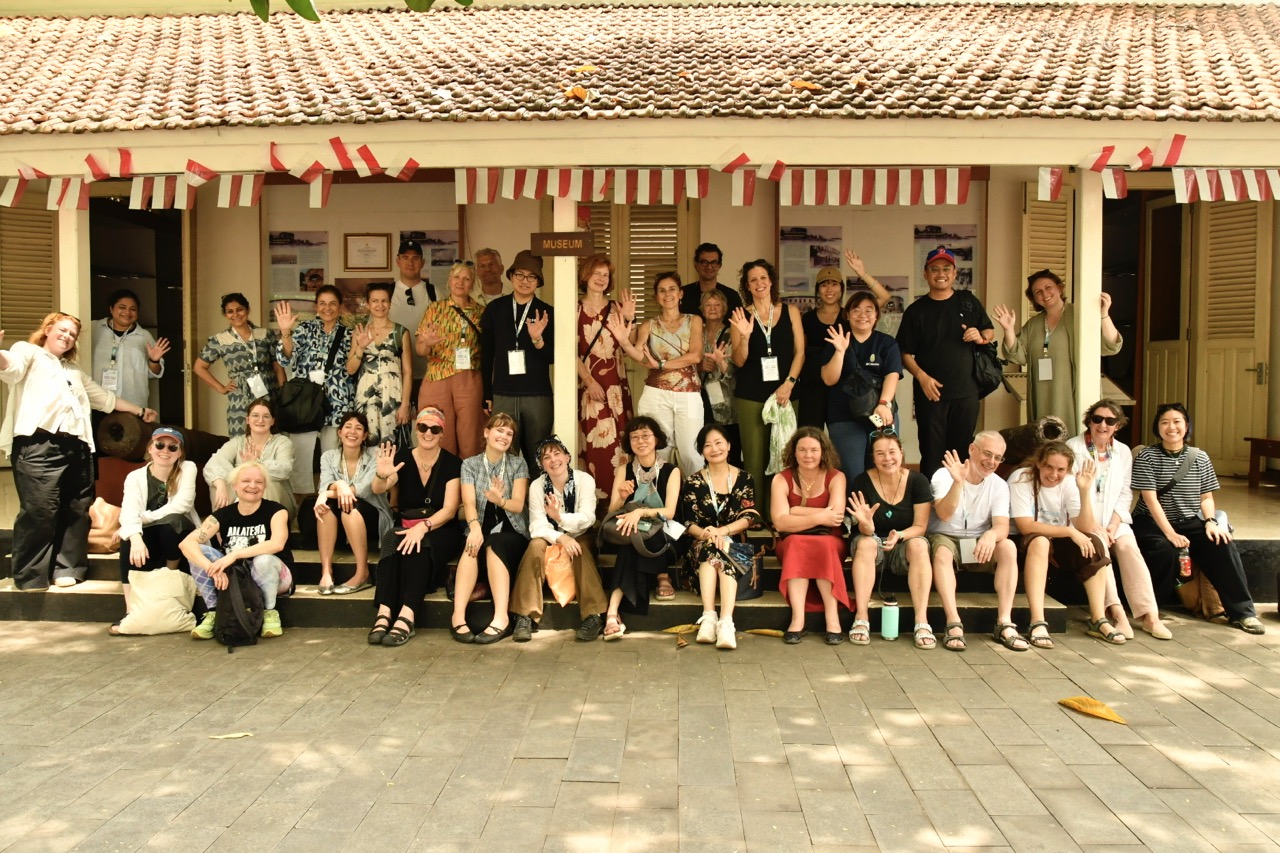
One group travelled to the Kelor, Cipir and Onrust Archaeological Islands in the Thousand Islands, north of Jakarta. The excursion offered delegates an opportunity to explore a different dimension of the capital’s history, away from its busy streets and modern skyline.
The islands preserve important traces of Jakarta’s maritime and colonial past. Onrust, in particular, played a significant role in the activities of the Dutch East India Company (VOC), serving as a port and shipyard from the seventeenth century. Its archaeological remains provide a glimpse into the maritime networks that connected Batavia with wider regional and international trading routes.
For museum professionals, the visit demonstrated how archaeological sites can become outdoor learning environments. Historical buildings, ruins and landscapes offer opportunities to interpret the past beyond conventional exhibition spaces, connecting physical heritage with the stories of people, trade and communities that shaped the region.
Setu Babakan: Discovering the Living Traditions of Betawi Culture
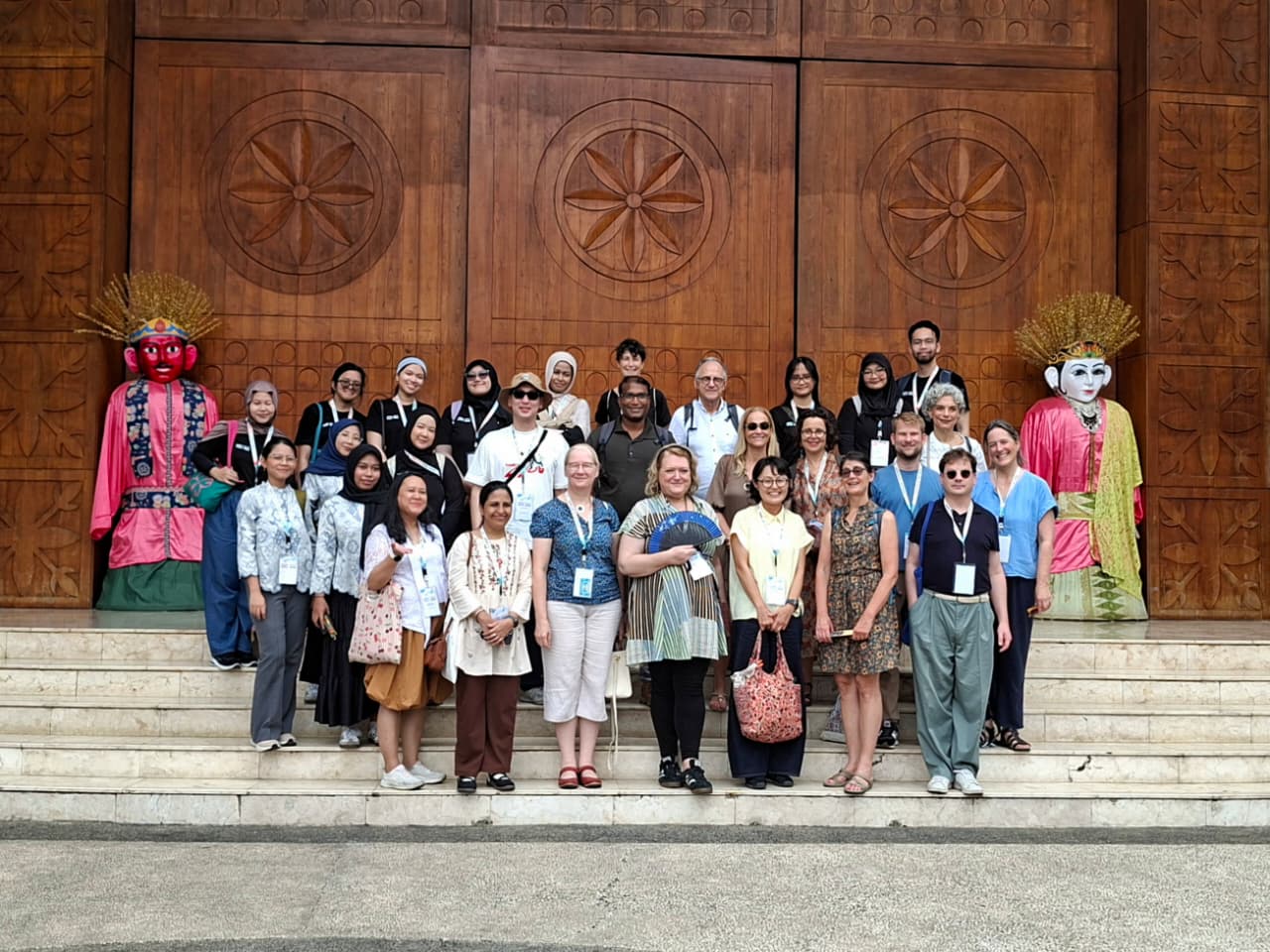
Another group joined the South Jakarta Heritage Tour, which included a visit to Setu Babakan, the Betawi Cultural Village. Designated as a cultural village in 2004, Setu Babakan is an important centre for preserving and introducing the traditions of Jakarta’s indigenous Betawi community.
Unlike a conventional museum visit, the experience brought delegates closer to cultural practices that remain part of everyday life. Participants were introduced to local culinary traditions, including selendang mayang, a colourful traditional Betawi dessert, and took part in a traditional cake-making workshop.
The experience highlighted the connection between cultural preservation and community participation. Betawi heritage is expressed not only through historical objects and traditional houses, but also through food, craftsmanship, language, performing arts and the knowledge passed between generations.
For international delegates, Setu Babakan offered a practical example of how a cultural destination can support living heritage by involving local communities in sharing their traditions with visitors.
TMII: A Journey Through Indonesia’s Artistic and Cultural Diversity
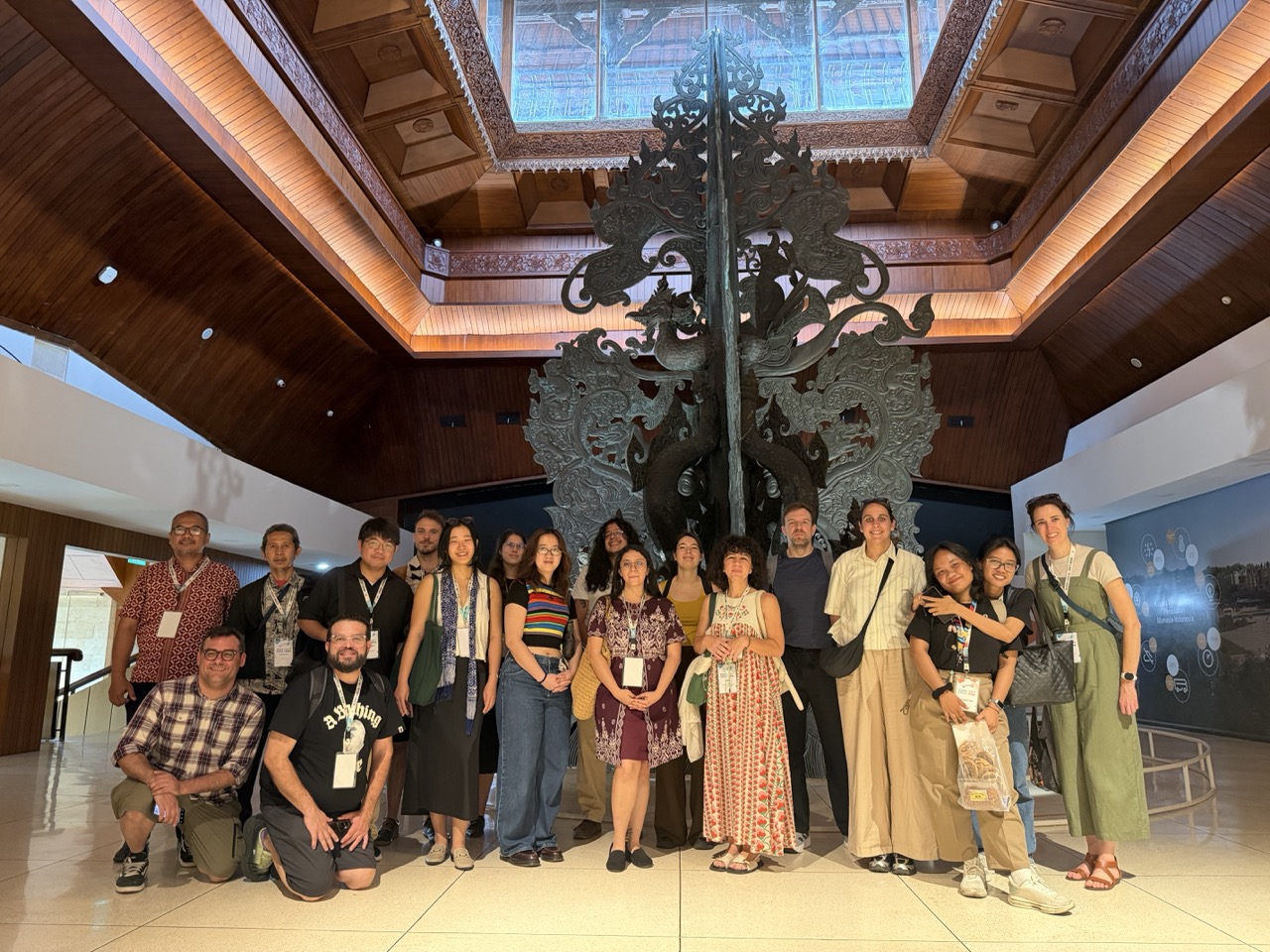
At Taman Mini Indonesia Indah, participants explored four cultural institutions: Museum Indonesia, the Contemporary Art Gallery, Museum Batik Indonesia and Museum Pusaka, which presents Indonesia’s heritage of traditional heirlooms, including the keris.
The visits offered different perspectives on the country's cultural identity. Museum Indonesia introduces visitors to the diversity of Indonesian society and its regional traditions, while the Contemporary Art Gallery provides a space for engaging with artistic expressions in a modern context.
Museum Batik Indonesia presented another important dimension of the country's intangible heritage. Batik was recognised by UNESCO in 2009 as an element of humanity’s intangible cultural heritage, and the museum houses more than 800 collections that document its techniques, patterns and development across Indonesia. Meanwhile, Museum Pusaka introduced participants to the historical and cultural significance of traditional heirlooms, particularly the keris.
TMII itself brings together 15 museums, making it a significant destination for cultural and educational visits in the capital. By exploring four of its institutions, delegates encountered different ways of presenting Indonesia’s history, creativity and cultural knowledge to the public.
Learning from Indonesia: Museums That Listen to Their Communities
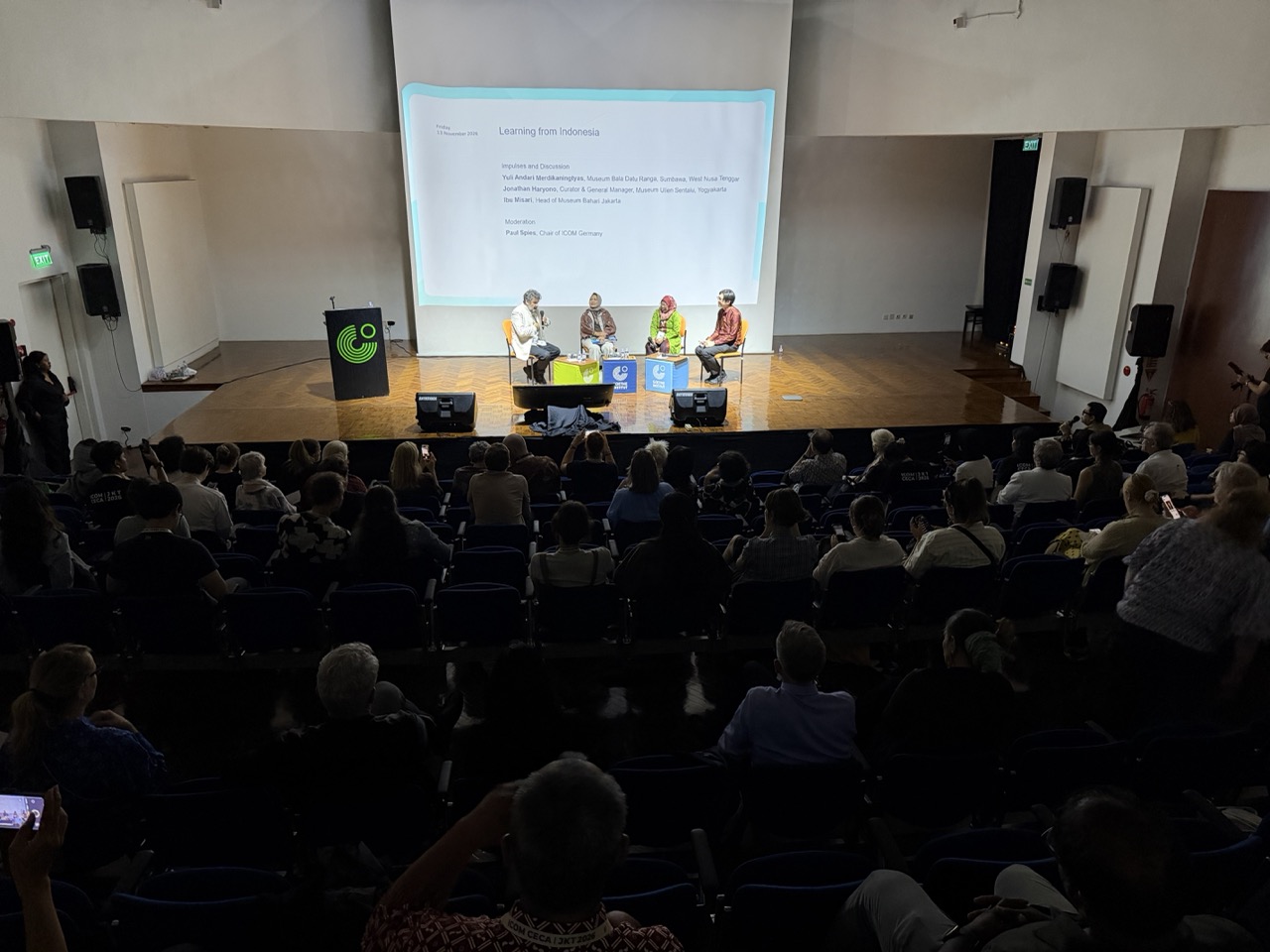
The day's programme continued at the Goethe-Institut Jakarta, where ICOM Germany hosted the conference's closing sessions and reception. Among the highlights was Impulses & Talk: Learning from Indonesia, moderated by Paul Spies, Chair of ICOM Germany. The session brought together three Indonesian museum practitioners: Mis'ari, Head of Museum Bahari Jakarta; Jonathan Haryono, Curator and General Manager of Museum Ullen Sentalu in Yogyakarta; and Yuli Andari Merdikaningtyas, representing Museum Bala Datu Ranga in Sumbawa, West Nusa Tenggara.
Their presentations demonstrated how meaningful museum programmes can begin by listening to the communities around them. Mis'ari shared how she invited local fishermen to meet with the museum team and discuss their ideas about how Museum Bahari could contribute more directly to their livelihoods. The approach reflected a shift from viewing communities simply as audiences to recognising them as partners whose knowledge and needs should influence museum activities.
Jonathan Haryono explained that his motivation to nurture Javanese culture came partly from observing close relatives gradually losing touch with their Javanese roots, language, traditions and heritage. His experience highlighted the importance of making cultural knowledge accessible to younger generations and ensuring that family and community histories remain part of contemporary life. In a 2024 interview, he described the broader ambition of his work as seeking to “change the image of museums once known as old-fashioned into something lively and familiar to the public.”
Yuli Andari brought a perspective from Sumbawa, where she and her colleagues encountered communities unfamiliar with the concept of a museum. Rather than assuming that people already understood the institution, they began by bringing community members together to introduce the role of museums and the importance of documenting and preserving local history through archiving. Her approach illustrated how museum education can start with building awareness and trust at the community level.
In an earlier statement, Yuli expressed her aspiration for Museum Bala Datu Ranga to become “a cultural meeting space that embraces the creative energy of people and communities in Sumbawa.” Together, the three experiences showed how museums can develop beyond traditional exhibition spaces to become places of community participation, cultural learning and shared ownership.
Can Museums Ever Be Neutral? Rethinking History and Representation
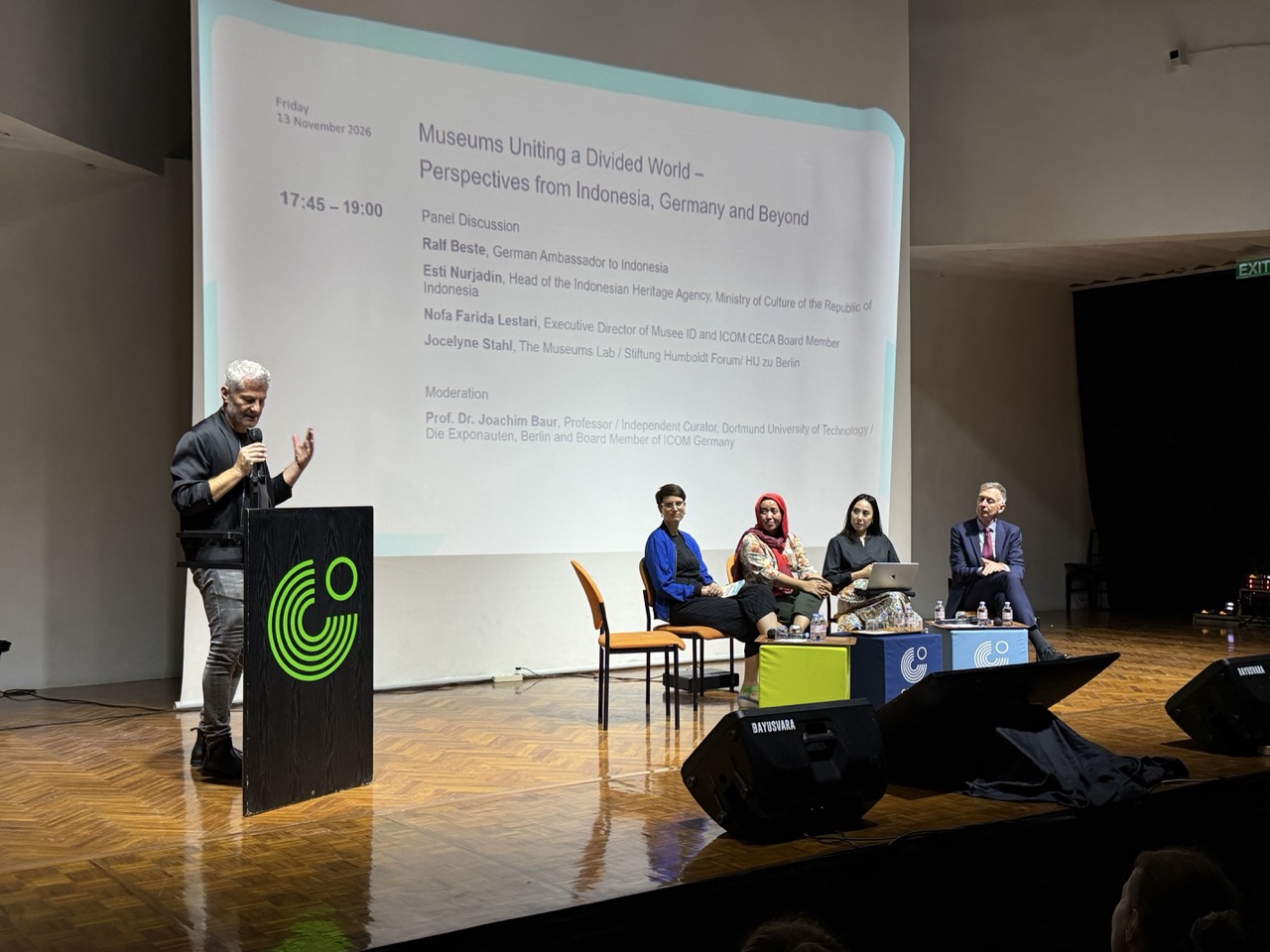
The closing panel, Museums Uniting a Divided World: Perspectives from Indonesia, Germany and Beyond, brought a more challenging question to the discussion: can museums ever be neutral?
Moderated by Prof. Dr. Joachim Baur, Professor and Independent Curator at Dortmund University of Technology and Die Exponauten, Berlin, as well as a Board Member of ICOM Germany, the panel featured Ralf Beste, German Ambassador to Indonesia; Esti Nurjadin, Head of the Indonesian Heritage Agency; Nofa Farida Lestari, Executive Director of Musee ID and ICOM CECA Board Member; and Jocelyne Stahl of The Museums Lab, Stiftung Humboldt Forum and Humboldt University of Berlin.
The discussion explored how historical interpretation can differ according to national experience, political context and cultural perspective. Ambassador Beste referred to relations between Germany and Namibia as an example of the complex connections between historical memory and contemporary international relations. Esti Nurjadin highlighted the narratives presented at Museum Pancasila, while Nofa Farida Lestari discussed how interpretations of history at a museum in Singapore could differ from perspectives commonly found in Indonesia.
These examples raised important questions about the responsibilities of museums when presenting contested histories. Decisions about which objects are collected, which stories are displayed and whose voices are included inevitably shape public understanding. Rather than treating neutrality as a simple default, museums must acknowledge different perspectives, provide historical context and create opportunities for informed dialogue.
A Shared Future for Museum Learning and Cultural Exchange
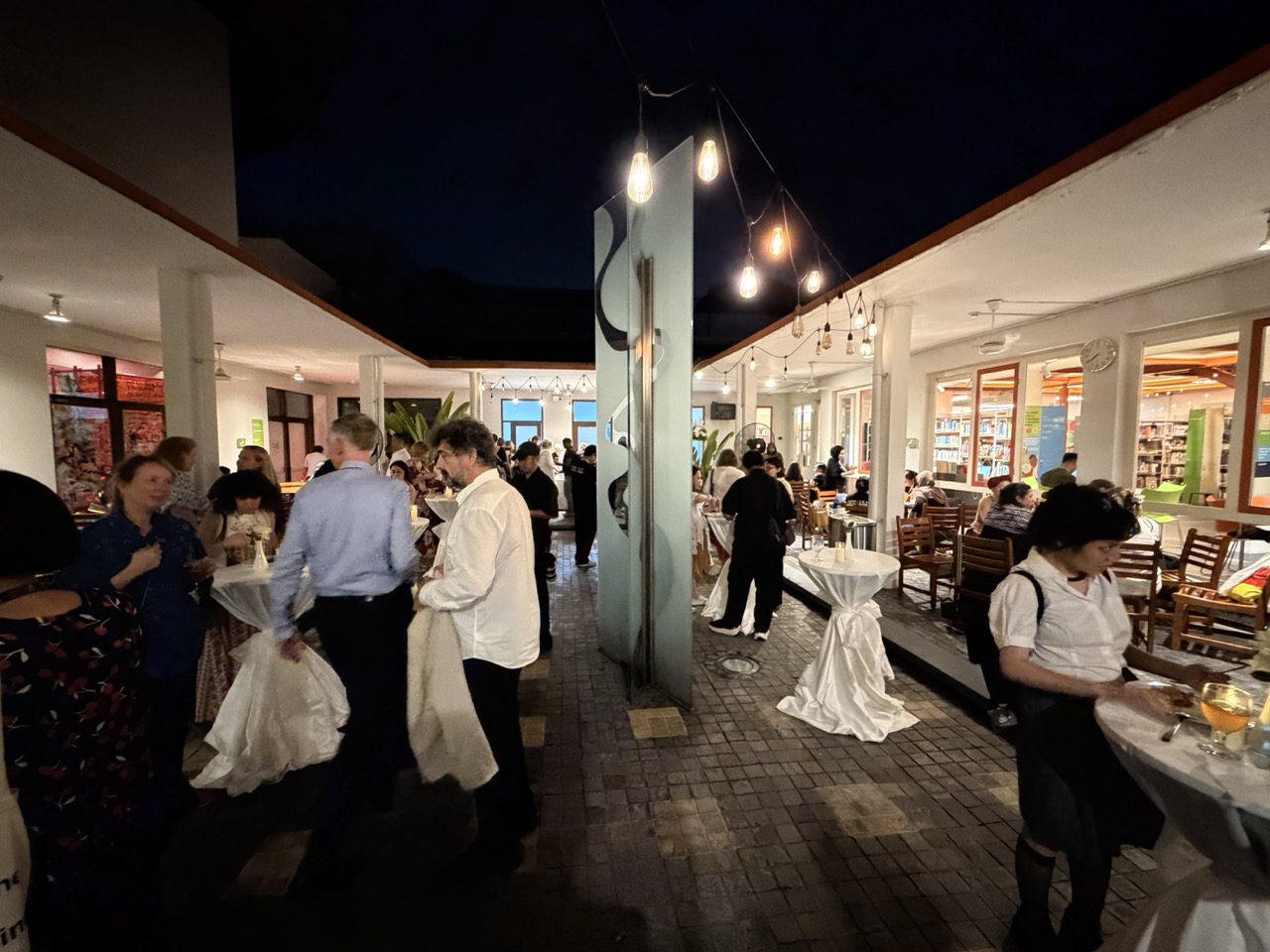
The programme at Goethe-Institut Jakarta also looked ahead to the future of museum education through a youth forum, a World Café discussion and a series of oral poster presentations. The youth forum, led by Harriet Meyer of the Baden State Museum in Karlsruhe and Rebecca Stoll of Galerie Bernau, invited emerging museum professionals to share their ideas about museums as spaces for dialogue, care and belonging. Meanwhile, Eliphas Nyamogo of Goethe-Institut Jakarta facilitated a World Café exploring how museums and libraries can serve as shared spaces of knowledge. The poster presentations added an international dimension, featuring projects and experiences from museum professionals representing countries including Brazil, Russia, Armenia, Canada, Germany, Malaysia and Hong Kong.
As the conference's final sessions concluded, delegates gathered for the closing reception and dinner in the Goethe-Institut's courtyard. The informal gathering provided a fitting opportunity to continue conversations, exchange contacts and celebrate the connections built over four days. From Indonesia's community-based museum initiatives to international perspectives on education, heritage and inclusion, ICOM CECA 2026 concluded with a shared commitment to making museums more accessible, engaging and meaningful to the communities they serve.


