


For generations, mobility has been woven into the rhythm of Filipino life. From jeepneys navigating the busy streets of Manila to tricycles connecting communities in provincial towns, transportation has always been more than movement—it is a lifeline for work, education, and opportunity. Today, a new chapter is unfolding as electric vehicles gain momentum across the archipelago.
What began as a niche market for environmentally conscious consumers is rapidly becoming a practical solution to rising fuel costs, urban congestion, and energy security concerns. Across the Philippines, the EV transition is increasingly being driven not only by sustainability goals but also by economic realities affecting millions of households.
Rising Fuel Prices Spark a New Conversation
One of the biggest catalysts behind the country's EV growth has been the impact of global fuel price volatility. Sharp increases in gasoline and diesel prices over recent years have placed additional pressure on commuters, transport operators, and businesses alike.
As a result, many Filipinos have begun exploring alternatives. Electric vehicles offer significantly lower operating costs, with daily charging expenses often costing only a fraction of what drivers would spend on fuel. This economic advantage has fueled growing consumer interest, particularly among urban professionals, ride-hailing drivers, and fleet operators.
Dealerships across Metro Manila, Cebu, and Davao have reported strong demand, with some suppliers struggling to keep pace as waiting lists for popular models continue to grow.
EVIDA Provides the Foundation
Behind the market's rapid expansion is strong government support through the Electric Vehicle Industry Development Act, more commonly known as EVIDA.
The legislation provides a comprehensive framework for EV adoption, including incentives for consumers, manufacturers, and investors. It also mandates the gradual integration of electric vehicles into government and corporate fleets.
President Ferdinand Marcos Jr. has repeatedly emphasized the importance of modernizing transportation while strengthening the country's energy security. Complementing this vision, tariff exemptions for battery electric vehicles, hybrid vehicles, and key components have been extended until 2028, helping keep vehicle prices competitive and encouraging foreign investment.
Government agencies have also committed to increasing EV usage within public fleets, creating a stable source of institutional demand that supports long-term industry growth.
A Competitive Market Takes Shape
The Philippine EV market has become one of Southeast Asia's most dynamic battlegrounds for automotive brands.
Chinese manufacturers have emerged as dominant players, with BYD capturing a substantial share of the passenger EV market. The arrival of premium brands and models, including Tesla and BYD's luxury marque Denza, reflects a market that is rapidly maturing beyond its early-adopter phase.
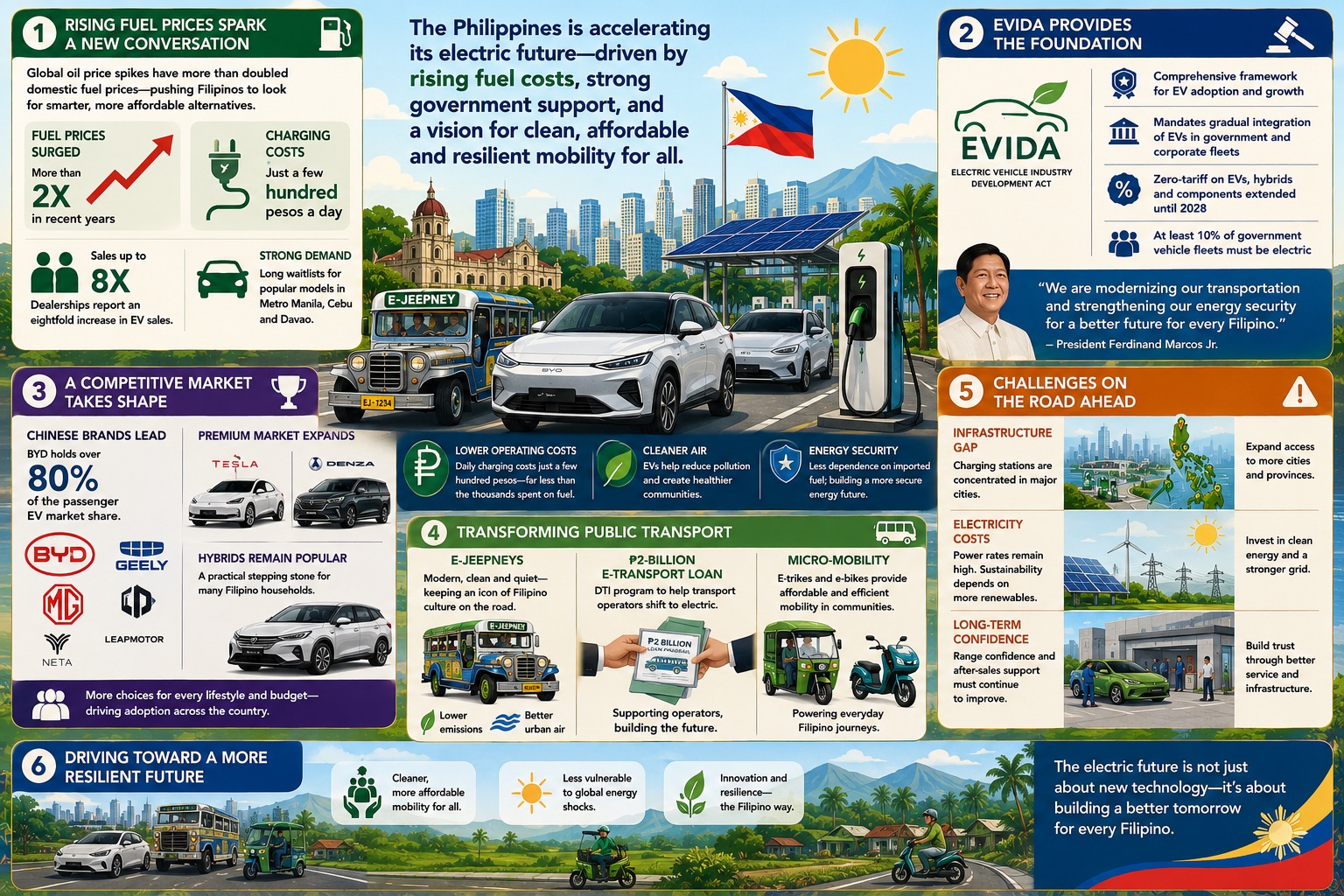
At the same time, hybrid electric vehicles remain highly popular among consumers who are interested in reducing fuel consumption but remain concerned about charging availability. For many Filipino households, hybrids serve as a practical stepping stone toward full electrification.
The diversity of vehicle options now available is helping expand EV adoption across different income groups and geographic regions.
Transforming Public Transport
Perhaps the most visible aspect of the Philippines' EV transition can be found in public transportation.
The modernization of traditional jeepneys into electric jeepneys has become a symbol of the country's efforts to improve air quality while preserving an iconic element of Filipino culture. These e-jeepneys offer cleaner and quieter transportation while maintaining the community-centered role that jeepneys have long played in everyday life.
The Department of Trade and Industry has supported this shift through a ₱2-billion e-transport financing program designed to assist operators transitioning to cleaner vehicles.
Beyond urban centers, electric tricycles and e-bikes are becoming increasingly common in provincial communities, where they provide affordable and efficient mobility solutions for short-distance travel.
Challenges on the Road Ahead
Despite impressive progress, significant obstacles remain.
Charging infrastructure continues to be concentrated in major economic centers such as Metro Manila, Cebu, and Davao. Expanding access to smaller cities and rural provinces will be essential if EV adoption is to reach its full potential.
Electricity costs also remain a concern. While EVs generally offer lower operating expenses than conventional vehicles, the long-term success of the sector will depend partly on expanding renewable energy generation and improving grid efficiency.
Energy Secretary Raphael P.M. Lotilla has emphasized that transportation electrification and renewable energy development must advance together to maximize both economic and environmental benefits.
Driving Toward a More Resilient Future
The Philippines' EV journey is about far more than adopting new technology. It reflects a broader effort to create a transportation system that is cleaner, more affordable, and less vulnerable to global energy shocks.
From e-jeepneys serving city commuters to electric tricycles supporting provincial livelihoods, the transition is already becoming part of everyday Filipino life. Challenges remain, but the momentum is unmistakable. As infrastructure expands and public confidence grows, the Philippines is steadily building an electric future powered not only by innovation, but also by the resilience and adaptability that have long defined the Filipino spirit.


