


Vietnam has quietly become one of the world's favorite destinations for digital nomads—and for good reason.
From the surf-friendly coastline of Da Nang and the entrepreneurial energy of Ho Chi Minh City to the timeless charm of Hanoi and the lantern-lit tranquility of Hoi An, Vietnam offers a rare combination of affordability, reliable digital infrastructure, outstanding food, and a rich cultural experience. Combined with expanded multiple-entry e-Visas and rapidly improving connectivity, the country is attracting a growing community of freelancers, startup founders, remote employees, and creative professionals seeking both productivity and quality of life.
Da Nang: Vietnam's Coastal Digital Nomad Capital
Few cities have risen as quickly in the remote work world as Da Nang. Stretching between the white sands of My Khe Beach and the lush mountains of the Son Tra Peninsula, the city offers an enviable work-life balance that has become increasingly rare across Asia.
The beachside district of An Thuong has evolved into a thriving international neighborhood filled with coworking spaces, boutique cafés, healthy restaurants, fitness studios, and apartments designed for long-term stays. High-speed fiber internet, relatively light traffic, and modern infrastructure make daily life remarkably efficient.
Recognizing its growing international appeal, the Da Nang People's Committee has positioned the city as a destination for digital entrepreneurs and innovation, with local officials describing the city's ambition to become "a regional innovation and digital transformation hub" while actively supporting startups and international talent.
Unlike many major Asian cities, mornings in Da Nang can begin with surfing or cycling along the beach before settling into a café overlooking the sea for a full day's work.
Ho Chi Minh City: Southeast Asia's Startup Powerhouse
If Da Nang represents balance, Ho Chi Minh City represents ambition.
Vietnam's largest city is the country's commercial engine, where millions of motorbikes weave through skyscrapers, historic French architecture, rooftop lounges, technology parks, and bustling street markets. District 1 remains the financial center, while Thao Dien has become the preferred neighborhood for international professionals seeking modern apartments, international schools, and vibrant café culture.
Coworking brands such as Dreamplex, Toong, and The Hive have transformed the city into one of Southeast Asia's strongest startup ecosystems. Networking events, venture capital meetups, and technology conferences occur almost every week, attracting entrepreneurs from across Asia.
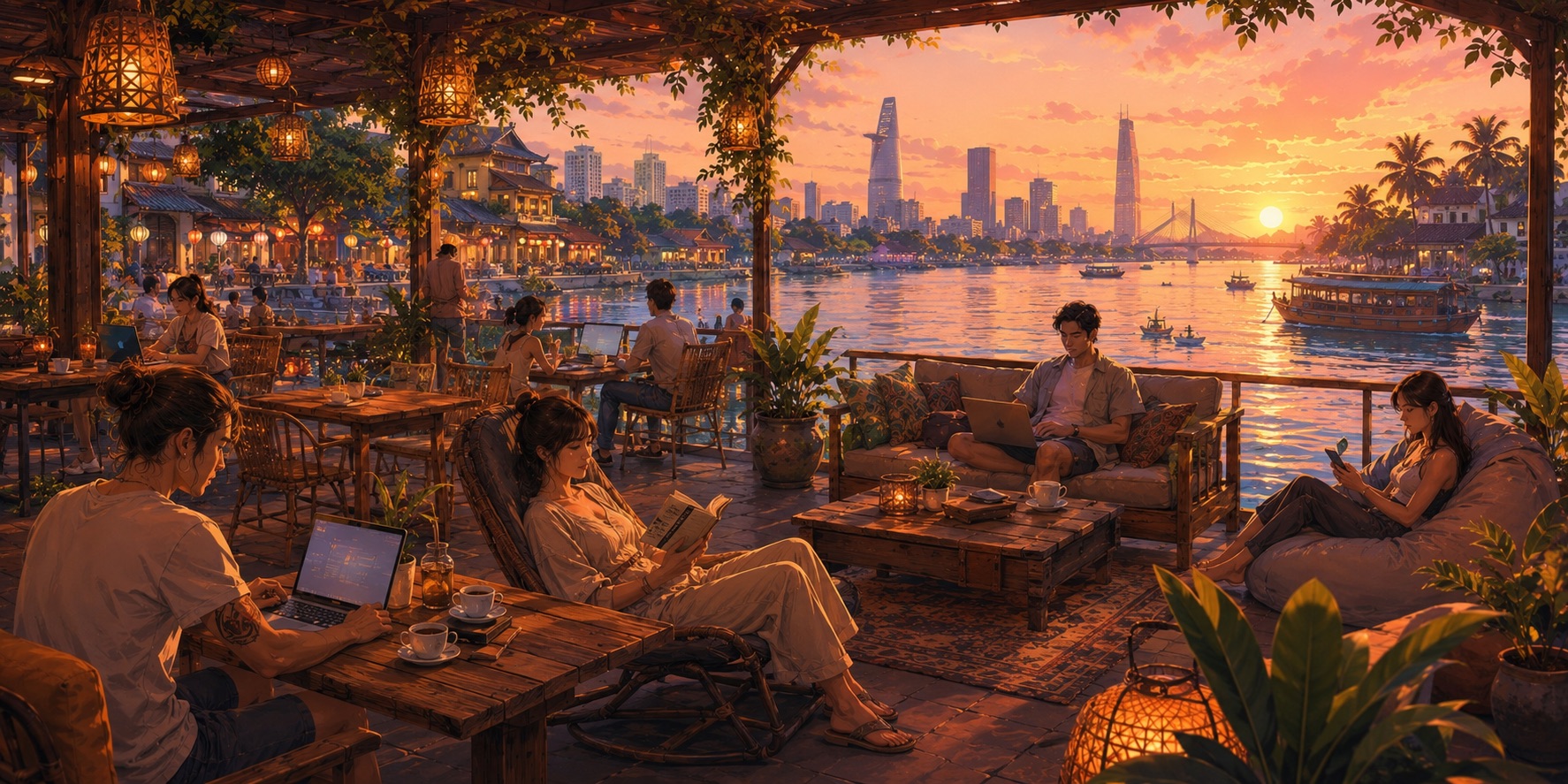
Digital nomad Pieter Levels, founder of Nomad List, once described Ho Chi Minh City as "one of the best places in the world to build a startup because you can focus entirely on your work while keeping living costs low."
For professionals building businesses, Vietnam's economic capital offers the pace and opportunities of a global city without the financial burden often associated with Singapore or Hong Kong.
Hanoi: Productivity Meets Heritage
Vietnam's capital moves to a different rhythm.
Around Hoan Kiem Lake and throughout the Old Quarter, centuries-old temples stand beside French colonial buildings and family-owned cafés that have served locals for generations. Hanoi's famous coffee culture has become one of its greatest attractions for remote workers.
The city's legendary egg coffee, traditional drip coffee, and endless supply of laptop-friendly cafés provide ideal environments for writers, designers, researchers, and creative professionals. Many choose Tay Ho (West Lake) as their base, enjoying quieter streets while remaining connected to the city's cultural heart.
Beyond work, Hanoi serves as the gateway to northern Vietnam's iconic destinations, including Ha Long Bay, Ninh Binh, and Sapa, making weekend escapes both affordable and convenient.
Hoi An: Where Slow Living Inspires Creativity
Just thirty minutes south of Da Nang lies a completely different world.
Hoi An's UNESCO-listed Ancient Town is famous for its yellow merchant houses, lantern-lined streets, riverside cafés, and nearby rice paddies. The atmosphere encourages slower living, making it increasingly attractive to artists, authors, wellness practitioners, photographers, and entrepreneurs looking to escape the pressures of large cities.
Coworking spaces, boutique cafés, and eco-friendly accommodations have gradually emerged around An Bang Beach and Cam Chau, allowing professionals to work while remaining surrounded by nature. Many residents commute by bicycle, enjoy organic farm-to-table cuisine, and spend evenings strolling beside the Thu Bon River illuminated by thousands of colorful lanterns.
Rather than maximizing productivity through speed, Hoi An encourages creativity through balance.
Affordable Living, Exceptional Connectivity
Vietnam continues to offer one of the strongest value propositions for remote professionals worldwide.
Many digital nomads comfortably maintain a lifestyle on approximately US$1,000 to US$1,500 per month, including modern apartments, coworking memberships, transportation, and frequent dining at local restaurants. A bowl of authentic phở or bánh mì often costs only a few dollars, while specialty coffee remains among the most affordable anywhere in Asia.
As the world's second-largest coffee producer, Vietnam has developed an extraordinary café culture that naturally complements remote work. Reliable Wi-Fi, air-conditioned interiors, affordable beverages, and welcoming atmospheres make cafés an extension of the office.
Travel between cities is equally straightforward. Vietnam's expanding domestic airline network, overnight sleeper trains, and modern highways allow digital nomads to relocate between Hanoi, Da Nang, Ho Chi Minh City, and Hoi An with relative ease, making multi-city living increasingly practical.
Vietnam's Growing International Appeal
Vietnam's rise is reflected in its tourism figures. The country welcomed approximately 17.6 million international visitors in 2024, approaching pre-pandemic levels and reaffirming its position among Southeast Asia's fastest-growing tourism destinations. The government aims to attract 22–23 million international arrivals in 2025, supported by expanded visa policies, improved aviation connectivity, and continued tourism investment.
Vietnam's multiple-entry electronic visa system, available for citizens of many countries, now permits stays of up to 90 days, making it significantly easier for remote workers and long-term travelers to base themselves in the country while exploring different regions.
Prime Minister Phạm Minh Chính has repeatedly emphasized that tourism should become "a spearhead economic sector" while encouraging digital transformation, innovation, and higher-quality international services that support sustainable growth.
A Destination That Balances Work and Life
Vietnam's greatest advantage is not simply affordability—it is variety.
Few countries allow professionals to spend one month building a startup in Ho Chi Minh City, the next surfing before work in Da Nang, another writing from a quiet café in Hanoi, and weekends cycling through Hoi An's rice fields without dramatically increasing their living expenses.
For digital nomads seeking fast internet, exceptional food, rich culture, welcoming communities, and remarkable value, Vietnam has quietly become one of the most compelling remote work destinations not only in Southeast Asia, but in the world.


