The next time you call customer support and hear a warm, easy to understand voice on the other end, pause for a second. There’s a good chance you’re not talking to anyone in the US, UK, or Australia at all.
You might be talking to someone sitting in a high rise office tower in Philippines. Thousands of miles away, who’s never even visited the country whose customers they help every single day.
So What Does "Call Center Capital" Even Mean?
That country is the Philippines, and the industry behind it is called Business Process Outsourcing (BPO).
Essentially companies paying someone else to handle the parts of their business they don’t want to run in house, like phone support, live chat, or billing questions.
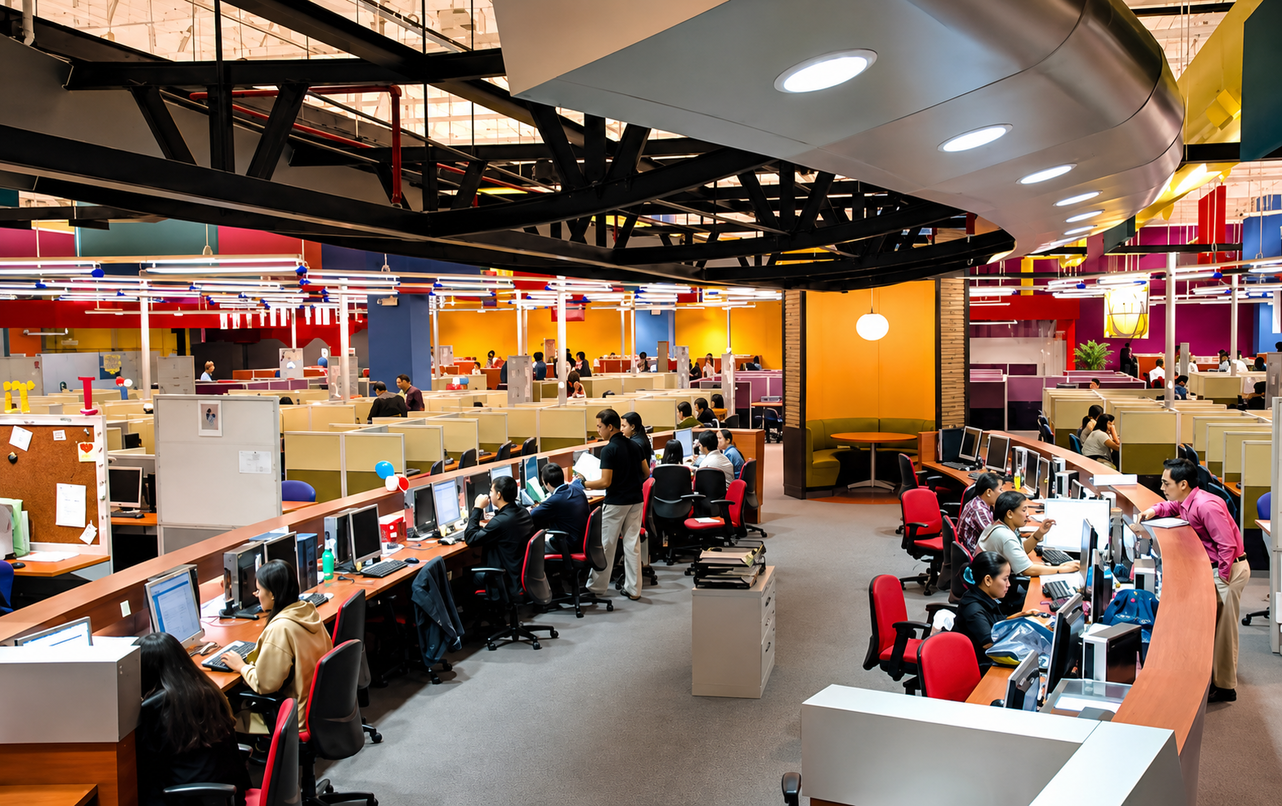
Within that broader BPO world, the Philippines has carved out a very specific lead. It is the largest BPO market on thr world specifically for voice based services.
Meaning actual phone calls having overtaken India, a country that instead built its outsourcing reputation around IT and software work rather than phone support.
How the Phillippines Took the Crown
The Philippines officially passed India in the number of call center agents back in 2010, and it has held the title of the world’s call center capital ever since.
Before that, India had been the early leader starting in the 1980s, riding on its large English speaking population. While the Philippines only began carving out its own niche in the early 2000s by zeroing in specifically on customer service and voice support.
Once the shift happened, it happened fast. By the mid 2010s, the Philippines had already become the world’s top destination for voice based call centers. India reportedly lost as much as 70% of its call center business to the Philippines and other rising competitors.
Just How Big Is This Industry?
Pretty massive, as it turns out. The industry is expected to bring in up to $39.9 billion in revenue in 2025, growing steadily at 5-7% per year, and the workforce has climbed from 1.79 million employees in 2024 to nearly 1.9 million today.
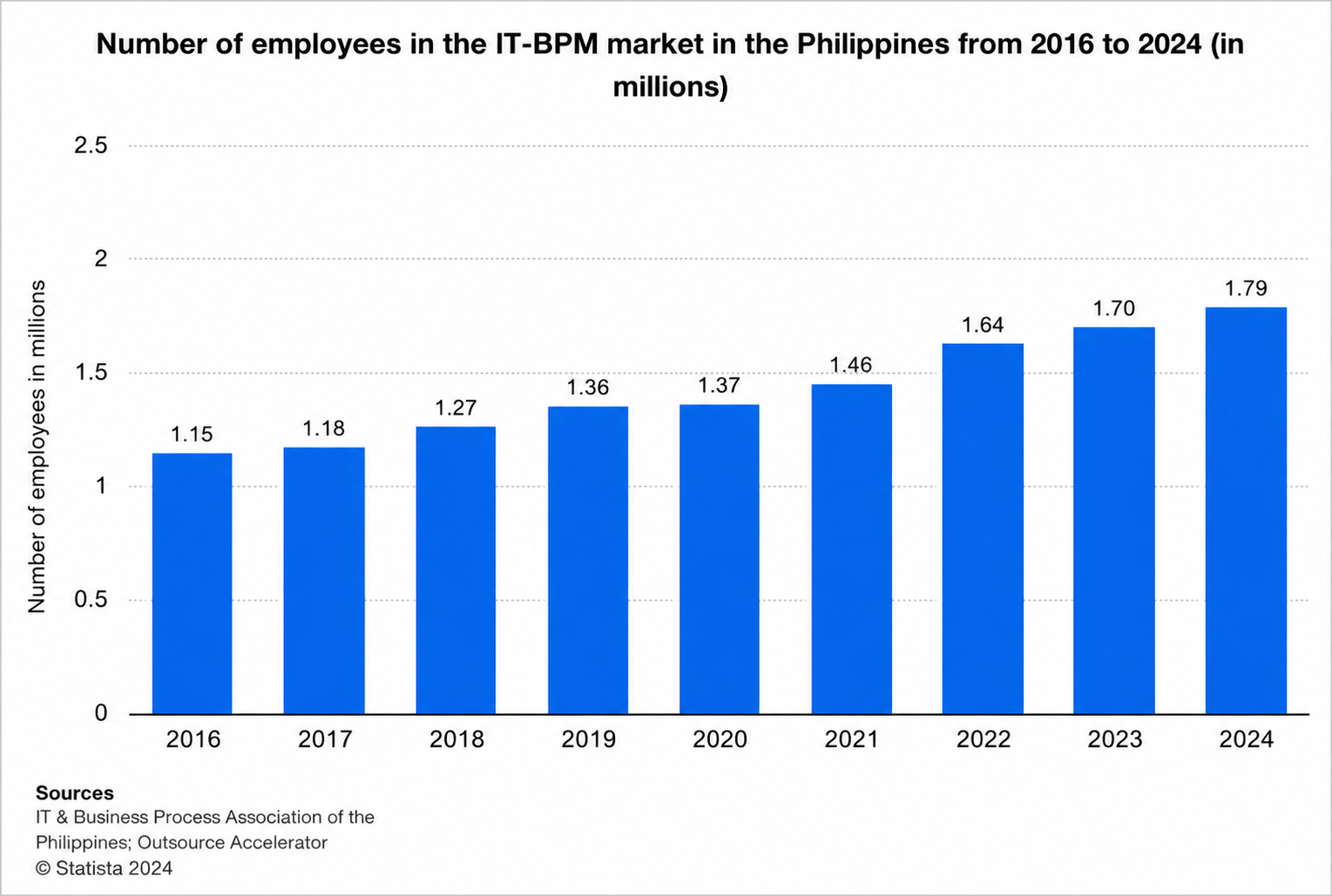
Looking at the slightly broader IT-BPM sector, the Philippines generated $40 billion in revenue in 2025 alone, spread across more than 850 companies, and now contributes over 7% of the entire country’s GDP.
On the global stage, that adds up to real weight.
The Philippines now holds 16% of the world’s entire outsourcing market, inside a global BPO industry worth roughly $328.37 billion.
Why Companies Keep Choosing the Philippines?
Three factors consistently stand out.
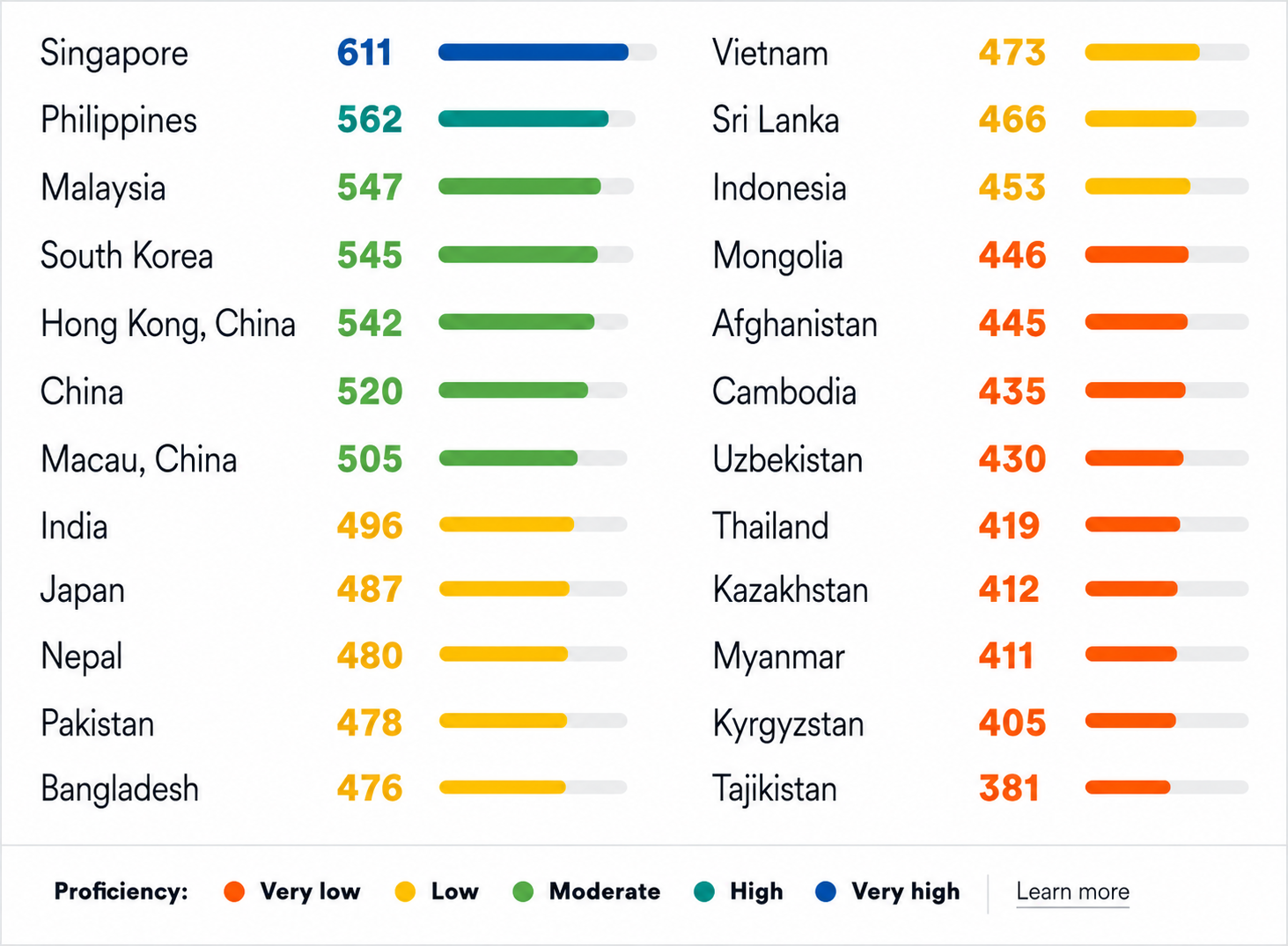
First is English proficiency. The Philippines ranked 28th globally and second in Asia in the 2025 EF English Proficiency Index, with English used extensively in schools, government, and everyday business.
Second is its young and educated workforce. With a median age of just 26 and a literacy rate exceeding 99%, the country provides a large and continuously growing talent pool ready to enter the industry.
Finally, there's the cost advantage. Hiring customer service agents in the Philippines typically costs 70-80% less than employing equivalent staff in the United States or the United Kingdom.
Once total employment costs are considered, while benchmark studies show Filipino agents continue to achieve customer satisfaction scores that remain close to those of their American counterparts.
Where All This Actually Happens
This isn’t just a Manila story. Major hubs are spread across the country.
Metro Manila, Cebu IT Park, Davao’s Matina IT Park, Bacolod’s Lopue’s IT Center, and Iloilo Business Park.
Backed by government support through investment in 5G, cloud infrastructure, cybersecurity, and tax incentives offered through PEZA economic zones.