Suea Rong Hai is a traditional grilled beef dish originating from the Isan region of Northeast Thailand. This legendary culinary creation is now immensely popular among spicy food lovers across the globe due to its remarkably unique flavor profile.
The unusual name literally translates to "Crying Tiger" among local communities. This designation instantly sparks intense curiosity for international travelers visiting the country.
The Starving Tiger Legend
The origin of this culinary name is deeply rooted in an ancient folklore about a starving tiger in a dense forest. The tiger successfully hunted and devoured an entire fat cow without leaving anything behind.
However, the powerful predator was forced to abandon the lower brisket section because the texture was notoriously too tough to chew. The tiger suddenly burst into tears of sadness while staring at the remaining piece of meat.
Ironically, that specific area was actually packed with thick layers of incredibly savory fat. The wild beast felt utterly frustrated because its sharp fangs failed to pierce the tough knit of rigid muscle fibers. This profound regret of the ancient predator eventually inspired local people to name this iconic grilled menu.
Melting Fat Stripe Illusion
The specific cut of meat lamented by the tiger became the primary technical reason behind this highly theatrical naming. Isan locals specifically utilize only the lower beef brisket, which naturally possesses a very thick outer layer of white fat tissue.
This fat melts slowly when grilled over glowing hot wood charcoal embers. The hot fat drippings hitting the charcoal create a constant, loud sizzling sound across the grill.
This fat-burning process triggers clouds of dense aromatic smoke that simultaneously cooks, imparts a natural char aroma to the entire meat surface. The melting hot oil eventually creates golden-yellow streaks mixed with white on the outer surface.
The contrasting streaks from the char process closely resemble the stripe patterns on a wet wild tiger's coat. These savory oil droplets that continue to ooze out like the tiger's tears of frustration are what reinforce the visual naming of Suea Rong Hai when served on a plate.
Extreme Nam Chim Chaeo Burn
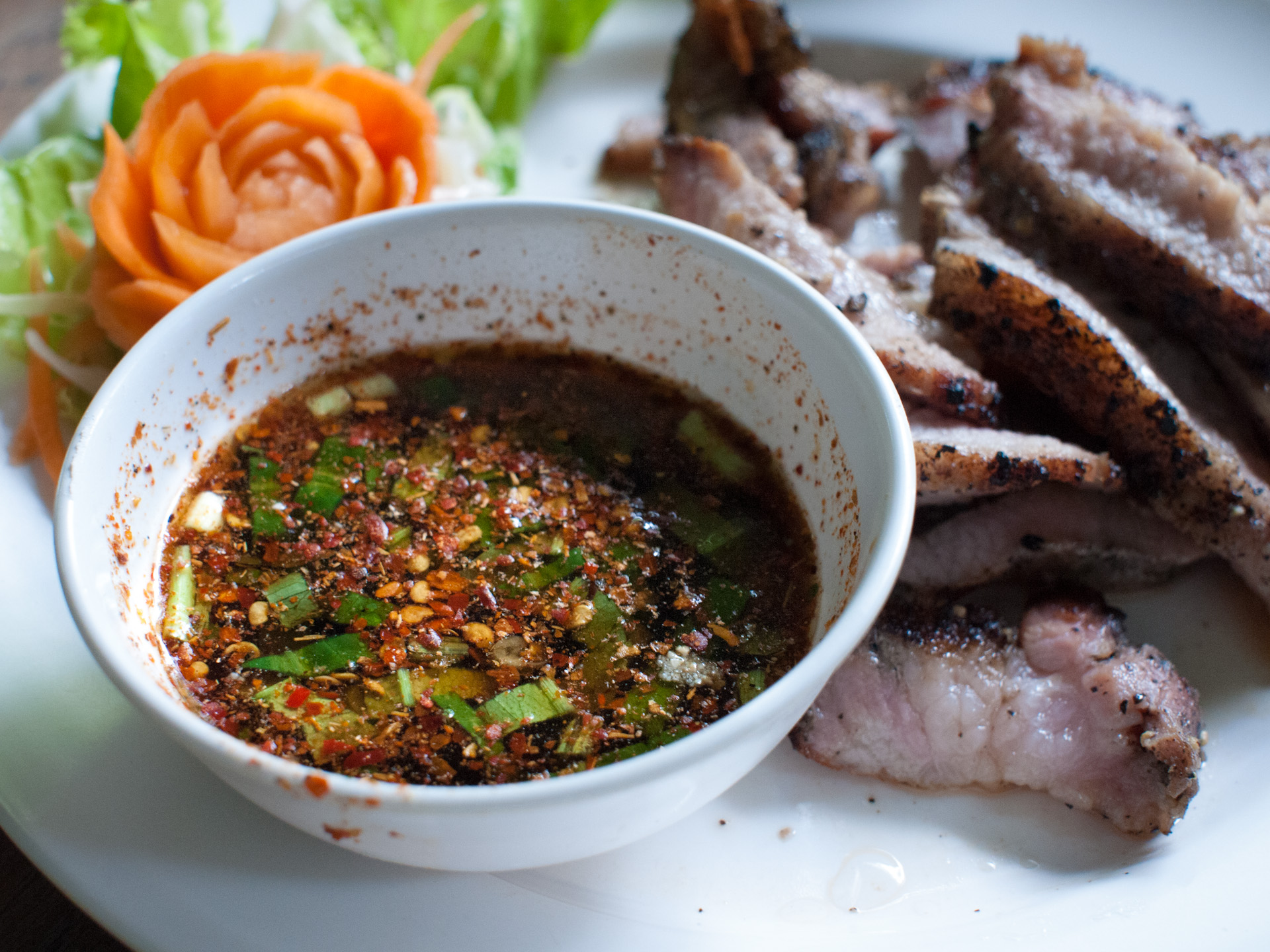
Aside from the visual aspect of the melting fat during grilling, the second reason for the naming lies in the extreme flavor profile of its dipping sauce. The traditional sauce that must accompany this tough grilled meat is widely known by locals as Nam Chim Chaeo.
The recipe for this dipping sauce uses a balanced combination of concentrated tamarind water, fish sauce and fresh lime juice. The most crucial component dominating the entire flavor profile of this accompanying sauce is a generous sprinkle of dried red chili powder characteristic of the Isan region.
The local red chilies must be manually dry-roasted on a clay pan first before being coarsely ground. This traditional roasting process delivers a strong, smoky-spicy aroma sensation that immediately, sharply pierces the nasal cavity.
Nam Chim Chaeo sauce possesses an accumulation of burning spiciness that is highly extreme, often shocks the palates of ordinary people. This stinging spiciness delivers an immediate burning sensation throughout the mouth from the very first bite.
This extraordinary heat is traditionally believed to be intense enough to make even a powerful wild tiger weep uncontrollably on the spot.
Slicing Strategy Wagyu Evolution
Despite the intensely spicy sauce, the deliciousness of this dish still relies on the beef brisket which naturally has a very tough, dense, chewy muscle fiber weave.
The grilled beef must be sliced very thinly diagonally against the grain of the main meat fibers. This precise cutting technique concretely functions to break the rigid muscle fiber chains that make the meat tough to chew before serving.
The meat grilling process is also deliberately done in a very short duration so that the natural moisture inside the meat is not lost and remains juicy. Before serving, the sauce mixture is always topped with Khao Khua or toasted glutinous rice powder to provide a contrasting crunchy texture.
Several modern restaurants in Bangkok replace the local beef raw material with imported Wagyu beef cuts which have a very high distribution of unsaturated fat patterns .
This premium ingredient conversion step automatically locks the dish's selling price to be many times more expensive on the tables of five-star restaurants.