The Wat Phra Dhammakaya complex in Khlong Luang District features a visual appearance that differs significantly from traditional Thai temples.
The temple spans an area of 320 hectares, dominated by unique architectural designs. It is located approximately 40 kilometers north of central Bangkok.
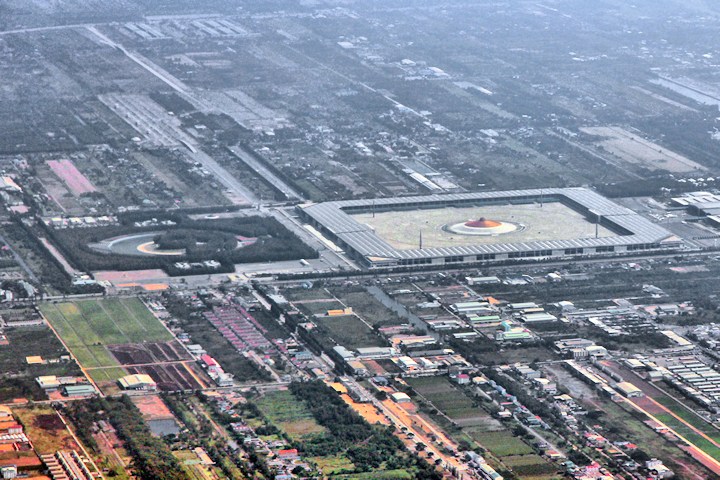
The main dome’s shape loosely resembles a flying saucer with a massive curved structure. Beyond its striking exterior, the impressive building serves as an active place of worship and meditation center for Buddhists.
The temple is open to the general public and tourists who wish to observe its unique architecture firsthand. Visitors can explore the expansive and neatly arranged outer areas of the complex.
The Grandeur of the Golden Maha Dhammakaya Cetiya

The central building that most catches visitors' attention is a giant stupa named the Maha Dhammakaya Cetiya. Built with a modern architectural concept, the stupa minimizes the intricate carvings typical of traditional Southeast Asian temples.
The outer curved dome is covered with 300,000 small Buddha statues. Each statue is crafted from a specialized metal alloy coated with pure liquid gold, designed to withstand weather corrosion.
The interior of the dome houses approximately 700,000 additional Buddha statues made from the same materials and design. The surface of the dome emits a bright golden glow when exposed to the afternoon sunlight.
The area surrounding the dome is enclosed by a vast open concrete plaza. Such open fields can accommodate thousands of people in neat alignment during religious rituals.
Near the stupa stands a large hall structure covered by a steel roof without central supporting pillars. The auxiliary building functions as a massive assembly space for religious learning activities.
All-White Dress Code for Visitors

Temple management enforces a strict dress code for anyone entering the main worship area. Visitors are required to wear modest white clothing from top to bottom.
The clothing rule symbolizes values of simplicity, purity, and equality among worshippers within the temple grounds. The dress code applies equally to local practitioners and international visitors.
Clothing with bright colors, thin fabrics, or revealing cuts is not permitted inside the main areas.
While lay practitioners and visitors gather in plain white attire, resident monks wear traditional saffron-orange robes. During mass ordination ceremonies and daily gatherings, the distinct clothing rules set the monastic order apart from the rest of the congregation.
Atmosphere of Meditation Amidst Expansive Open Spaces
Tranquility is the primary element felt as soon as visitors enter the inner worship complex. The layout of the buildings is designed symmetrically, featuring clean concrete plazas extending across various corners.
The landscape is built with an open layout to facilitate air circulation and the movement of large crowds. The presence of tall concrete pillars adds to the overall sense of vastness.
Visitors are permitted to observe religious activities from areas designated by staff. Temple management also offers dedicated spaces for tourists who wish to try basic meditation practices.
All activities within the complex follow a structured schedule to preserve the quiet atmosphere. Visitors are asked to keep their noise levels down while on the worship grounds.
The open-air grounds feature wide pedestrian pathways designed to connect all major sectors across the complex.