In Thailand, there is a Buddhist place of worship standing in the highlands of Phetchabun Province. The place is named Wat Pha Sorn Kaew.
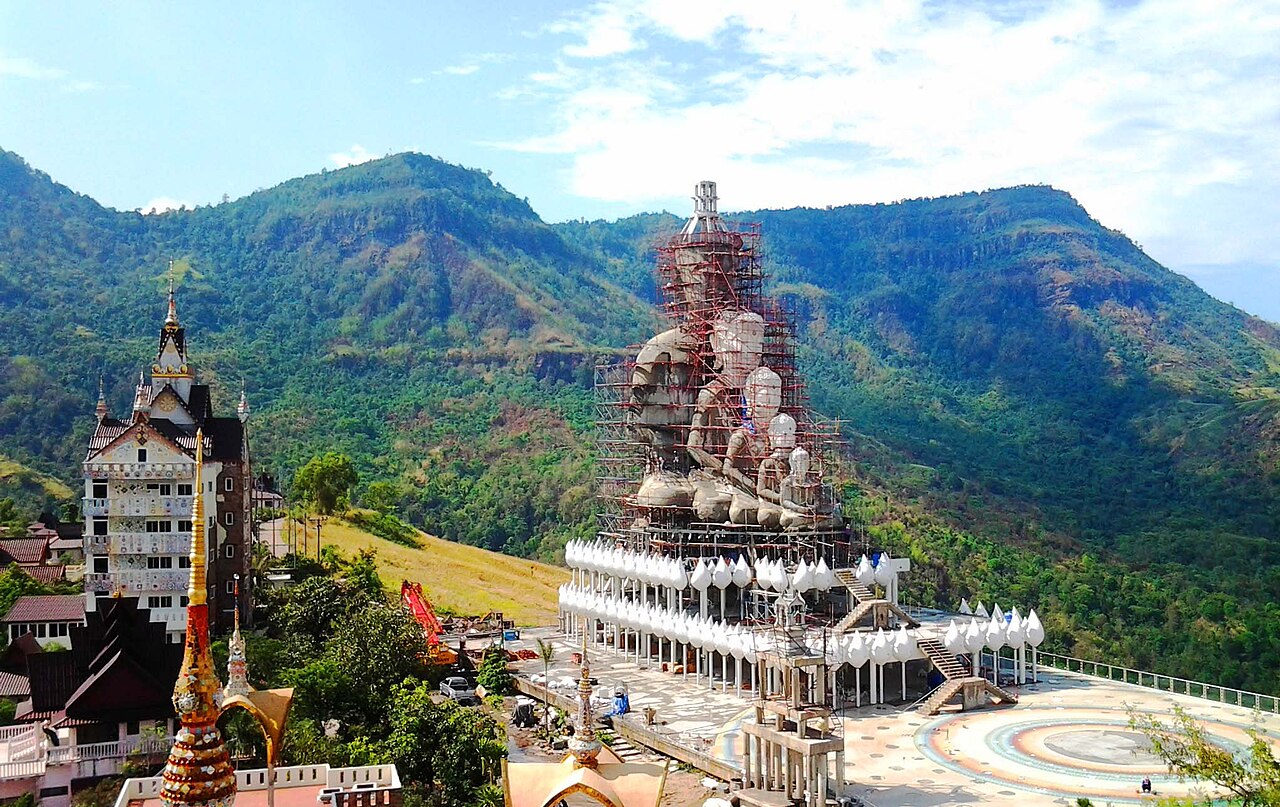
The temple area is situated in the Khao Kho Mountains, approximately a five-hour drive from the capital city of Bangkok. Located at a high elevation, it is surrounded by views of hills and sprawling valleys.
The temple was originally established as a meditation area for monks and local residents. Over time, the area developed into a center for religious activities in the Phetchabun region.
Wat Pha Sorn Kaew is now known for its distinctive architectural design and geographical position in the mountainous region. The site combines the function of a place of worship with mosaic architectural structures and a tiered arrangement of Buddha statues.
The Story Behind Wat Pha Sorn Kaew
The development of the temple area began in the early 2000s. At that time, the site was intended as a quiet spiritual practice location, isolated from the hustle and bustle of the city.
The name Wat Pha Sorn Kaew means a temple on a hidden cliff. The naming relates to its geographical location situated on the steep hillsides of Phetchabun.
Local religious authorities officially designated its status as a Buddhist temple in 2004. The designation expanded the temple's functional area from a small-scale meditation site into an official religious venue.
As a new center for spiritual activity, the construction of various supporting facilities was carried out gradually. The management added a main prayer hall area as well as road landscaping around the temple.
Stained Glass with Ceramic Mosaic Architecture
The primary physical uniqueness of the temple lies in the wall ornaments of its main building. The surface of the pagoda structure is coated with colorful pieces of porcelain, ceramics, and glass.
The mosaic coating integrates millions of fragments from recycled items and intact ceramics. The elements cover the walls, pillars, and floors of the main stupa area.
In addition to manufactured materials, the wall decorations also utilize donations of glassware from local residents. The community contributed antique plates, teapots, and small jewelry pieces to be affixed to the wall surfaces.
The installation process of the mosaic was executed in detail by local artists. The technique forms geometric patterns and floral motifs covering the entire exterior of the main building.
Structure of the Five White Buddha Statues

In the main area of the temple area stands a structure of five pure white Buddha statues. The statues were constructed sequentially from the largest size at the back to the smallest size in front.
The five statues were built sitting in a meditation posture atop lotus bases. The tiered design creates a parallel visual arrangement amidst the green landscape of the Khao Kho Mountains.
The construction of the statues utilizes reinforced concrete coated with white paint and thin gold ornaments. The structure is engineered to withstand extreme weather and strong gusts of wind in the highlands.
The height of the largest main statue reaches 45 meters with a base width of approximately 15 meters. The interior of the largest structure contains five floors of space used as prayer halls and displays of sacred artifacts.
The construction process for the entire series of five statues was completed in 2014. The project complemented the existing worship facilities at the Wat Pha Sorn Kaew temple area.