Dadiah Kabau or Dadih is a traditional West Sumatran, Indonesia curd made by pouring raw buffalo milk into fresh bamboo tubes.
Dadiah looks exactly like yoghurt. However, this traditional Minangkabau delicacy relies on entirely different ingredients and production methods compared to standard yoghurt.
The indigenous Dadiah making process skips modern pasteurization and artificial starters which rely on wild bacteria to preserve the milk.The natural process transforms the liquid into a thick, solid delicacy with a distinct sour profile.
The Biology Inside Fresh Bamboo

The entire fermentation process depends on the raw structural properties of native bamboo variants. Farmers specifically select bambu gombong or bambu talang due to the high moisture retention of their inner layers.
The wood must be cut fresh to ensure the internal environment remains biologically active for the milk.
Freshly cut bamboo contains microscopic pores on its inner walls that naturally harbor wild lactic acid bacteria. Raw water buffalo milk is poured directly into these unheated bamboo tubes immediately after milking without undergoing any artificial heating.
This allows the native microflora to dominate the liquid before harmful bacteria can colonize it.
The cylinders are covered with a banana leaf and left to sit at room temperature for two days. The microscopic environment inside the bamboo grid triggers a spontaneous chemical reaction without any human interference or temperature control.
The natural breathability of the bamboo wall allows excess moisture to evaporate while trapping the essential fats.
A Velvety Texture Rich in Probiotics
Water buffalo milk has a significantly higher fat and protein content compared to standard cow milk. This specific chemical composition gives the resulting curd an incredibly dense, velvety, and gelatinous texture that holds its shape.
The high solid content prevents the mixture from turning watery during the intense fermentation phase.
The natural breakdown of lactose during the two-day process generates a massive concentration of live probiotics. Local communities traditionally consume this dense curd for breakfast to maintain daily physical stamina during heavy agricultural work.
It provides an immediate source of clean energy and eases digestion for the rest of the day.
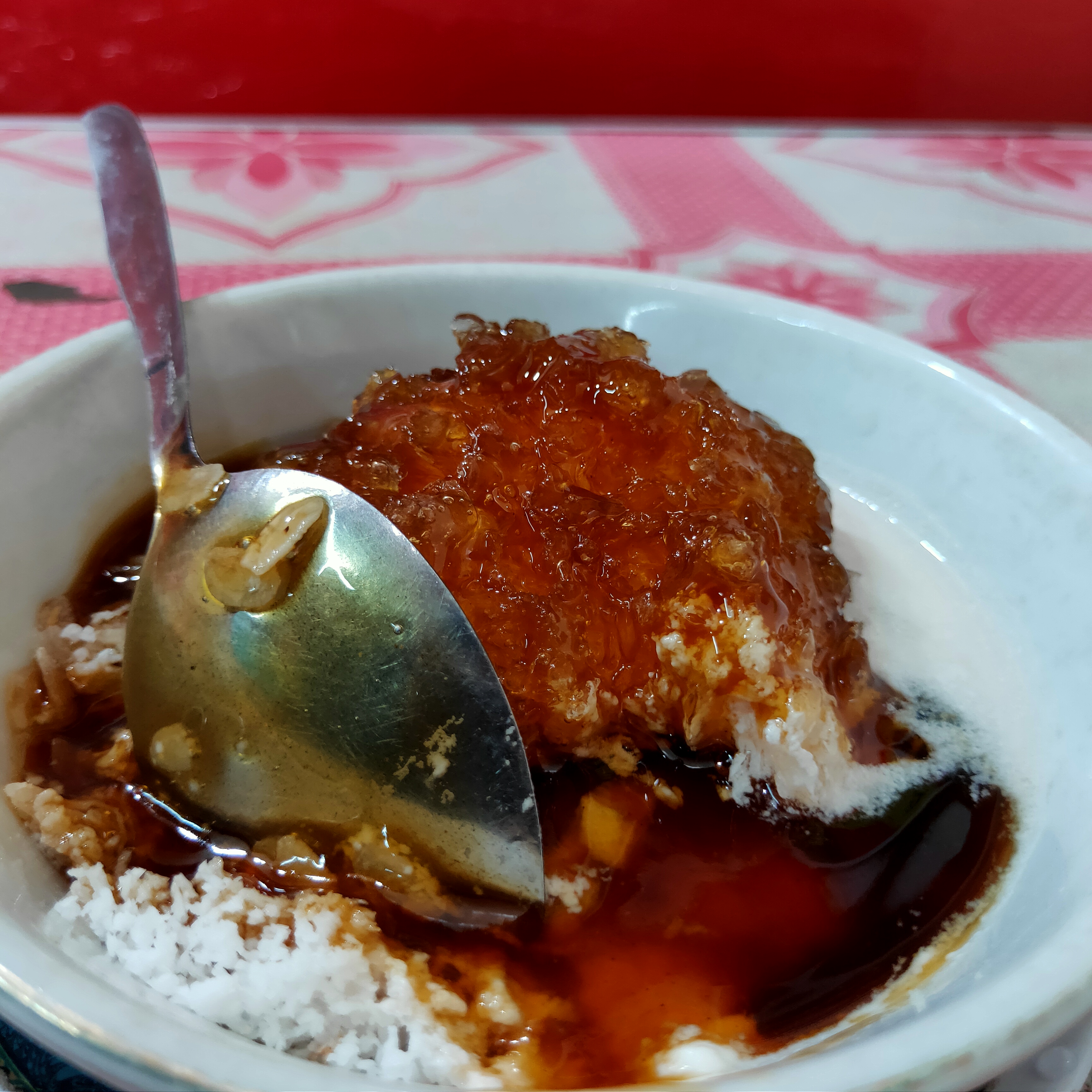
It is commonly served over Iced Ampiang. a traditional dish made of crushed glutinous rice flakes, and drenched in liquid palm sugar. Modern culinary setups in Southeast Asia have also adapted the ingredient for contemporary breakfast bowls.

The sour curd is also frequently paired with assorted dried fruits, granola, and nuts directly inside the original bamboo container.
Defeating Gastric Acid Naturally
The Journal of Ethnic Foods research in 2025 proved that the biological efficiency of this regional food storage technique. Microbiologists isolated dozens of distinct beneficial bacteria strains from traditional West Sumatran samples.
These microscopic findings explain why the local population has consumed the raw curd for generations without health complications.
These native probiotic strains demonstrate an unusually high resistance to gastric acid in the human stomach. They remain fully active and viable while passing through the highly acidic environment of the human digestive tract.
They eventually reach the lower intestines intact, where they provide maximum reinforcement to the immune system.
The bacteria successfully populate the gut lining and actively inhibit the growth of harmful foodborne pathogens like Escherichia coli. The natural antimicrobial properties of the bamboo walls effectively filter out unwanted environmental molds during the settling period.
The natural physics of a bamboo tube protects the milk while allowing it to transform into a functional health food.
Reference:
Pramana, A., Yudhistira, B., Jayalaksamana, M., Kurnia, D., Husnayain, N., & Pramitasari, R. (2025). Dadih, traditional fermented buffalo milk: A comprehensive review of the aspects of gastronomy, health benefits, and product development. Journal of Ethnic Foods, 12(1), 1–17. https://doi.org/10.1186/s42779-024-00261-3