Indonesia is the world's largest archipelago, and connecting every island to one giant power grid was never realistic. That's a big reason the government is now focusing on Small Modular Reactors, or SMRs, a newer, smaller type of nuclear reactor.
Unlike traditional nuclear plants, which typically produce more than 1,000 megawatts of electricity, SMRs generate up to 300 megawatts per unit, according to the International Atomic Energy Agency's definition.
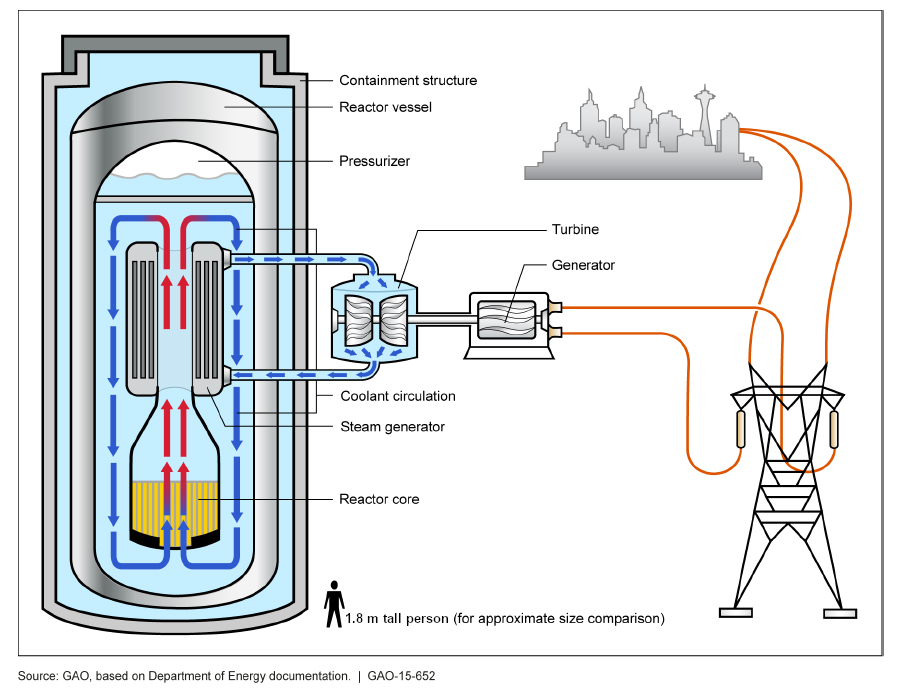
In March 2026, Indonesia's National Energy Council confirmed that SMRs will be the country's starting point for nuclear power, with the first plant expected to come online between 2032 and 2034. That same month, Indonesia teamed up with the United States and Japan for a workshop in Jakarta focused on preparing the country for SMR technology.
The goal, officials said, was to make sure any future reactors meet strict international standards for safety and security.
Indonesia Isn't Just Buying the Technology, It's Building Its Own
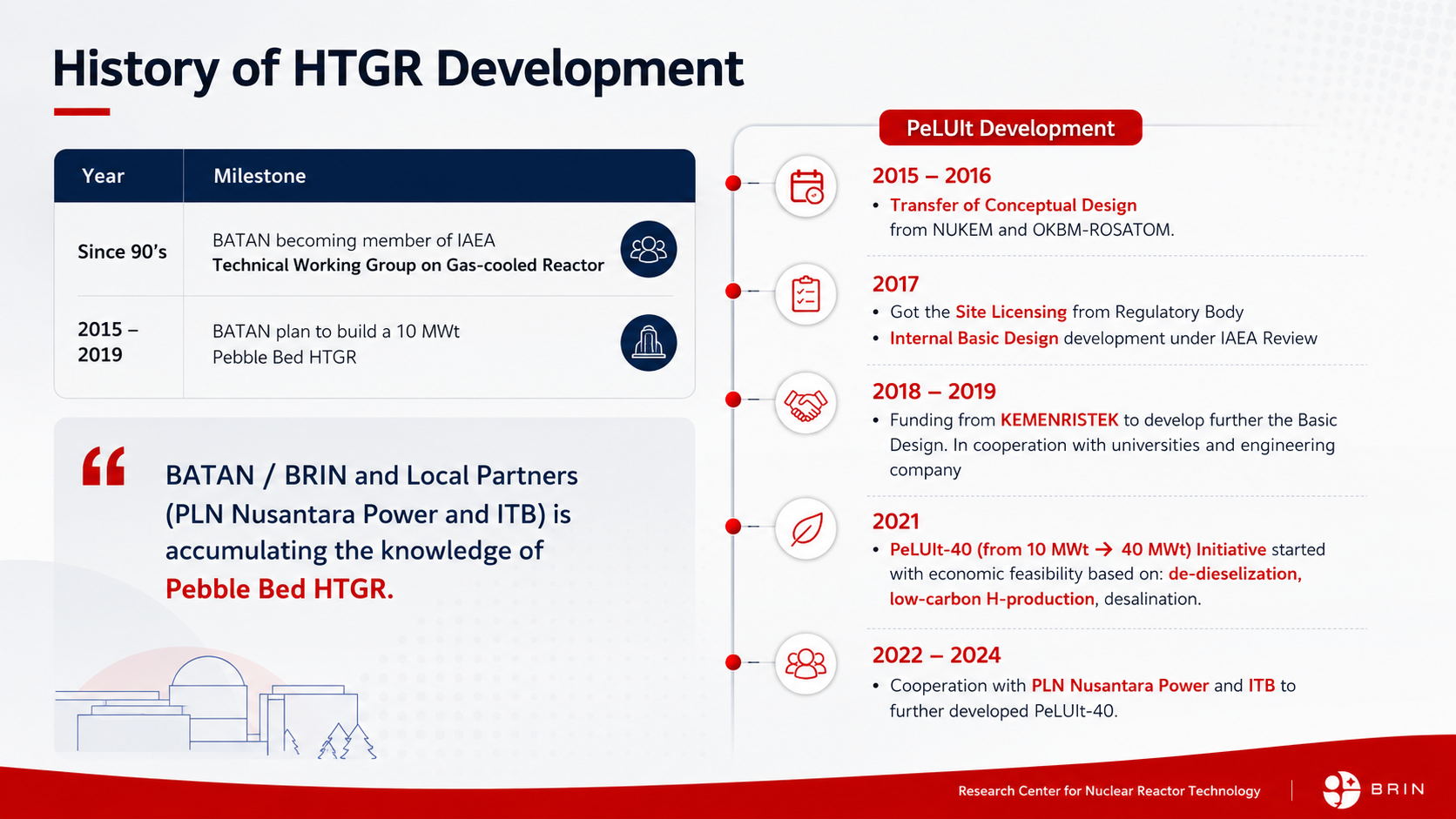
Indonesia isn't only relying on foreign companies for this. Its own research agency, BRIN, is developing a homegrown reactor design called PeLUIt-40.
According to Nuclear Engineering International, PeLUIt-40 is a small, 40-megawatt reactor still in the design stage, built using a well-established cooling technology that uses gas instead of water. It grew out of an earlier, smaller experimental reactor project that Indonesia had been working on for years.
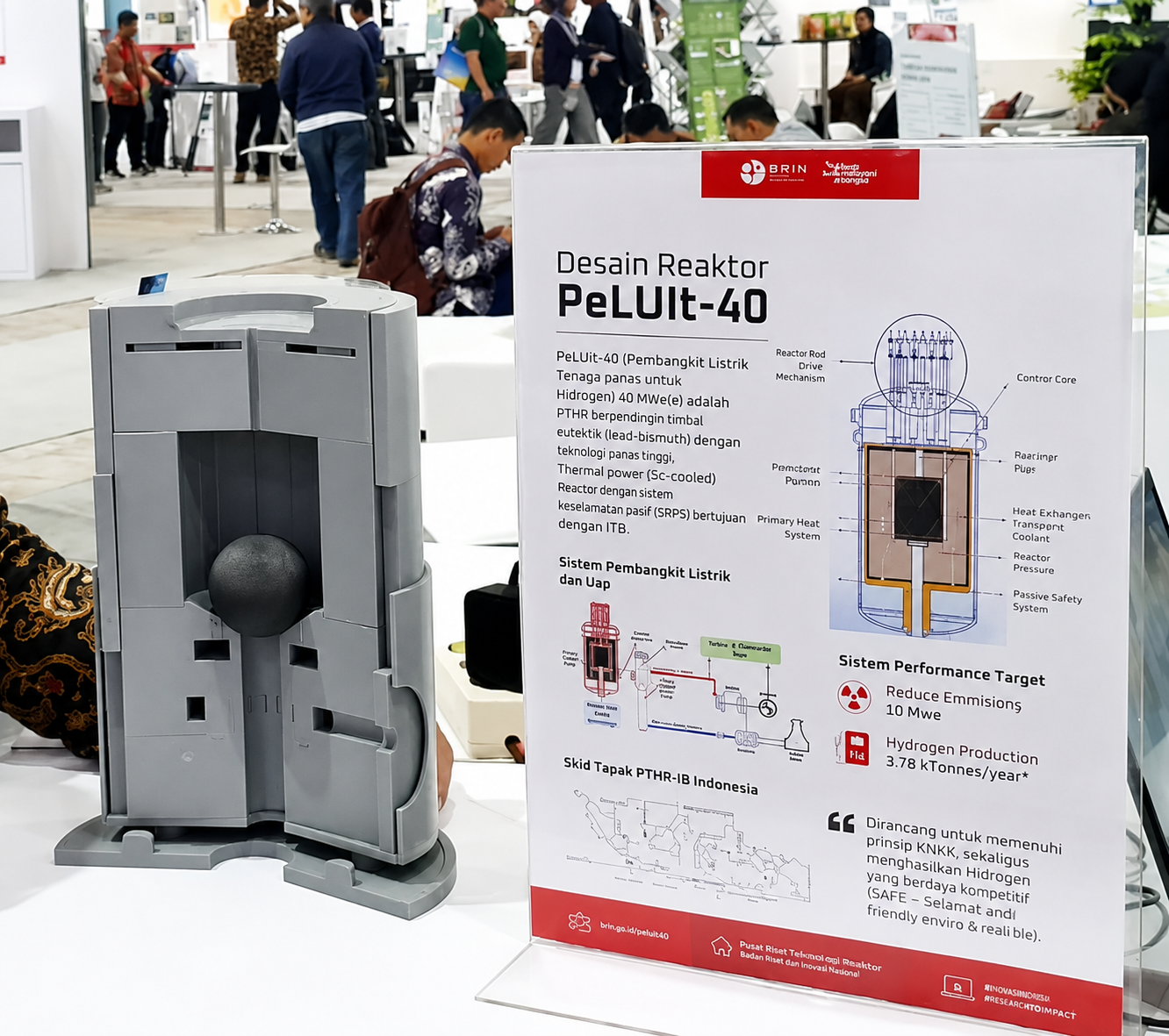
As of 2024, BRIN has requested a budget of around IDR 2 trillion, roughly USD 125.7 million to develop the reactor over the next five years.
What makes this design interesting is that it's not just meant to generate electricity, it can also produce industrial steam, which factories need for manufacturing. That's useful for a country trying to clean up not just its power grid, but its factories too. BRIN says it's open to working with international partners to eventually build and test the reactor.
Does Smaller Mean Safer?
Not automatically, a smaller reactor isn't safer just because of its size.
Safety still comes down to design, operation, and regulation. That said, the International Atomic Energy Agency (IAEA), the UN's nuclear watchdog that sets global standards for nuclear safety notes that many SMR designs rely more heavily on passive safety systems.
Its use natural forces like circulation, gravity, and self-pressurization instead of requiring human intervention or external power to keep a reactor safe during an emergency.
This is also why Indonesia's roadmap requires meeting the IAEA's own infrastructure readiness checklist before any plant can start operating, covering everything from regulation to emergency preparedness, not just the reactor design itself.
A Two-Track Plan, With a Site List Already in Hand
Indonesia is pursuing two tracks at once. On one side, it's working with established foreign vendors.
The U.S. Trade and Development Agency has already granted funding for Indonesia Power to develop a proposed 462 megawatt SMR facility using NuScale's technology, in partnership with Fluor and Japan's JGC Corporation.
On the other, BRIN is developing its own design through PeLUIt-40, with a proposed budget of around IDR 2 trillion (roughly USD 125.7 million) for a five year development period.
This isn't just talk, either Indonesia's National Energy Council has already identified 29 potential sites for SMR construction, and the government has moved up its target for commissioning the first SMR to 2030, from an earlier target of 2032.
If that accelerated timeline holds, Indonesia could become the first country in Southeast Asia to bring an SMR online.