


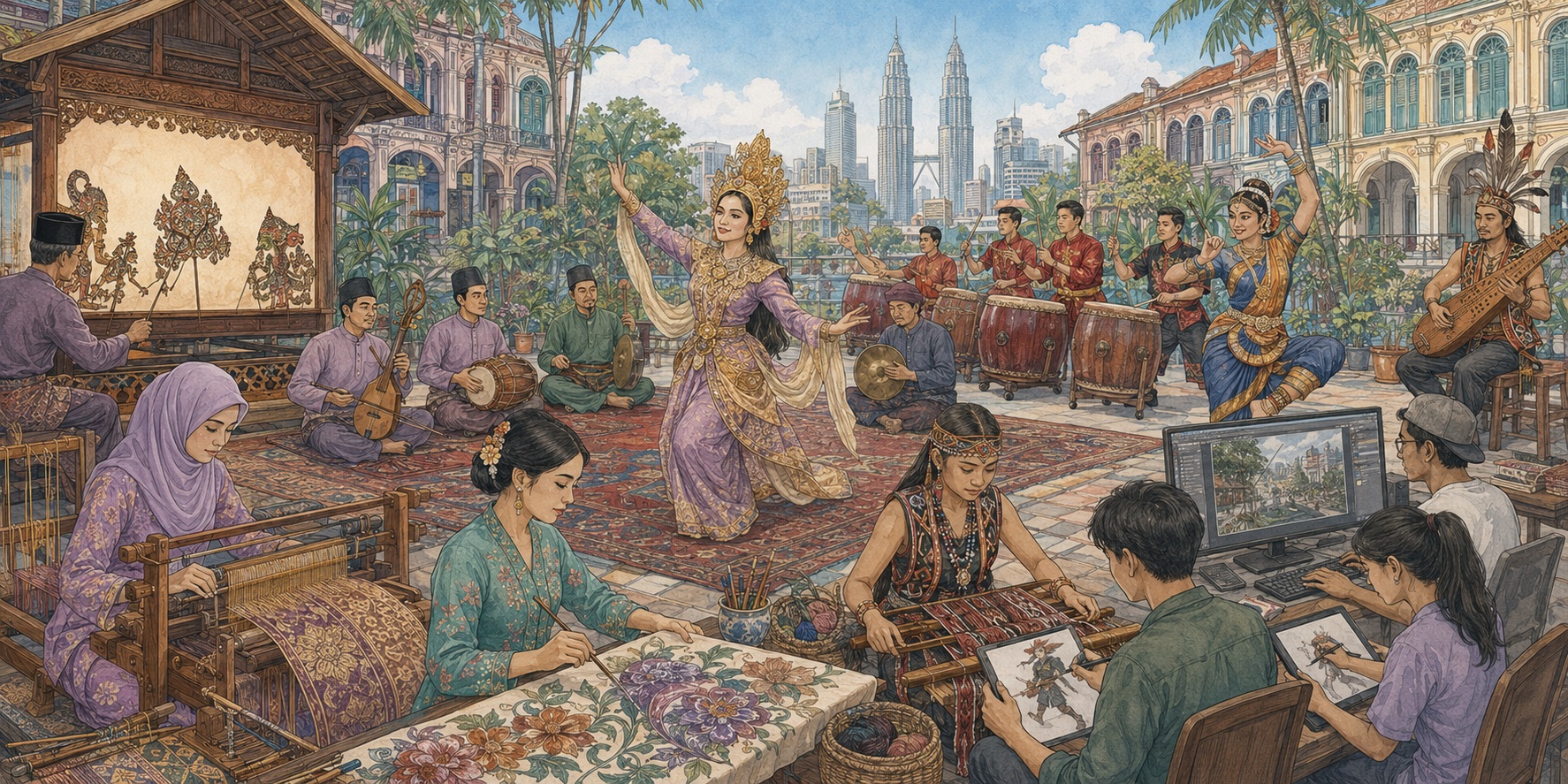
On one Malaysian evening, shadow puppets may flicker behind a screen in Kelantan while dancers rehearse in Kuala Lumpur, muralists work inside a former Penang bus depot and animators build fictional universes for audiences across Asia. This constant movement between heritage and experimentation makes Malaysia’s arts scene one of Southeast Asia’s most diverse and adaptable.
Many Traditions Share One Living Stage
Malaysia’s performing arts reflect centuries of migration, trade and cultural exchange. In Kelantan, Wayang Kulit Siam transforms stories influenced by the Ramayana into local theatre, guided by a tok dalang who voices the characters, directs musicians and adapts the narrative in the Kelantan dialect.
Mak Yong brings together dance, acting, improvised dialogue, music and ritual. Once associated with royal courts and village healing ceremonies, the predominantly female-led theatre was inscribed on UNESCO’s Representative List of Intangible Cultural Heritage in 2008.
Malaysia’s multicultural stage extends beyond Malay traditions. The Twenty-Four Festive Drums, developed in Johor Bahru in 1988, turned Chinese drums into a synchronised performance combining calligraphy, movement and rhythm. Indian classical dance and music remain active through institutions such as the Temple of Fine Arts in Kuala Lumpur’s Brickfields district.
Textiles Carry Memory Across Regions
Songket, recognised by UNESCO in 2021, is woven by inserting gold or silver threads between the base fibres, creating patterns that appear to float above silk or cotton. Traditionally associated with royal ceremonies, weddings and formal occasions, it is now being reinterpreted by Malaysian fashion designers.
Malaysian batik offers a freer visual rhythm through hand-drawn flowers, leaves, butterflies and abstract forms. In Sarawak, pua kumbu carries the spiritual and historical memory of the Iban people. Its warp-ikat patterns emerge from dreams, ancestral narratives and knowledge of rainforest plants used for natural dyes.
Master weaver Indai, also known as Buri Anak Sada, explains, “I don’t just weave fabric. My inspiration comes from my dreams and the history and soul of my people.”
Cities Transform Art into Public Life
George Town’s murals have turned Penang’s heritage streets into one of Asia’s most recognisable outdoor galleries. Ernest Zacharevic’s 2012 project introduced works that combined painted figures with physical bicycles, motorcycles and chairs. Local artists subsequently expanded the movement with murals exploring neighbourhood stories, food, migration and multicultural identity.
Hin Bus Depot carries that creative energy into a repurposed industrial space hosting exhibitions, workshops, performances and weekend markets. In Kuala Lumpur, the National Art Gallery and ILHAM Gallery connect audiences with modern and contemporary artists including Latiff Mohidin, Awang Damit Ahmad, Yee I-Lann and Ahmad Fuad Osman.
Artists are also addressing environmental and social concerns through new materials. Sabah-born Red Hong Yi, known for constructing images from everyday objects, created a burning world map from 50,000 matchsticks. She said its motivation came from “the urgency of having to tackle climate change together.”
Malaysian Stories Enter Digital Worlds
Animation has become one of Malaysia’s strongest cultural exports. Upin & Ipin, BoBoiBoy and Ejen Ali package local food, neighbourhood relationships, humour and architecture into stories designed for international audiences. Rather than removing cultural details to become global, these productions have discovered that their Malaysian character is part of their appeal.
Malaysia Digital Economy Corporation figures show that the digital-content industry generated RM5.31 billion in revenue in 2023, including RM840 million in exports. It supported more than 10,000 jobs and included 156 animation companies. In 2025, Ejen Ali The Movie 2 exceeded RM40 million at the Malaysian box office, demonstrating the commercial strength of locally developed intellectual property.
Music is evolving along similar lines. Independent musicians combine electronic production, jazz and rock with instruments such as the sape from Sarawak, bringing Indigenous Bornean sound into festivals, studios and digital platforms.
Creative Hubs Welcome Wider Audiences
Malaysia’s cultural and creative industries contributed RM130.7 billion, or 6.8 percent of national GDP, in 2024. That scale is visible in the range of spaces where creativity now happens.
Central Market remains a gateway to traditional crafts, while nearby REXKL has transformed a former cinema into a community of booksellers, artists, designers and food entrepreneurs. Penang’s Hin Bus Depot offers a grassroots counterpart, while galleries, workshops and museums across Sabah and Sarawak connect visitors with Bornean traditions.
Malaysia’s creative strength comes from allowing many cultural languages to exist together. From a Kelantan shadow screen to a Kuala Lumpur animation studio, its artists are preserving inherited knowledge while confidently designing what comes next.


