In April 1975, when the Khmer Rouge took control of Cambodia, schools across the country stopped functioning.
Classrooms were closed, universities were emptied, textbooks disappeared, and teachers became one of the groups most heavily targeted by the regime. Between 1975 and 1979, Cambodia's formal education system was effectively dismantled.
When the Khmer Rouge government collapsed in January 1979, rebuilding schools became one of the country's most urgent challenges.
A Country without Classroom
The Khmer Rouge viewed formal education as unnecessary under its vision of an agrarian society.
Schools and universities were shut down, while educated professionals including teachers, lecturers, and academics were persecuted. During the regime, an estimated 1.7 to 2.2 million people died from execution, starvation, disease, and forced labour.
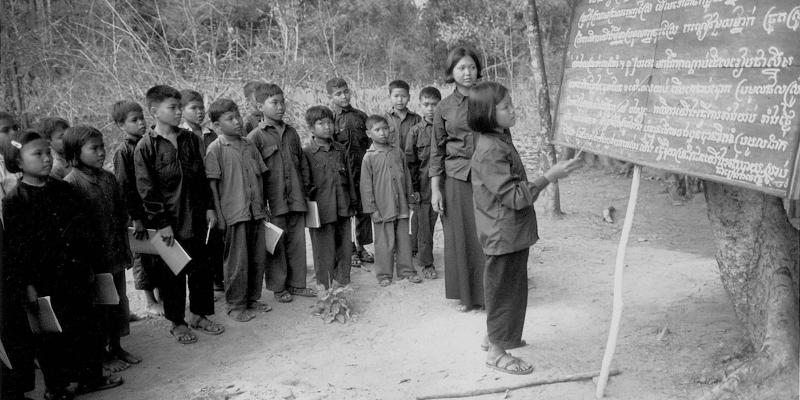
By the end of the regime, Cambodia had lost much of the workforce needed to operate a modern education system. According to UNICEF, much of the country's education infrastructure had been destroyed, and rebuilding began from an extremely limited base.
Reopening Schools with almost no Teachers
After 1979, the new government faced a basic question. Who would teach?
Many experienced teachers had been killed or had fled the country. Those who remained were too few to serve a nation where millions of children had missed years of schooling.
The government responded by reopening schools as quickly as possible and recruiting new teachers, many of whom received only short periods of training before entering classrooms. International organisations and foreign governments also began supporting teacher training, curriculum development, and school reconstruction during the 1980s and 1990s.
Access to Education Gradually Recovered
Progress did not happen overnight.
According to UNESCO's Global Education Monitoring (GEM) Report, only about one in three Cambodian children completed primary school in the mid 1990s. Over the following three decades, primary completion increased steadily, reaching 82% in 2024, or 85% when late completers are included.
Primary school enrolment also expanded rapidly.
UNICEF reports that primary school enrolment increased from 82% in 1997 to more than 97.8% in the 2017/18 school year, while enrolment in early childhood education more than doubled after 2007
Improving Schools after Expanding Access
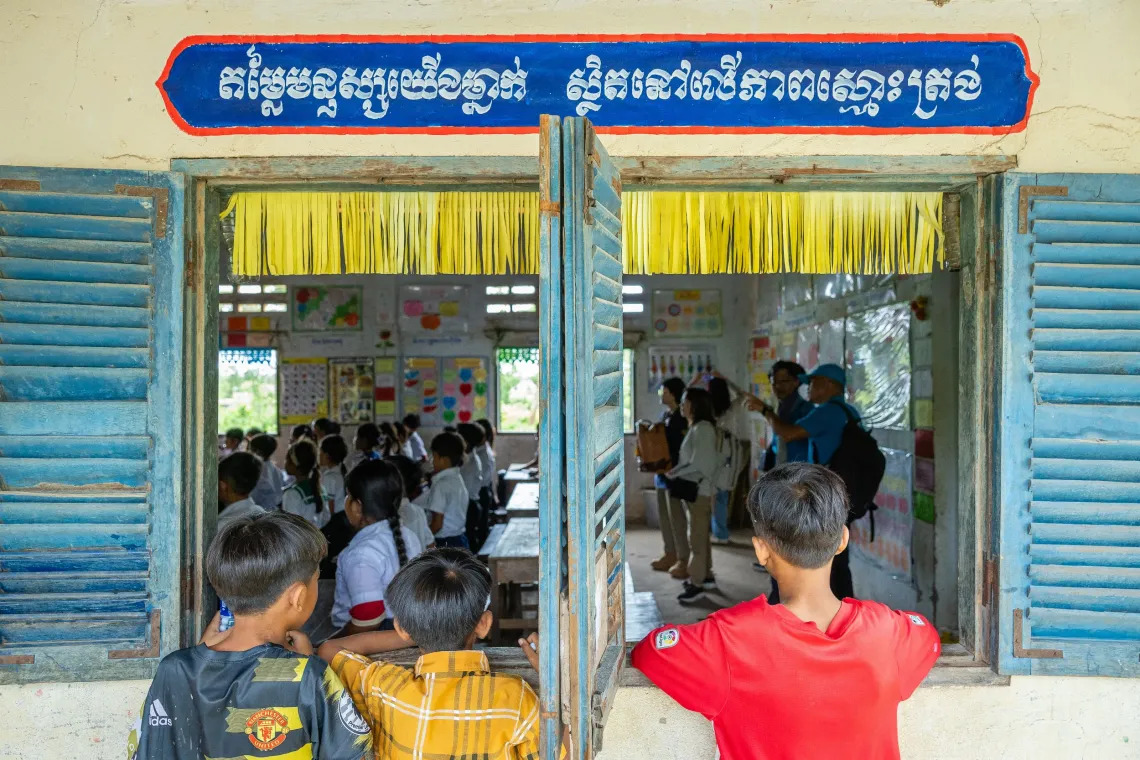
As more children entered school, Cambodia shifted its focus from expanding access to improving quality.
The World Bank's Secondary Education Improvement Project supported the construction of 76 new school buildings, 395 classrooms, renovation of 437 classrooms, installation of 276 laboratories and subject-learning facilities, and construction of teacher housing in remote areas.
The programme also upgraded the qualifications of 2,348 teachers and 636 school leaders, while establishing 30 new lower-secondary schools. By the time the project concluded, according to the World Bank, almost half a million students, 453,838, more than half of them girls had benefited from improved school facilities, teacher training, and stronger school management.
Challenges remain
Although access to education has improved significantly, learning outcomes remain a challenge.
The World Bank reports that in 2018, only 8% of Cambodian 15-year-olds reached the minimum reading proficiency level measured by PISA for Development, while 10% achieved the minimum level in mathematics. Teacher shortages, classroom quality, and learning outcomes continue to receive attention in ongoing education reforms.
More recent World Bank assessments also highlight foundational learning as Cambodia's next priority. In 2026, the organisation reported that only 11% of Grade 5 students could read at the expected level, prompting new programmes focused on improving literacy, teacher quality, and STEM education.