


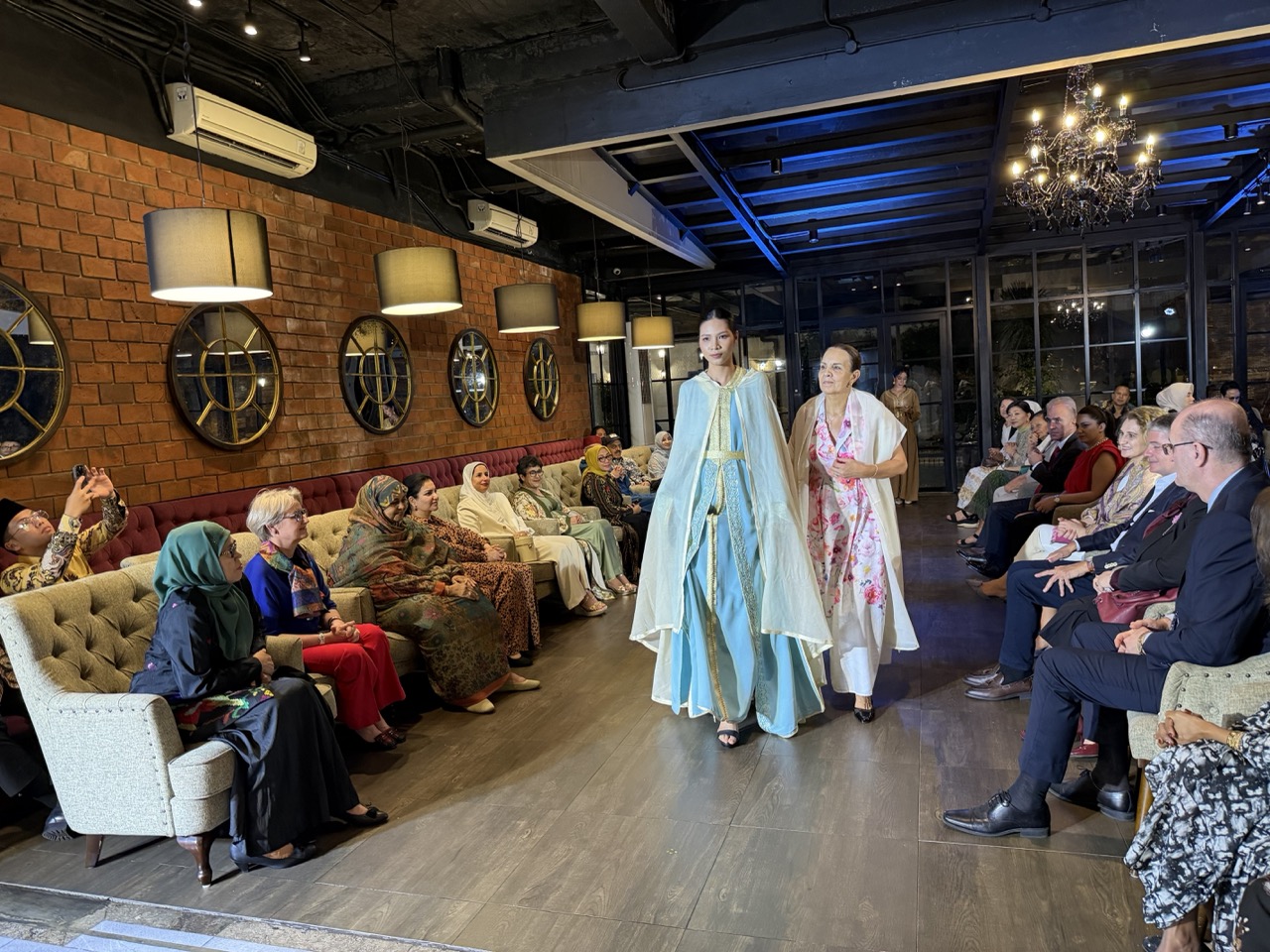
Moroccan craftsmanship took centre stage in Jakarta on November 1 as designer Bouchra El Bouhsini presented a kaftan collection celebrating embroidery, cultural identity and contemporary style. Part of Moroccan Cultural Week, the evening brought fashion into the growing cultural conversation between Morocco and Indonesia.
From Rabat to Jakarta
Held at Mardin Fine Baklava Cafe in Kemang, South Jakarta, the show welcomed Indonesian Minister of Women Empowerment and Child Protection Arifah Choiri Fauzi, foreign ambassadors and dignitaries. Maria Hnid Houssaini, wife of Moroccan Ambassador Redouane Houssaini, delivered the welcome remarks.
El Bouhsini travelled from Rabat to present her collection, bringing the skills of Moroccan dressmaking to an Indonesian audience. Her designs combined detailed ornamentation with contemporary cuts, demonstrating how a traditional garment can evolve while retaining its distinctive character.
“It is a history, an identity and a source of pride for every Moroccan woman,” she told Moroccan news agency MAP. Her remarks placed the kaftan within a wider story of cultural inheritance and artistic expression.
A Living Tradition, Recognised Worldwide
The presentation followed the 2025 inscription of “Moroccan Caftan: art, traditions and skills” on UNESCO’s Representative List of the Intangible Cultural Heritage of Humanity. The recognition encompasses the knowledge and practices surrounding the garment, including its making, use and transmission between generations.
Behind each kaftan is a network of skilled hands. Weavers produce fabrics such as silk, velvet and brocade; tailors shape the garment; and specialist artisans create its buttons, decorative braids and embroidery. These skills pass through families, workshop apprenticeships, training centres and fashion schools, supporting livelihoods as well as cultural continuity.
Speaking during the event, Ambassador Houssaini emphasised the craftsmanship behind the finished clothing and the importance of recognising its makers. He described the show as an opportunity to share Moroccan expertise with Indonesians and encourage further exchanges in culture, education and tourism.
“This is a very important moment for Morocco,” he said, discussing the opportunity to share the tradition with Indonesia.
Women, Creativity and Shared Connections
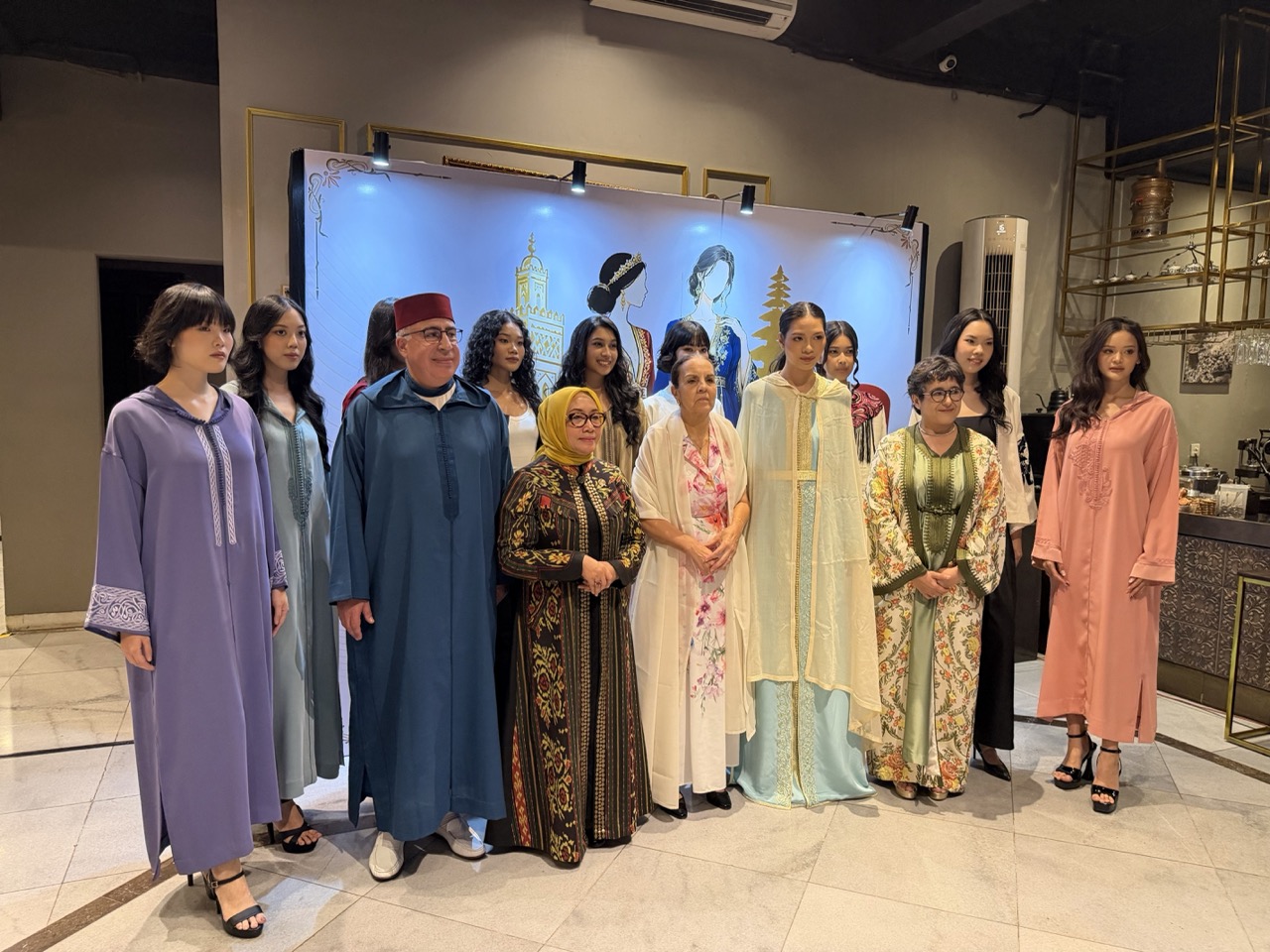
Minister Arifah’s attendance gave particular relevance to the evening’s focus on women’s creativity and participation in cultural life. Houssaini welcomed her presence and linked the occasion to the importance both countries attach to women’s roles in society.
In remarks conveyed through interpretation, Maria Hnid Houssaini described the kaftan as a connection between Morocco and Indonesia: a traditional garment that continues to adapt to modern tastes. Sharing that knowledge, she explained, was a central purpose of the gathering.
For Indonesian audiences, the relationship between clothing and identity offers a familiar point of connection. Batik and kebaya likewise bring inherited techniques into contemporary wardrobes. The Jakarta presentation created space to appreciate those parallels while discovering the particular skills behind Moroccan fashion.
From Cultural Exchange to Creative Opportunity
The show also took place against a backdrop of expanding commercial relations. Indonesia’s Trade Ministry reported bilateral trade of US$235 million in 2025, an increase of approximately 33 percent over the previous year. These figures cover overall trade, rather than fashion alone, but provide context for efforts to develop new creative and commercial connections.
The ambassador expressed hope that greater familiarity with Moroccan dressmaking would encourage exchanges of expertise and interest in travel between the two countries. Such connections could create opportunities for designers, artisans and retailers as audiences discover each other’s traditions.
Visitors can continue that discovery at the Moroccan Pavilion in Senayan Park, where kaftans and other fashion items are available for purchase during Moroccan Cultural Week until November 6.
The runway evening offered an introduction; the pavilion extends the invitation. Together, they bring Moroccan heritage closer to Jakarta through the clothes people admire, the craftsmanship they discover and the connections they take home.


