


On Saturday morning, 8 August 2026, Palestinian diplomats, students and community members joined Indonesian residents and local government workers along Jalan Diponegoro in Menteng, Central Jakarta. Carrying brushes, paint and cleaning equipment, they transformed an ordinary neighbourhood activity into a public expression of friendship ahead of Indonesia’s 81st Independence Day.
Organised by the Embassy of the State of Palestine, the voluntary activity was presented as a gesture of gratitude to Indonesia and its people for their enduring solidarity with Palestine. From 8:30 a.m. until noon, participants cleaned the roadside, repainted barriers in black and white, arranged plants and improved the surrounding public space.
Gratitude Expressed Through Gotong Royong
The activity began at the Palestinian Embassy before continuing into the Menteng area. Embassy staff worked alongside Indonesian and Palestinian communities, local government personnel and children of Palestinian diplomats. Participants wore shirts bearing the message, “From Palestine to Indonesia, Happy Independence Day Indonesia.”
“This activity is a simple expression of our gratitude and appreciation to the Republic of Indonesia and the Indonesian people,” said Palestinian Ambassador to Indonesia Abdalfatah A.K. Al-Sattari. “Indonesia’s support and solidarity with Palestine hold very deep meaning for the Palestinian people.”
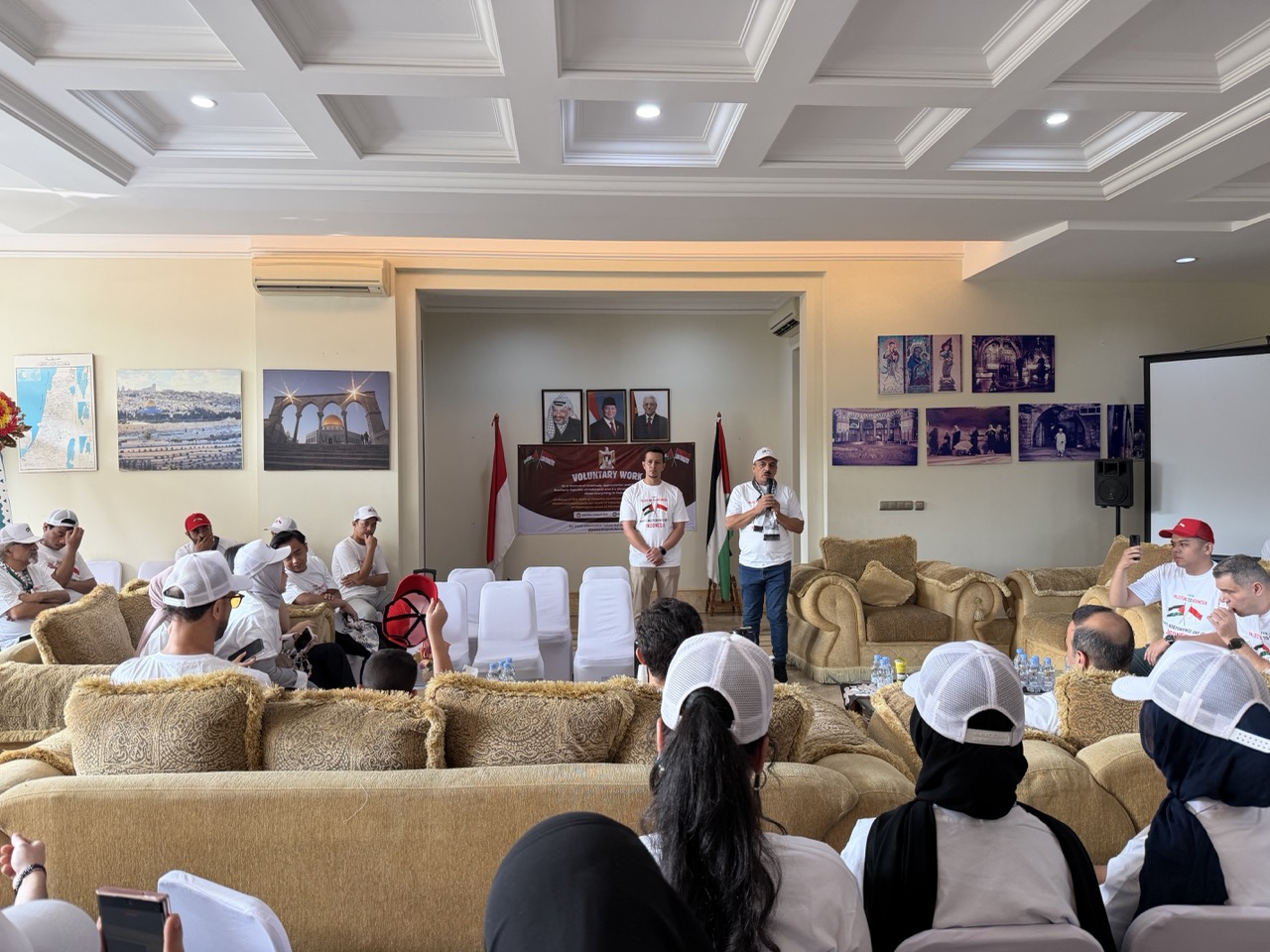
Rather than expressing that appreciation only through a diplomatic reception, the embassy chose gotong royong—a distinctly Indonesian tradition of voluntary communal work. The gesture connected Palestinian gratitude with an everyday practice familiar to neighbourhoods across Indonesia.
Students Carry the Friendship Forward
Among the participants were Palestinian students pursuing undergraduate degrees at the Indonesian Defense University in Sentul, Bogor. Their presence added a generational dimension to the occasion: diplomatic solidarity is being carried forward through education, daily interaction and friendships formed on campus.
Indonesia welcomed 22 Palestinian students to the university through a full scholarship programme in 2023. They entered five-year courses in military medicine, military pharmacy, civil engineering, electrical engineering, mechanical engineering and information security engineering.
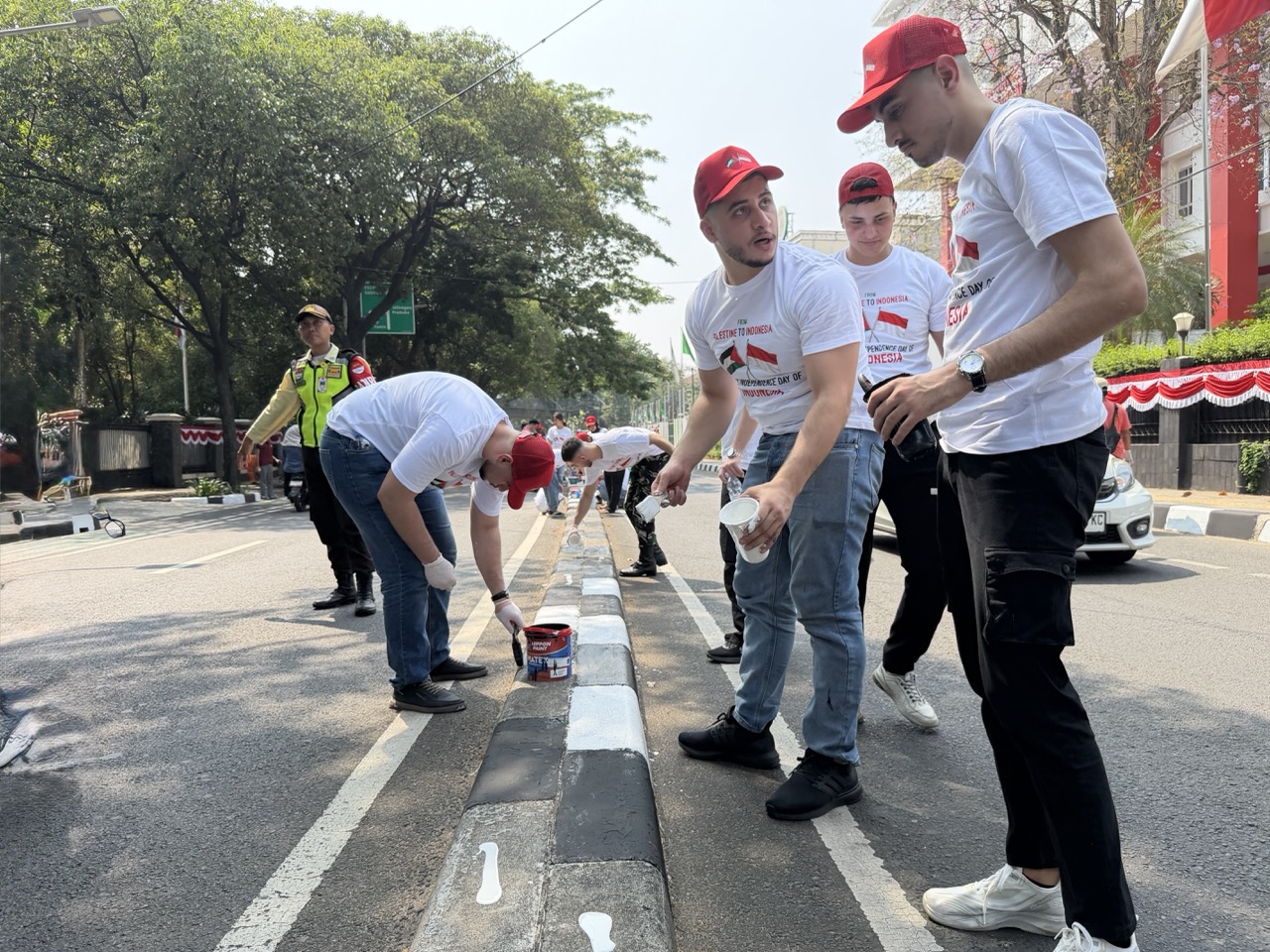
By painting roadside barriers and working with residents, the students participated not simply as international guests but as members of the wider Indonesian community. Their involvement showed how educational cooperation can extend beyond classrooms and develop a deeper understanding of Indonesian culture and civic life.
Ambassador Al-Sattari also brought children of embassy staff to the activity. He said he wanted them to understand the positive relationship between Palestinians and Indonesians and experience that friendship through direct participation.
A Relationship Rooted in Independence
The timing carried strong historical symbolism. Indonesia’s Constitution rejects colonialism because independence is regarded as the right of every nation. That principle has long shaped the country’s support for Palestinian self-determination.
Indonesia was among the first countries to recognise the State of Palestine following its declaration of independence in Algiers on 15 November 1988. Formal diplomatic relations began on 19 October 1989, coinciding with the opening of the Palestinian Embassy in Jakarta.
Since then, Indonesia has supported Palestine through diplomacy, humanitarian assistance, education and civil-society initiatives. Public solidarity is visible in fundraising campaigns, humanitarian missions, demonstrations, university programmes and cultural events throughout the archipelago.
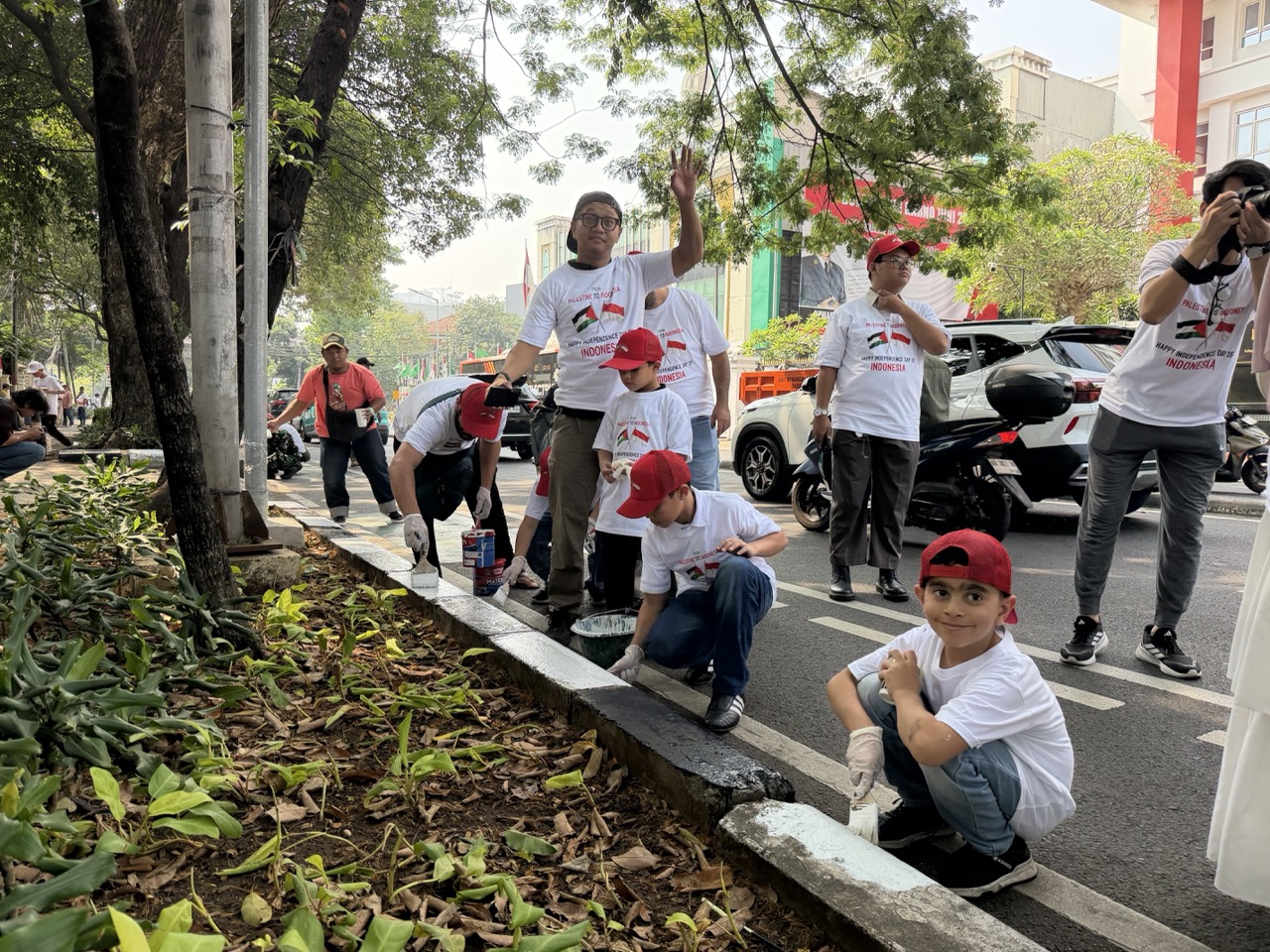
Ambassador Al-Sattari said the voluntary activity was Palestine’s way of thanking Indonesia’s government, communities, Muslim organisations, students and journalists. He emphasized that their consistent support demonstrated the deep and enduring connection between the two peoples.
The Menteng activity added another layer to that history. Instead of focusing on high-level negotiations, it placed bilateral relations on a city street, where cooperation could produce an immediate benefit for the local environment.
Friendship Built Through Everyday Action
Repainting a roadside may appear modest beside the scale of the challenges facing Palestine. Yet public diplomacy often becomes most meaningful when expressed through direct and relatable action.
For Indonesia, the event reaffirmed that support for Palestine is shared not only by government officials but also by communities, students, journalists and ordinary citizens. For Palestine, it offered an opportunity to reciprocate that solidarity while joining Indonesia’s Independence Day spirit.
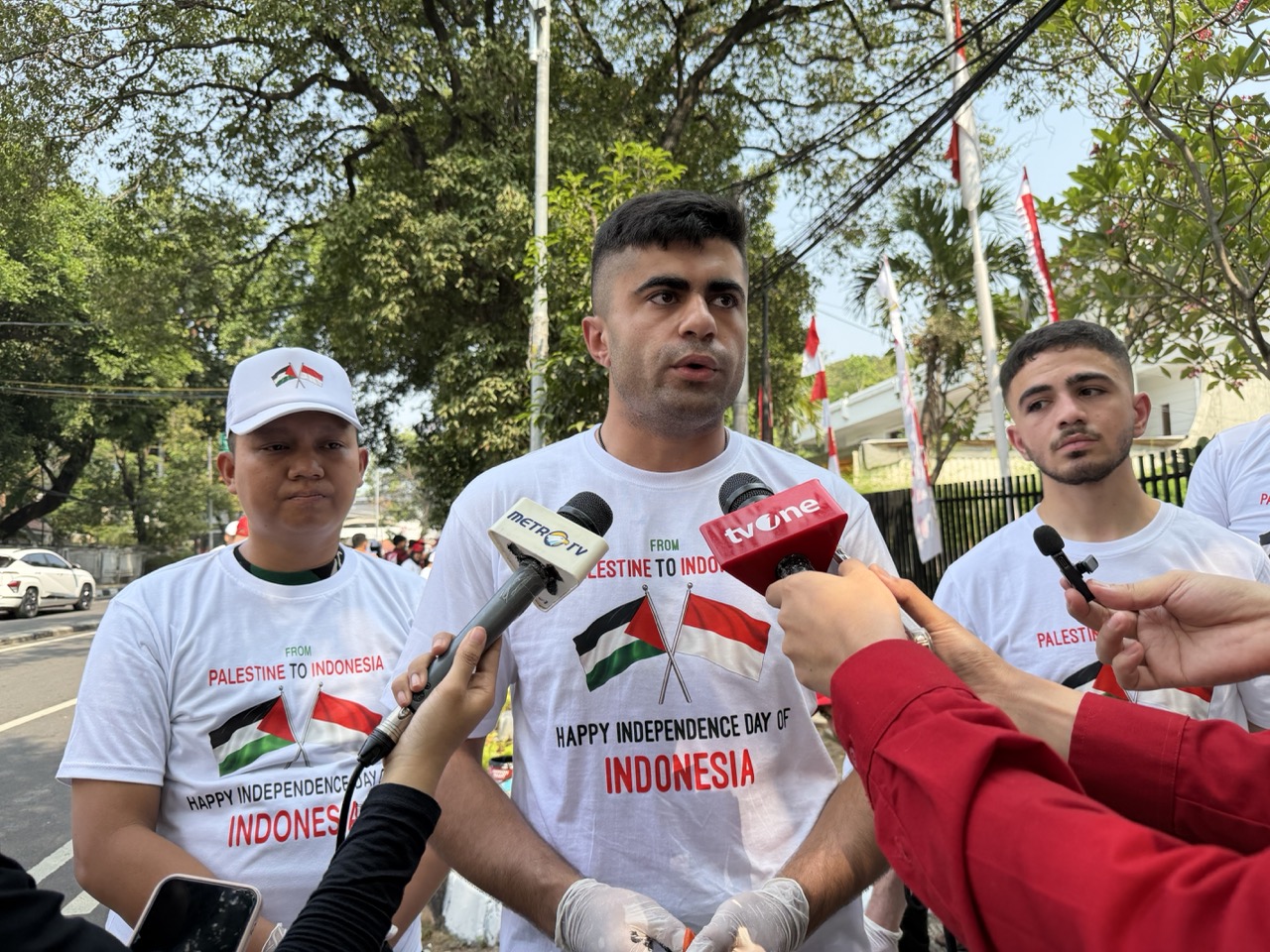
Loai, one of the Palestinian students, said the activity reflected the friendship between the two peoples. “When I was a child, I saw the Indonesian flag in Palestine and learned about our friendship,” he recalled. “When I arrived here, I was surprised by Indonesia’s size and population—and by how deeply Indonesian people love and support us.”
Dabke Concludes a Morning of Solidarity
After completing the work along Jalan Diponegoro, participants and volunteers walked back to the Palestinian Embassy. Gathered in front of the embassy building, they concluded the morning by performing the traditional Palestinian Dabke, celebrating their shared effort through music, dance and togetherness.
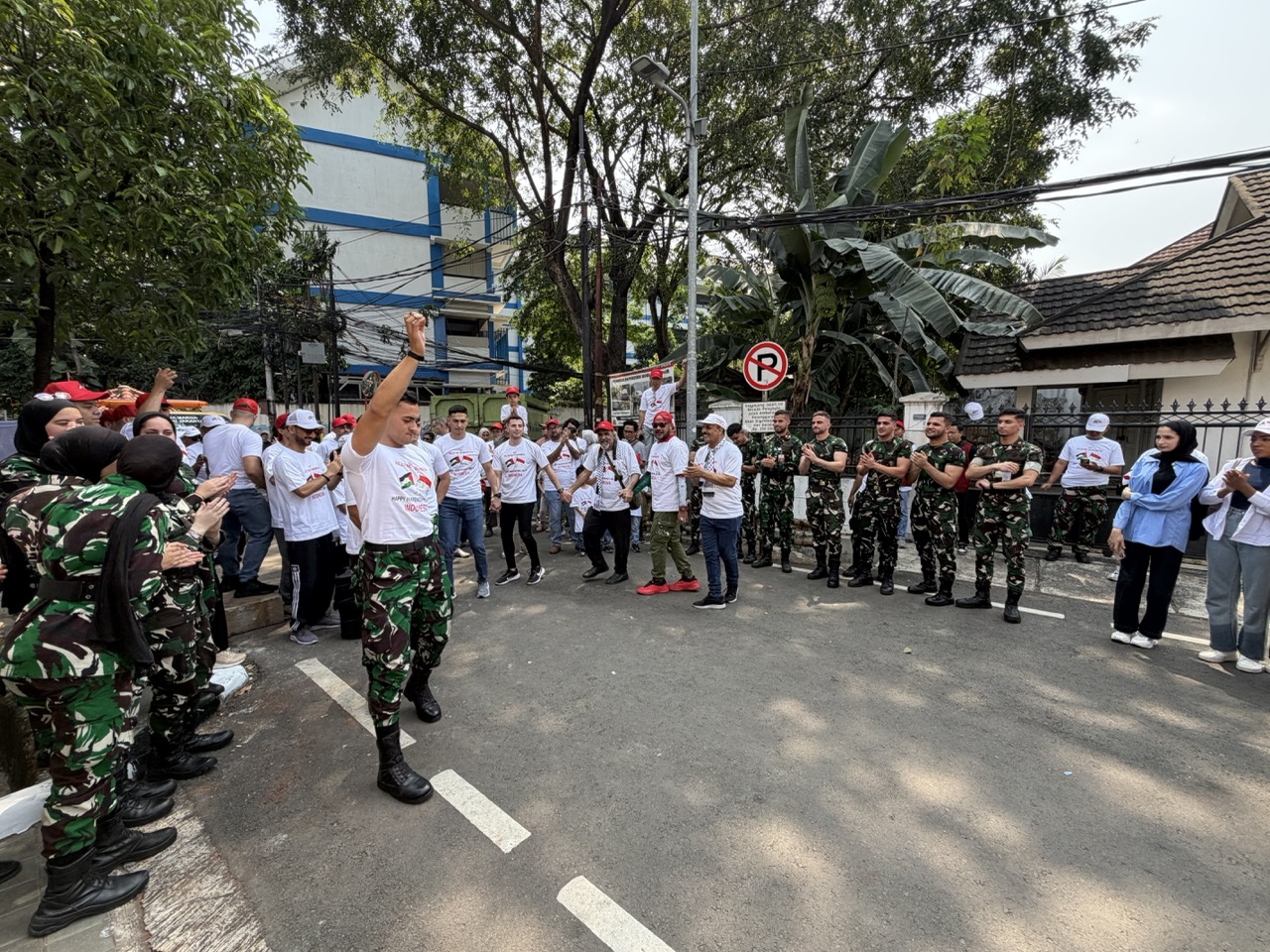
Along Jalan Diponegoro, brushes and buckets became instruments of diplomacy. The result was more than a cleaner streetscape: it was a visible reminder that the friendship between Indonesia and Palestine is sustained through gratitude, participation and work undertaken side by side.


