Khao soi is a traditional curry noodle soup from Thailand. It serves as a primary culinary icon originating from the city of Chiang Mai. Chiang Mai itself is located in the mountainous region of northern Thailand.
A bowl of khao soi presents a combination of two distinct noodle textures. The base of the dish uses boiled soft egg noodles. The top is garnished with deep-fried crispy egg noodles. A rich coconut curry broth completes the dish with a savory and spicy flavor profile.
Historical Roots of the Chin Haw Muslims from Yunnan
The emergence of khao soi in northern Thailand is linked to the migration of Chinese Muslim traders known as the Chin Haw people.
The Chin Haw people migrated from Yunnan Province in southern China around the late 19th century, where they crossed the border regions of Myanmar and Laos.
They introduced wheat and egg noodle recipes to their new settlements in Northern Thailand. As Muslims, they prepared the noodle dish using beef or chicken.
Distinctive Presentation of Khao Soi

The main appeal of khao soi lies in the composition of ingredients served within a single bowl. The foundation consists of soft-boiled egg noodles cooked to a chewy texture.
Meat cuts cooked in seasonings are submerged at the bottom of the bowl along with the broth. The top layer is covered with a mound of crispy fried egg noodles.
A bowl of khao soi is served alongside a small side plate containing sliced red shallots, pickled mustard greens, lime wedges, and chili oil.
Local Variations by Northern Thai Communities

The base ingredients of khao soi diversified as it spread across Northern Thailand. The early version of khao soi introduced by the Chin Haw focused on the use of beef and chicken.
The use of beef and chicken meat became a defining characteristic of Muslim-style khao soi, which remains popular in Chiang Mai.
Over time, local Thai communities developed variations of khao soi using pork and curdled blood cakes.
Regional variations of khao soi also exist in the northern part of Thailand. One of the variations uses rice noodles and minced pork, served without coconut curry broth. Instead, the broth utilizes a tomato and fermented soybean base.
Different Khao Soi Variations in Neighbouring Countries
Khao soi in Thailand shares similarities with several noodle dishes in neighboring countries. In Myanmar, a dish named ohn no khao swe features a flavor profile similar to Thai khao soi.

Ohn no khao swe combines egg noodles with a coconut curry broth containing chicken and chickpea flour as a thickening agent.
Meanwhile, Laos features a dish also named Lao khao soi, though its character differs entirely from both the Thai and Burmese versions.
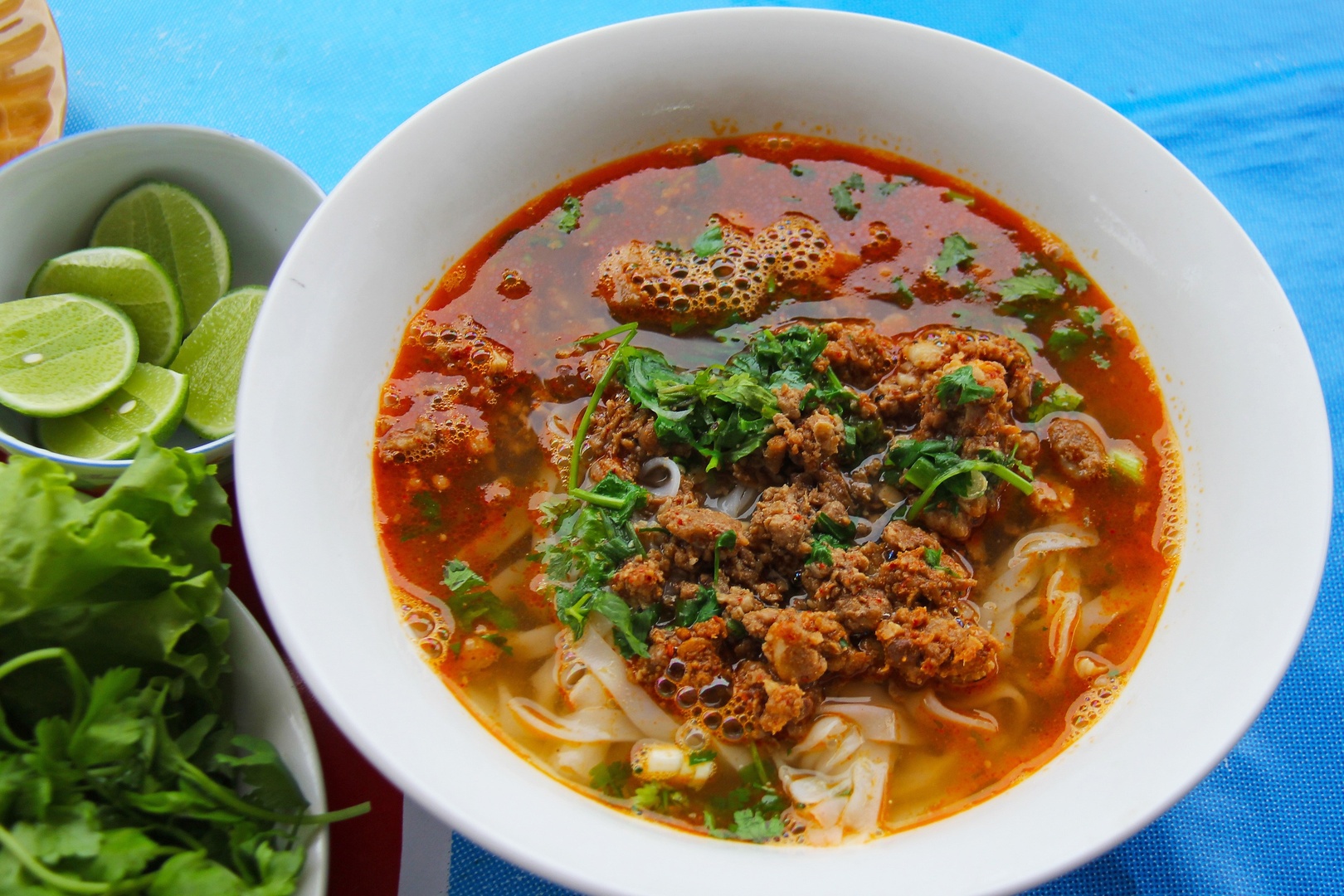
Luang Namtha and Luang Prabang provinces in northern Laos are recognized as the birthplaces of Lao khao soi.
Lao khao soi uses rice noodles made from steamed sheet batter, which are rolled and sliced into wide noodle ribbons.
The broth of Lao khao soi uses a clear stock made from beef, or pork without coconut milk or curry powder.
The bowl is topped with a savory meat sauce made from minced pork, tomatoes, garlic, and fermented bean paste. It is often served with a side plate of fresh greens, including basil, lettuce, cilantro, raw yardlong beans, and lime wedges.