In 1945, nine out of ten Vietnamese could not read or write. Today, 96.1% of adults can, according to the latest UNESCO data compiled by the World Bank, well above the global average, which hovers around 87%.
Getting there took the better part of eight decades, starting with a literacy campaign launched within days of independence and never really letting up since.
A Country That Started Almost From Zero
When Ho Chi Minh declared the Democratic Republic of Viet nam in September 1945, illiteracy sat at roughly 95% of the population, closer to 100% in remote highland areas, and even higher among women.
Under French colonial rule, formal education was largely restricted to a small and predominantly urban elite, while French was the main language of instruction.
After independence in 1945, the new government made fighting illiteracy an immediate priority and introduced compulsory, free education in the national language, according to Viet Nam's Ministry of Education and Training, in a report submitted to UNESCO
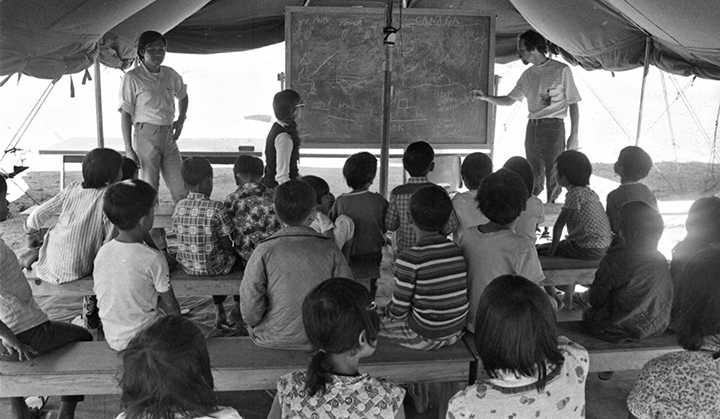
What followed was improvised and enormous. Classes were held in communal houses, market stalls, boat docks, under trees wherever people could gather. Blackboards were dirt floors or banana leaves, chalk was burnt brick or charcoal.
Within a year, close to 75,000 of these classes were running with about 96,000 volunteer teachers, and more than 2.5 million people had learned to read.
It didn't wipe out illiteracy in one stroke. But it set a pattern Viet nam kept returning to for decades, treat basic education as something owed to every village, not just to people who happened to live near a city.
Then the Focus Shifted to Getting Kids Into School
After reunification in 1975, the emphasis started moving from adult literacy campaigns toward something more structural, making sure children were in school from the start, so literacy stopped depending on catching people up later in life.
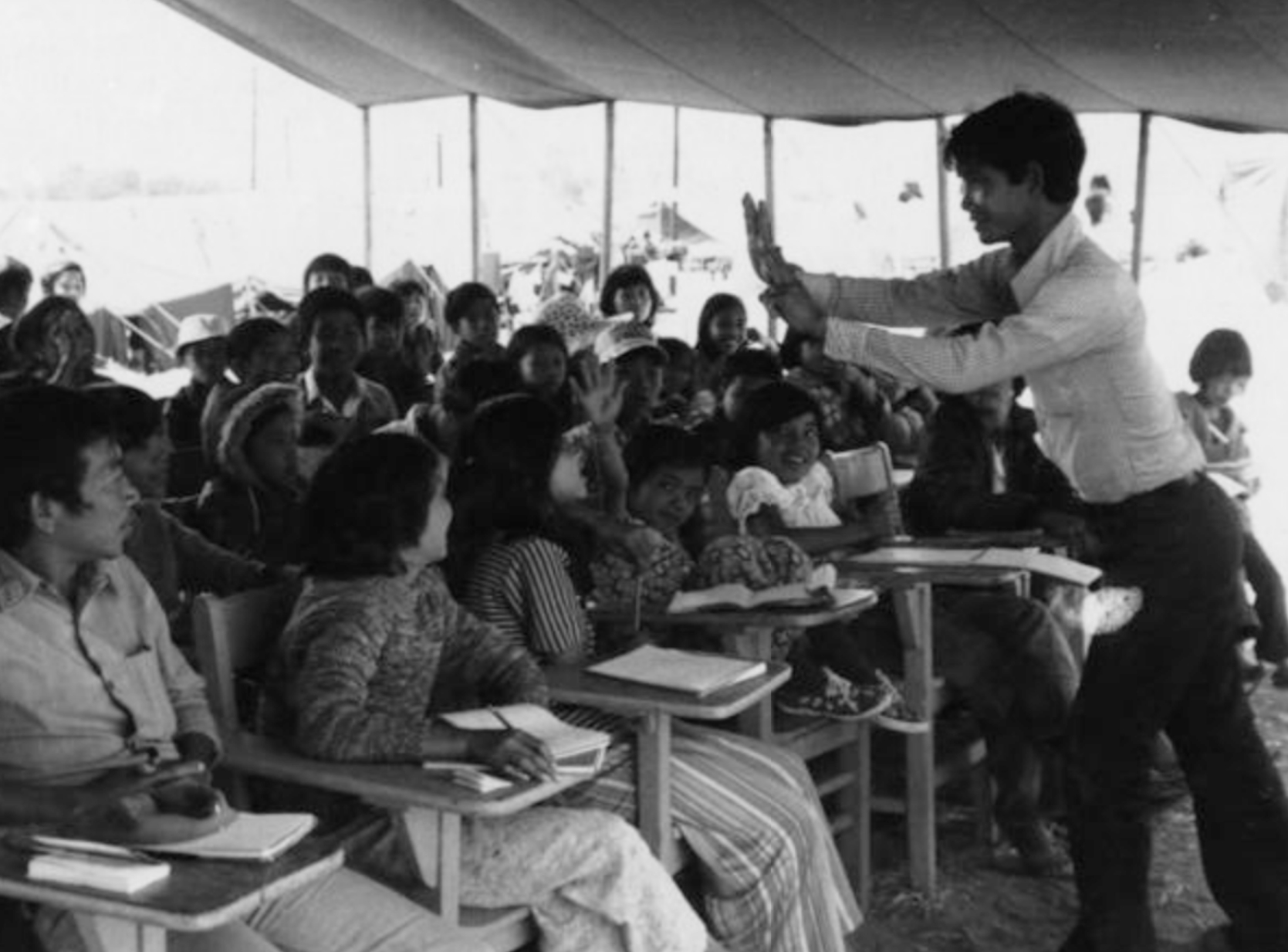
That shift became law in 1991, when Viet nam made five years of primary education compulsory nationwide. It took until 2000 to actually get every child enrolled, but the government backed the policy with real infrastructure. New schools built into the commune system, including small satellite schools reaching villages that had never had one.
The Money Followed the Policy
Viet nam kept the spending up long after primary school became universal. Public education spending rose from 3.9% of GDP in 2002 to 6.3% in 2014, according to World Bank figures, and more than half of that went specifically to primary and lower-secondary schools.
That investment shows up in how well Vietnamese children are actually learning, not just whether they're enrolled. In the 2024 SEA-PLM assessment, Vietnamese fifth-graders recorded the highest share of students reaching high proficiency among participating countries: 66% in reading, compared with a regional average of 40%, and 88% in mathematics, compared with 36% regionally.
Worth noting that those numbers are actually down from 2019, when 82% of Vietnamese fifth-graders hit the top reading band and 92% hit it in math. Viet Nam still leads Southeast Asia by a wide margin, but the slide suggests the post pandemic years put a dent in learning outcomes even in a system that's otherwise been a regional standout and that maintaining this lead isn't automatic.
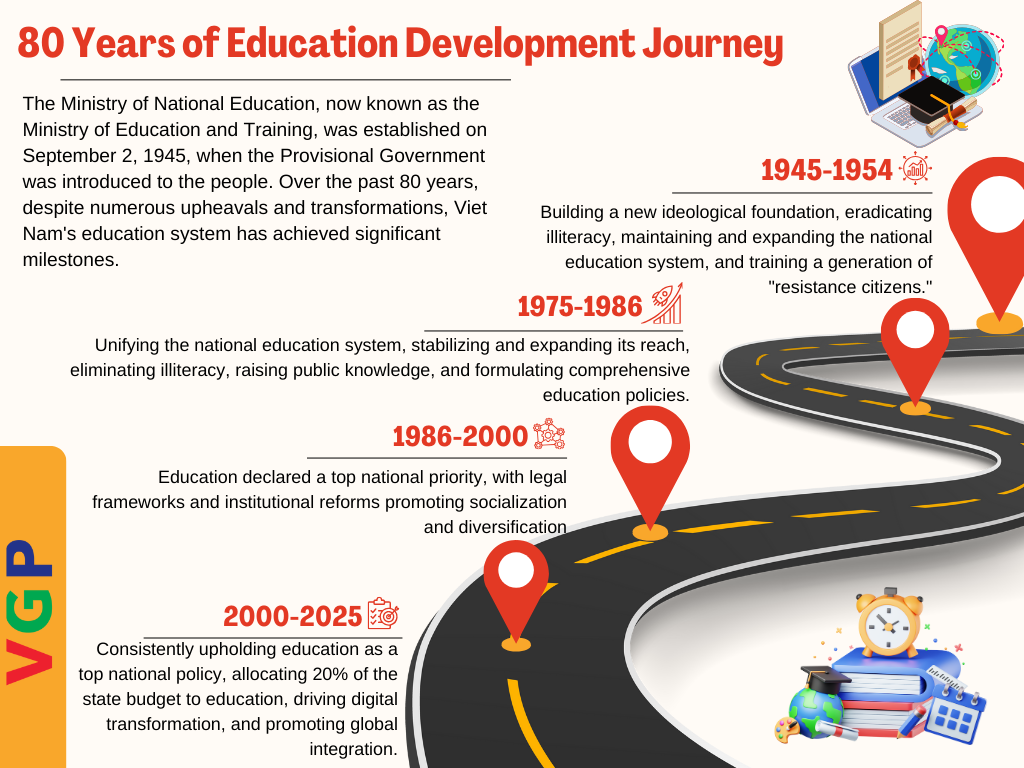
Gaps between regions, especially for ethnic minority and rural students, are still the main unfinished business in Vietnamese education.
Still, the arc is hard to argue with. In 1945, roughly 19 out of 20 adults in Viet nam couldn't read. Today, it's fewer than 1 in 25. Nobody one policy did that, it took a literacy campaign, a compulsory schooling law, decades of school building, and budgets that kept pace, stacked on top of each other for most of a century.