Myanmar's writing system stands out immediately from alphabets like Latin, the one used to write English, Malay, or Indonesian. Its characters are built almost entirely from loops and curves rather than straight lines, giving it a look that's recognizable even to people who can't read it.
That distinct roundness turns out to have less to do with aesthetics than with history, and as it happens, with climate.
Per the Unicode Standard, the script descends from a Brahmi-related writing system brought over from South India to mainland Southeast Asia around the eighth century. The oldest inscriptions found so far date to the eleventh century, and back then the letters looked far more like squares than the rounded shapes we know now.
The Script Wasn't Always Round
Modern Myanmar script is used for Burmese as well as several other languages in the region, including Shan, Karen, Mon, and Palaung. According to Unicode, the script itself has barely changed over the centuries, apart from one very visible shift that its letters gradually rounded out from what were once sharper, more angular forms.
That makes sense once you consider what people were writing on. Early inscriptions were carved into stone, and stone lends itself to straight edges and hard corners. Surviving inscriptions from the period show letterforms that look noticeably more rigid than the script in use today.
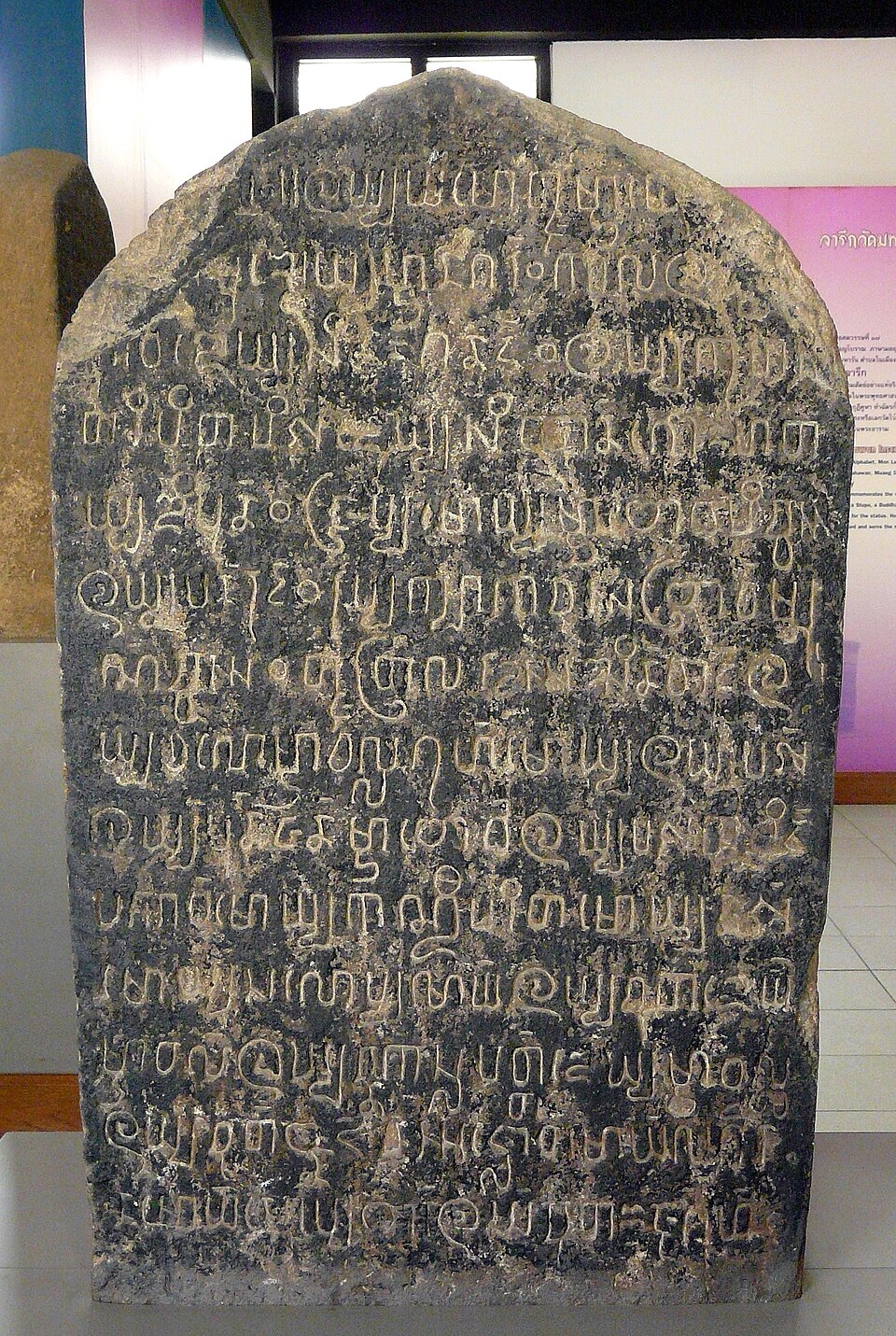
Writing materials changed, though and so did the letters.
Palm Leaves Helped Shape the Alphabet
Unicode links the rounding of Myanmar's letters to the widespread use of palm leaf manuscripts. The idea is fairly simple, rounded strokes were easier to write on palm leaves without damaging them. A sharp angle or a straight line risked tearing or splitting the leaf, while a curved stroke was far less likely to cut through it.
ScriptSource, a writing system reference maintained by SIL International, describes much the same process. Burmese writing was more angular back when it was mainly carved into stone, once palm leaves took over as the everyday writing surface, the shapes rounded out because angular strokes made with a reed pen tended to split the leaf.
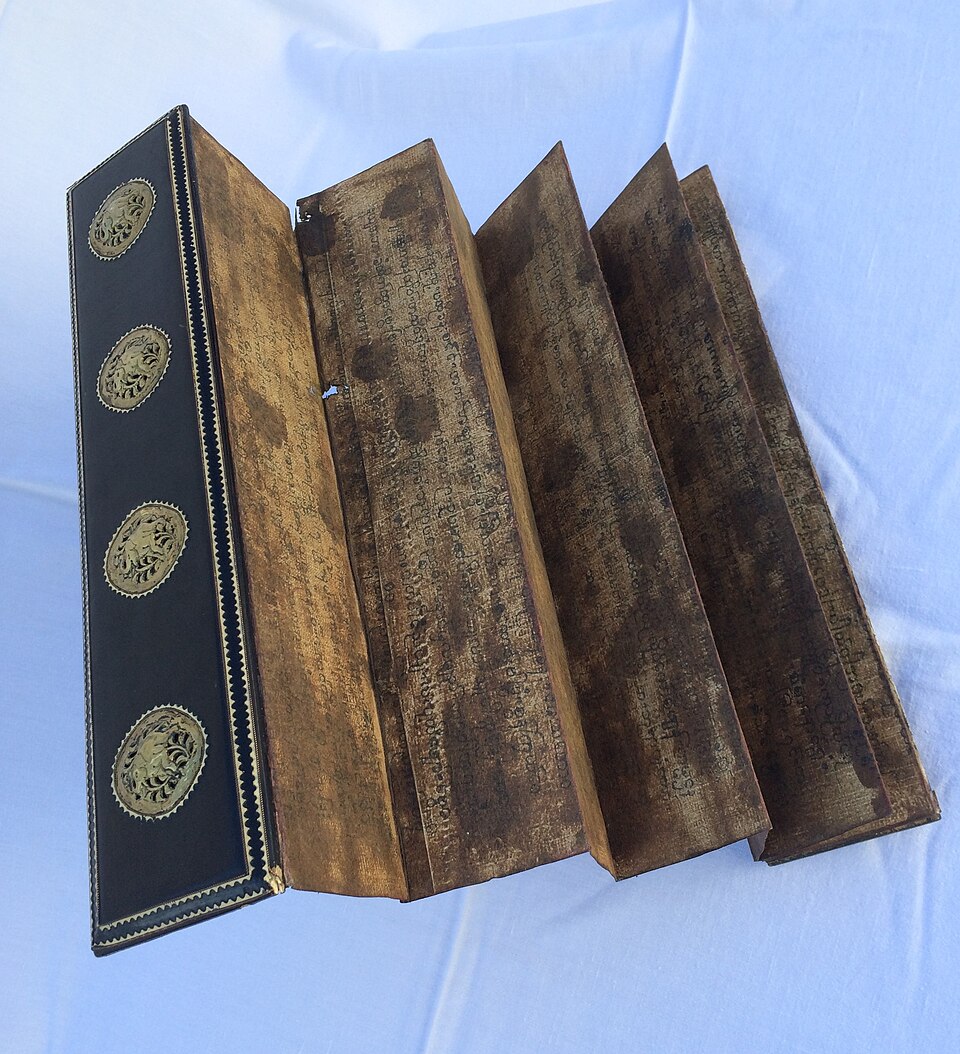
There's also a practical reason palm leaves became the material of choice in the first place, beyond what they did to letter shapes. Myanmar's climate is hot and humid, and that isn't kind to paper or leather, both degrade quickly in that kind of environment. Palm leaves held up far better, which is part of why scribes leaned on them so heavily for so long.
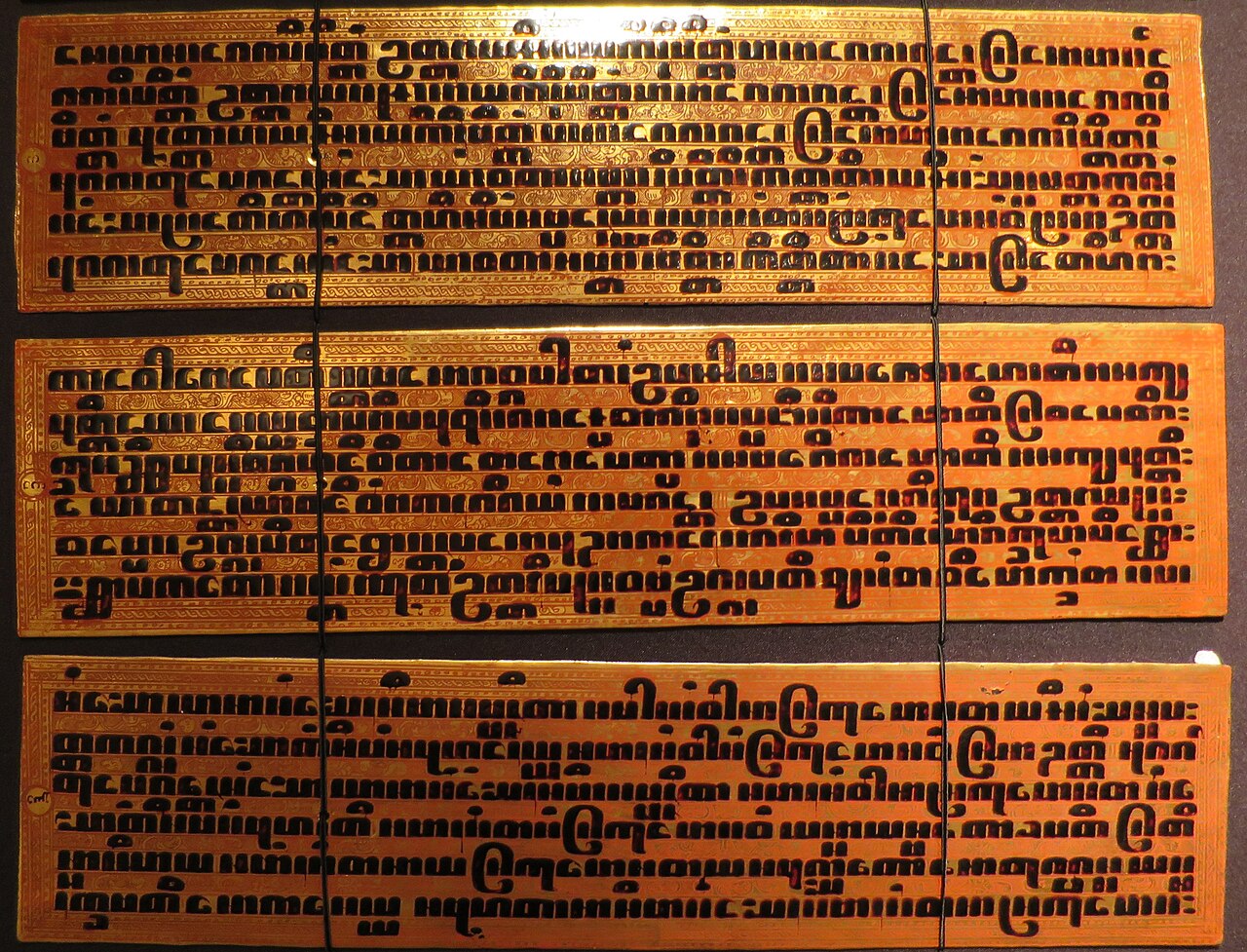
In other words, the climate pushed people toward palm leaves, and palm leaves then pushed the script toward curves. The result, over time, was a script built almost entirely out of loops, circles, and curved forms.
Part of a Larger Southeast Asian Pattern
Myanmar isn't the only place where this happened. Several scripts across South and Southeast Asia trace back to Brahmi and were for most of their history, written on palm leaves too. Sinhala in Sri Lanka shows the same kind of rounding, and so do a number of traditional scripts used across Indonesia.
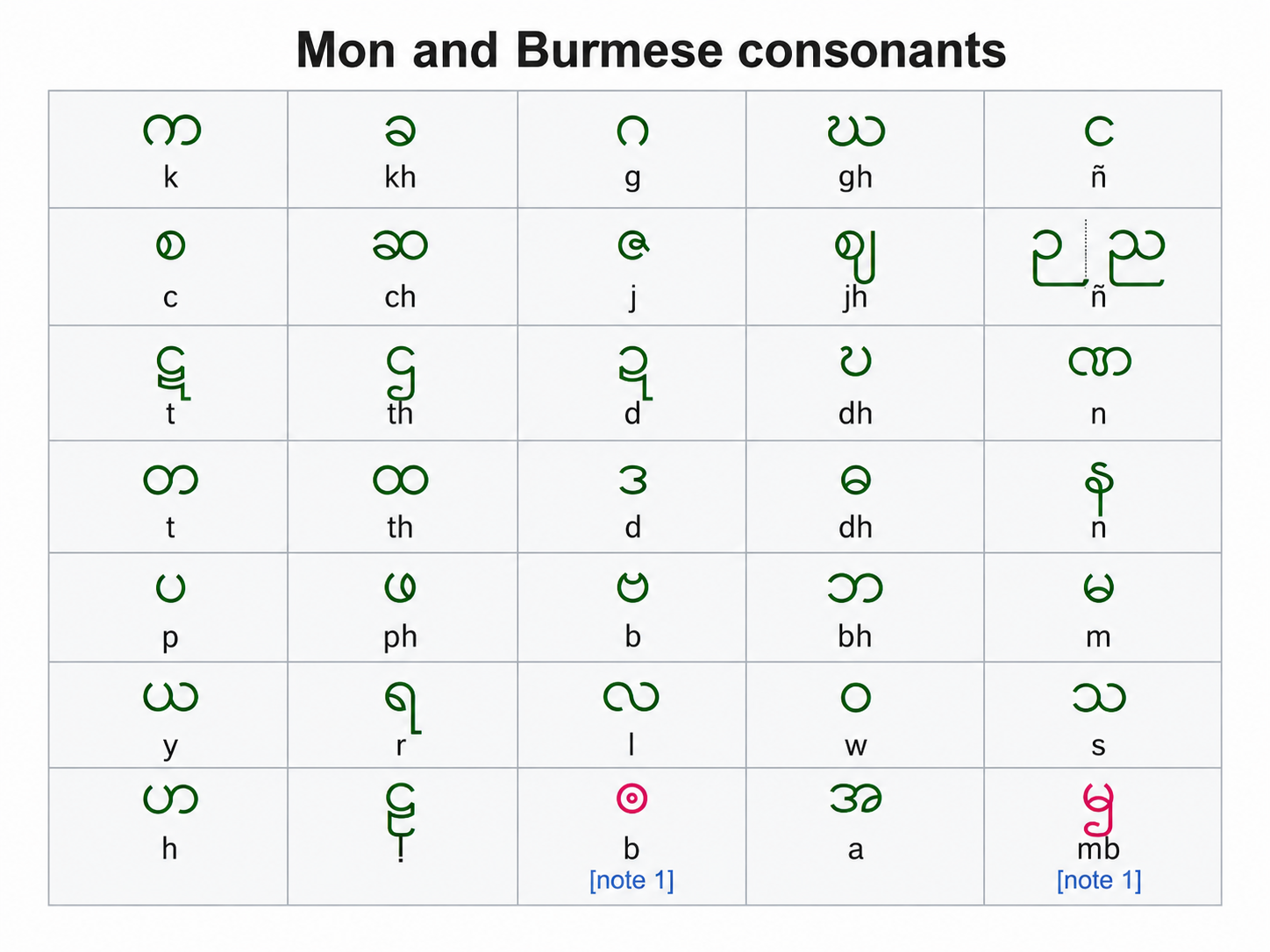
Even so, Myanmar's script tends to stand out as one of the more visually striking examples of the pattern. Today it's the official script of Myanmar, used not just for Burmese, the country's majority language, but also for a number of minority languages spoken there and in parts of neighboring countries, including Mon, Shan, and Karen.
A Thousand-Year-Old Script Still in Use
The earliest known Myanmar inscriptions go back to around the eleventh century. More than a thousand years later, the script is still in daily use and it still carries traces of where it came from.
Its most recognizable feature is also the one people tend to notice first, how round it looks. That roundness was never a stylistic choice.
It's the residue of centuries of practical writing of scribes working with reed pens on palm leaves in a climate that made other materials fall apart, and of a script that adapted, stroke by stroke, to the surface it was written on.