


Laos may be Southeast Asia’s only landlocked country, yet water defines its landscape and identity. Across its mountainous 236,800 square kilometres, life follows the Mekong—a river connecting villages, farms, temples and memories through a rhythm that can feel remarkably calm.
The Mother of Waters
Known locally as Mae Nam Khong, or the Mother of Waters, the Mekong is central to transport, agriculture, fishing and food security. Wooden boats move between riverside communities while fishers cast woven nets against forested hills. Markets reflect the river’s seasonal abundance through fish, vegetables, riverweed and sticky rice.
The Mekong Basin supports around 70 million people across mainland Southeast Asia, making its health inseparable from regional prosperity. Former Mekong River Commission chief executive Anoulak Kittikhoun, the organisation’s first Lao leader, argued that science must be taken “directly to the people, so that we can discuss Mekong issues based on facts and not feelings.”
His words carry particular weight in Laos, where changing rainfall, hydropower development and pressure on river ecosystems are reshaping livelihoods. The country retains approximately 62 percent forest cover, but conservation remains essential to protect watersheds, wildlife and rural communities.
Luang Prabang’s Living Architecture
At the meeting point of the Mekong and Nam Khan rivers, Luang Prabang provides the clearest expression of Laos’s spiritual and architectural character. Inscribed on UNESCO’s World Heritage List in 1995, the former royal capital blends traditional Lao wooden houses, Buddhist monasteries and European-influenced buildings within a mountainous landscape.
Wat Xieng Thong, completed in the 16th century, is among its defining landmarks. Its sweeping, multi-tiered roofs descend close to the ground, while gold stencilling and a glass mosaic depicting the Tree of Life reveal the precision of Lao craftsmanship.
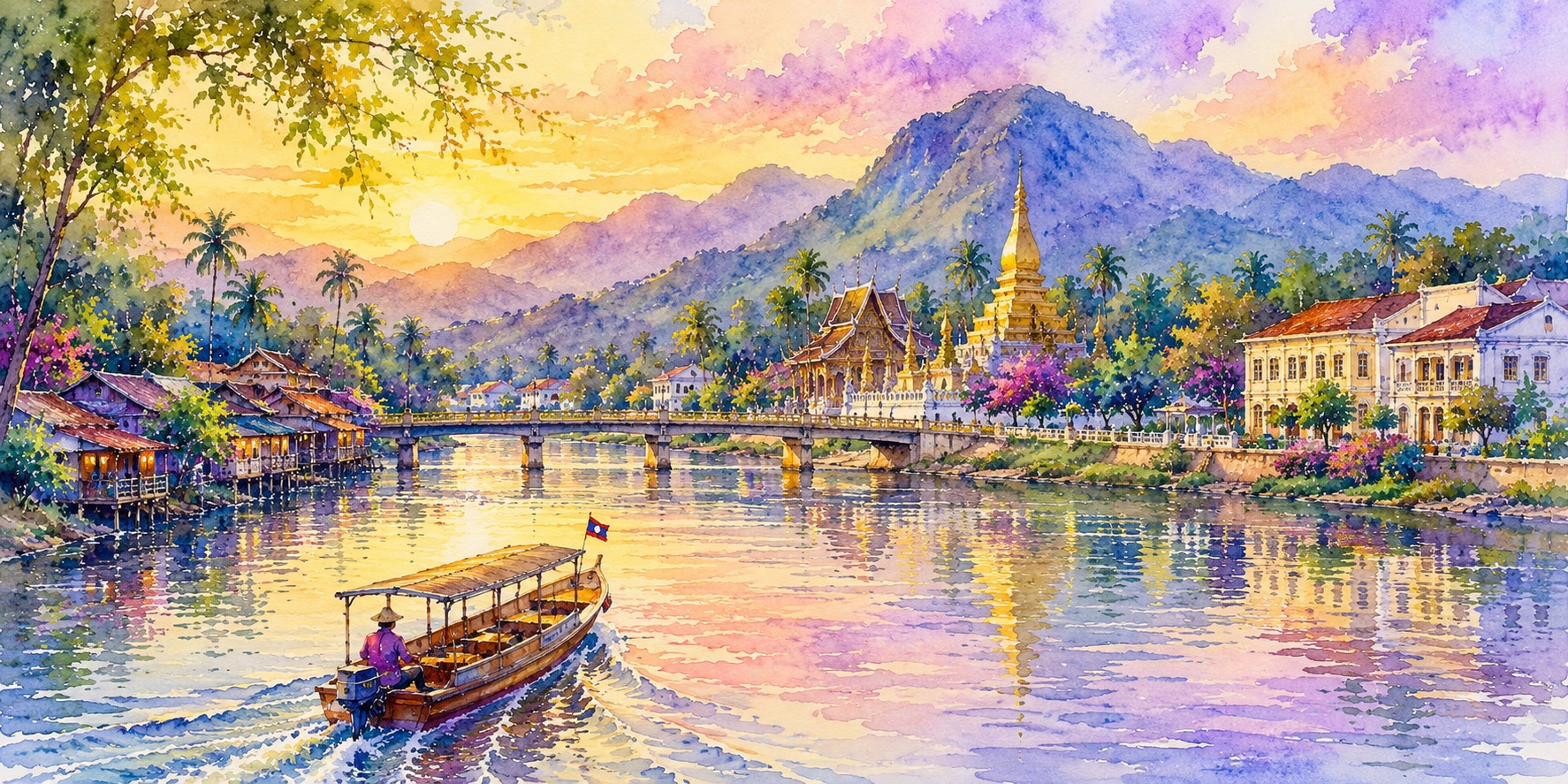
Luang Prabang is not preserved as an empty museum. Families still inhabit its historic neighbourhoods, monks study within its monasteries, artisans weave silk and vendors gather at morning markets. Heritage remains meaningful because it continues to support everyday life.
From Morning Alms to the Sound of the Khaen
Before sunrise, saffron-robed monks walk barefoot through Luang Prabang during Sai Bat, receiving sticky rice and other offerings from residents. The ceremony expresses generosity, humility and the relationship between monasteries and their surrounding communities.
Its quiet discipline contrasts with the growing attention of tourism, creating a shared responsibility to protect the ritual from disruption. Visitors are expected to observe respectfully, maintain their distance and recognise that the procession is an act of faith rather than a staged attraction.
In the evening, another expression of Lao identity emerges through the khaen, a bamboo mouth organ whose layered tones accompany storytelling, singing and lam vong circle dancing. UNESCO recognised the music of the Lao khaen as intangible cultural heritage in 2017, affirming its place within the country’s living traditions.
Preserving a Gentle Strength
Lao Culture Minister Suanesavanh Vignaket has observed that “strengthening regional identity through inclusive policies can foster understanding and cooperation.” In Laos, that identity is sustained by communities that continue to practise, teach and adapt their traditions.
The country’s quiet rhythm should not be mistaken for stillness. From riverside fisheries to temple conservation and musical transmission, Laos is constantly negotiating how to welcome development without losing its cultural foundations.
Along the Mekong, the soul of Laos remains visible in the relationship between water, faith and community—a gentle but enduring strength flowing through the landlocked heart of Southeast Asia.


