


Singapore has only one landfill, Semakau Landfill, and it is projected to reach capacity by 2035. For a country this small, there is no large reserve of land that can simply be turned into a new landfill once Semakau is full.
That leaves Singapore with one option: changing the way it thinks about waste itself. Instead of treating waste as something that must simply be disposed of, it can be treated as a resource for construction.
An Island Built from Ash
Semakau itself is the first example of this approach. Built between 1995 and 1999 at a cost of S$610 million, the landfill was created by enclosing 350 hectares of sea around Semakau and Sakeng islands.
A seven-kilometer rock bund was built around the area and lined with an impermeable membrane and marine clay. The layers were designed to prevent leachate from escaping into the open sea.
Since opening on April 1, 1999, the site has received more than 800,000 tons of incineration ash each year. It also takes in stabilized construction and demolition waste.
But continually adding ash is not a permanent solution. It only pushes the deadline forward until the landfill eventually reaches its full capacity.
Turning Ash into Building Materials
This is where NEWSand comes in. The name refers to processed incineration bottom ash, or IBA, which can be reused as a construction material after metals are removed and the ash undergoes washing and chemical stabilization.
Singapore’s National Environment Agency (NEA) began testing the material in September 2020. One pilot project used processed IBA to build road base and sub-base layers along Tanah Merah Coast Road.
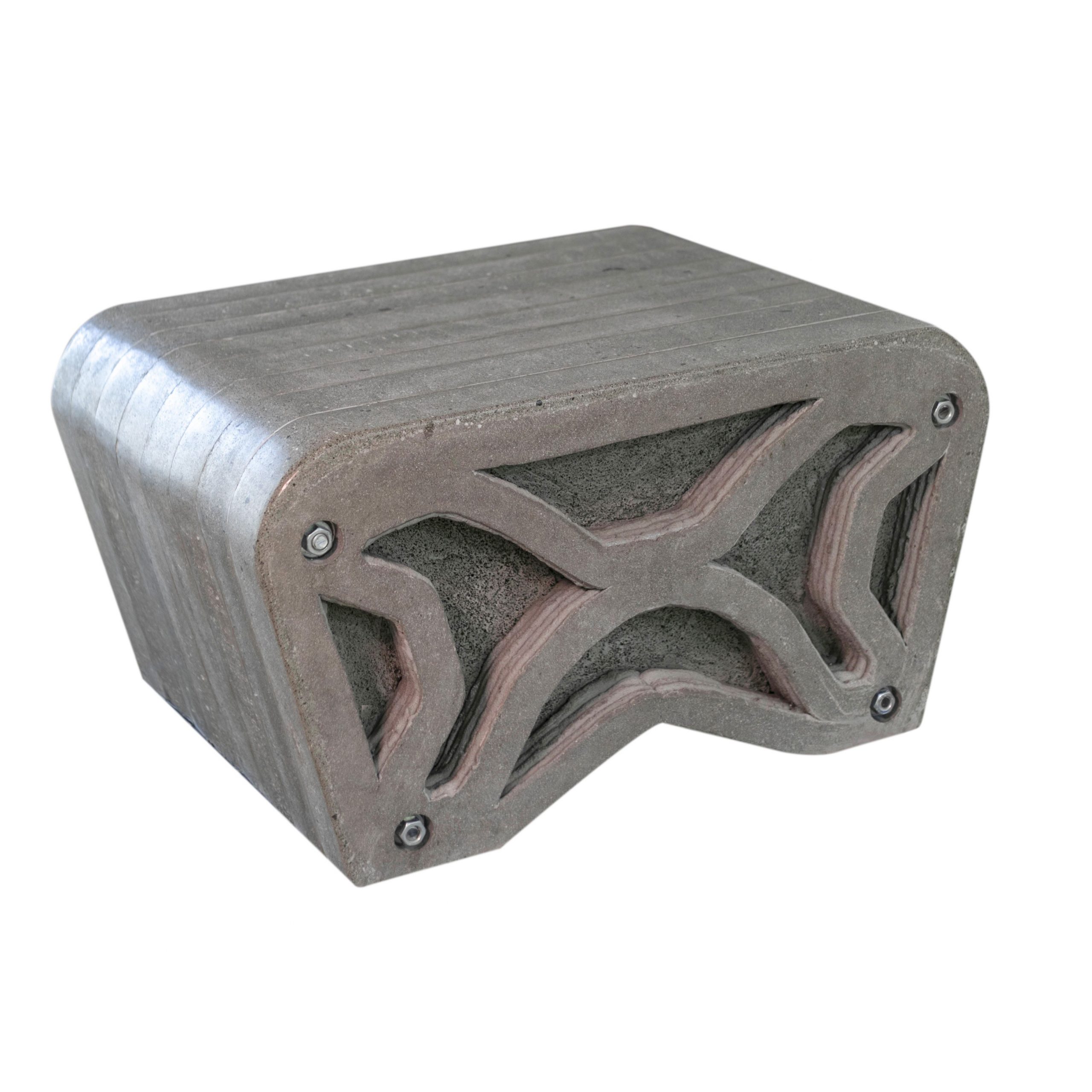
NEWSand has since been used as a sub-base material on the same road and for concrete wheel stops at CT FoodNex Mandai. According to the NEA, its performance is comparable to that of conventional construction materials.
A concrete plaza in front of the Environment Building on Scotts Road was also built entirely from NEWSand.
The NEA is also testing slagging gasification technology at Nanyang Technological University’s Waste-to-Energy Research Facility. The technology can convert municipal waste directly into a glass-like slag without conventional incineration.
The resulting material can then be used as NEWSand without additional processing.
If these approaches can be scaled up, some of Singapore’s municipal waste may no longer need to end up at Semakau at all. Instead, it could become part of the roads, sidewalks, and public plazas that people use every day.
One Facility for Water and Waste
On the other side of Singapore, in Tuas, an even larger project is taking shape: Tuas Nexus. It is described as the world’s first facility to integrate wastewater treatment and solid waste management at a single site.
The project consists of two major facilities. The Tuas Water Reclamation Plant (TWRP) is set to become the world’s largest membrane bioreactor facility, with the capacity to treat up to 800,000 cubic meters of wastewater per day.
The second is the Integrated Waste Management Facility (IWMF). It will have a nominal capacity of 5,800 tons of municipal waste per day, making it one of the world’s largest and most advanced waste-to-energy facilities.
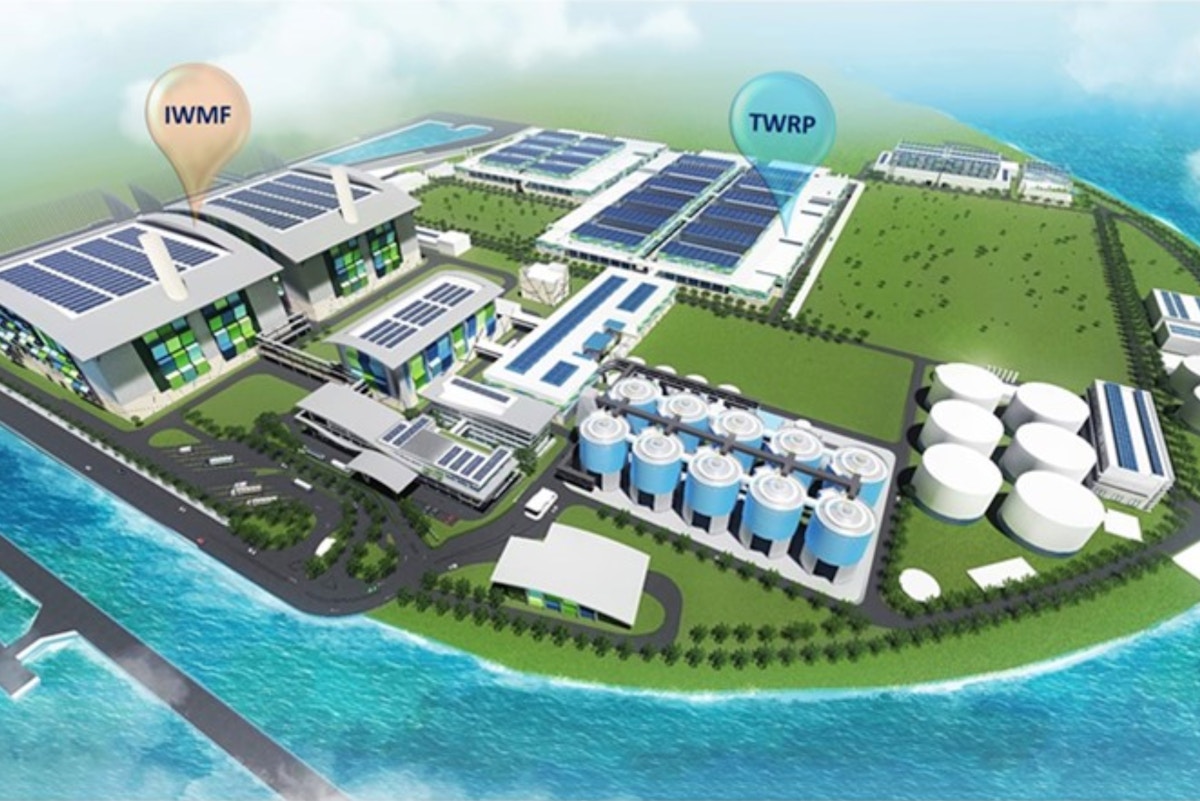
The first phase of the IWMF includes a waste-to-energy plant with a capacity of 2,900 tons per day, a 250-ton-per-day materials recovery facility, an 800-ton-per-day sludge incineration facility, and a food waste treatment facility capable of handling 400 tons per day.
Singapore’s National Environment Agency (NEA) and national water agency PUB initially targeted 2025 for the completion of the project’s first phase. The COVID-19 pandemic and labor challenges pushed the timeline back, however.
The project is now expected to begin phased completion in mid-2026.
Once fully operational, Tuas Nexus is projected to generate around 80 percent of the energy needed to treat its wastewater on site. It is also expected to reduce carbon emissions by more than 200,000 tons of CO₂ per year.
That reduction is equivalent to taking around 42,500 cars off Singapore’s roads.


