


Thailand moves between stillness and motion. Temple bells ring above Bangkok traffic, long-tail boats cross historic canals and fishing villages share southern coastlines with international resorts. Its identity has been shaped by an enduring ability to absorb change while preserving a recognizably Thai sense of place.
Sacred Horizons Across the Kingdom
Covering 513,115 square kilometres, Thailand stretches from the forested mountains of the north to a narrow tropical peninsula between two seas. Doi Inthanon rises 2,565 metres above Chiang Mai Province, while the broad Central Plain has long supported rice cultivation, settlements and historic capitals.
Spiritual architecture gives this diverse geography a common visual language. The ornate buildings of Bangkok’s Grand Palace rise above the Chao Phraya River, while Wat Phra That Doi Suthep overlooks Chiang Mai from its mountain setting. Elsewhere, the brick ruins of Ayutthaya and Sukhothai preserve the memory of kingdoms that shaped Thai art, statecraft and Buddhist traditions.
Inside a temple courtyard, lotus offerings, incense and gently moving bells create a moment of calm. These spaces remain active centres of worship and community life rather than monuments separated from the present.
Water Connects River and Coast
The Chao Phraya River remains one of Bangkok’s central arteries. Ferries carry commuters between neighbourhoods, riverfront temples and commercial districts, while the city’s surviving klongs recall an era when boats were the principal means of transport. Markets in Damnoen Saduak and Amphawa preserve parts of this riverine culture, although they now also serve a large tourism economy.
Farther south, Thailand has approximately 3,219 kilometres of coastline facing the Gulf of Thailand and the Andaman Sea. Phang Nga Bay’s limestone formations, Krabi’s beaches and Phuket’s maritime communities reveal how fishing, trade and travel have developed around the same waters.
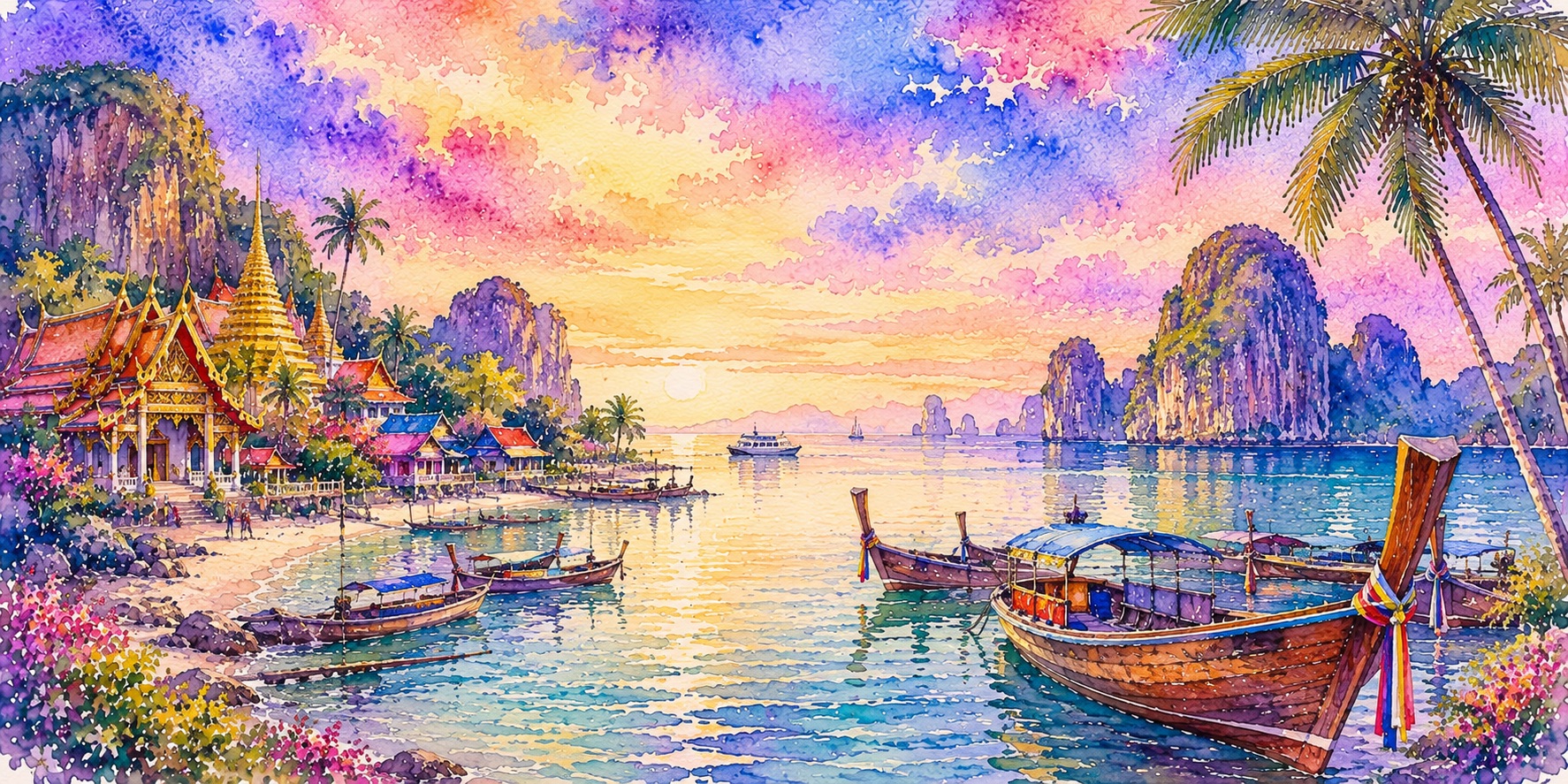
Tourism brings livelihoods and global visibility, but it also places pressure on coral reefs, freshwater supplies, waste systems and coastal communities. The challenge is to keep these landscapes economically productive without weakening the ecosystems and local cultures that attract visitors.
Living Traditions Welcome the World
Thai culture continually transforms tradition into contemporary experience. Bangkok chefs reinterpret regional dishes, Chiang Mai designers work with northern textiles and younger musicians combine modern sounds with instruments such as the phin. Yet familiar expressions of sanuk—finding enjoyment in life—and sabai—a sense of comfort and ease—continue to shape social interaction.
UNESCO has recognized several Thai traditions, including Khon masked dance, Nuad Thai massage, southern Nora dance drama and Songkran. Their continued practice shows that heritage survives through performers, craftspeople, families and communities, not simply through formal preservation.
Tourism Authority of Thailand Governor Thapanee Kiatphaibool captured this approach by saying, “We’re inviting the world to see Thailand through the eyes of those who live it—artists, chefs, creators, and communities.”
Tourism Finds a More Sustainable Rhythm
Thailand is increasingly directing visitors toward community-based experiences and lesser-known provinces while promoting responsible operators, rail travel and conservation-led destinations. Projects in Ko Lanta, Chiang Khan and Nan demonstrate how tourism can support environmental restoration and local income rather than concentrating benefits in established resorts.
The country’s adaptability was expressed poetically by then Foreign Minister Maris Sangiampongsa: “Those who endure are not those who resist the current, but those who move along with it wisely.”
Thailand’s soul lies in that carefully negotiated movement. From golden temple spires to Andaman waves, it continues to welcome the world while drawing stability from its waterways, spiritual traditions and communities.


