


Before sunrise on September 20, volunteers across Southeast Asia will begin gathering beside rivers, beaches, markets and neighbourhood streets. Their bags and gloves represent more than a one-day cleanup: they are part of a regional effort to prevent waste, protect livelihoods and change how communities value what they consume.
Context: A Global Day with a Southeast Asian Pulse
World Cleanup Day began as a citizen-led movement and became an official United Nations observance in 2024. It is now marked every September 20, meaning the 2026 event falls on Sunday rather than the third Saturday of the month.
Since 2018, the movement has involved more than 139 million people across 212 countries and territories. In 2025 alone, approximately 25 million people in 190 countries and territories participated. Southeast Asia’s densely populated cities, extensive river systems and long coastlines give the region a particularly important place in this global effort.
This year’s theme, “From Clean Plates to Clean Cities,” expands attention to food waste and its connections with municipal services, consumption and urban sustainability.
Challenge: Waste Travels Beyond Community Boundaries
Discarded packaging on a Jakarta street can enter a drainage canal, flow into a river and eventually reach the Java Sea. Similar journeys occur along waterways in Manila, Bangkok, Ho Chi Minh City and other regional cities. Waste is therefore not confined to the place where it is discarded.
The accompanying regional chart estimates that Asia mobilized approximately 5.8 million volunteers and collected around 185,000 tonnes of waste, the largest volume among the regions displayed. However, these figures cover Asia as a whole, not Southeast Asia specifically, and the chart does not identify its year or original dataset. It should consequently be read as an illustration of regional scale rather than a verified Southeast Asian cleanup index.
Community: Local Action Produces Visible Results
Recent campaigns demonstrate what organized participation can accomplish. During World Cleanup Day 2025, more than 300 volunteers cleaned Pham Hung Street in Hanoi. In the Philippines, over 80,000 people reportedly collected more than 400,000 kilograms of waste through nationwide coastal-cleanup activities.
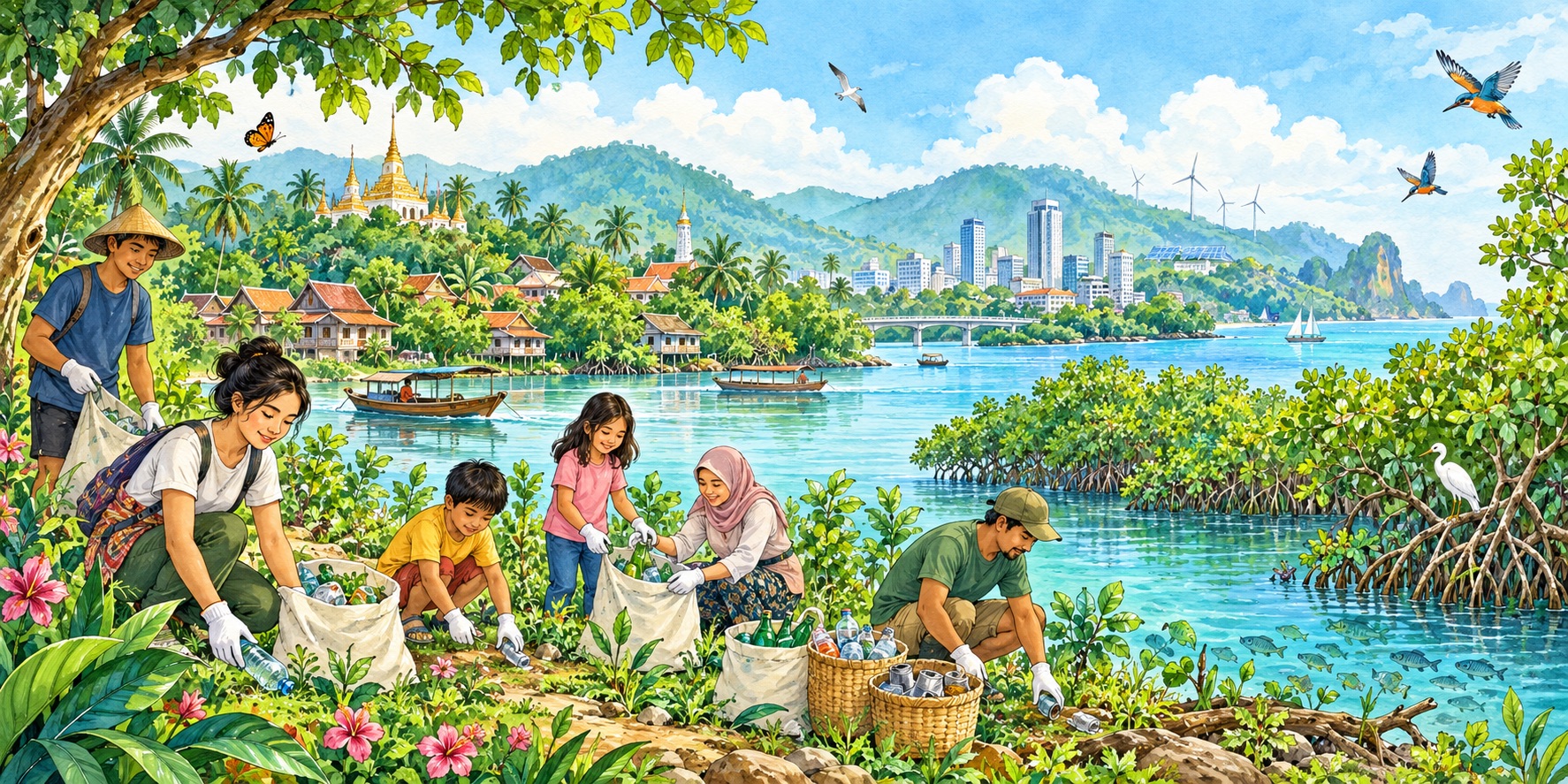
In Bandung, volunteers and students removed approximately 2.23 tonnes of plastic and household waste from the Cikapundung River. Bali-based Sungai Watch has taken a longer-term approach by installing hundreds of floating barriers and conducting recurring river cleanups. By early 2024, the organization had collected more than 1.7 million kilograms of waste.
Indonesian environmental engineer Yuyun Ismawati has connected environmental protection directly with local prosperity: “We have to protect Bali or else tourists won’t want to come.” Her observation applies throughout a region where beaches, rivers and marine ecosystems support tourism, fishing and community livelihoods.
Change: Moving from Collection to Prevention
Removing waste remains necessary, but cleanup bags cannot solve a system that continuously produces unnecessary disposable packaging. Volunteers can strengthen their impact by recording the types, materials and brands they collect. Such audits help identify recurring sources of pollution and provide evidence for better packaging policies.
Filipino environmental advocate Von Hernandez has summarized the challenge clearly: “It’s not enough to clean up plastic waste, we must challenge the business models that perpetuate our addiction to single-use plastic.”
That requires cooperation among citizens, companies and governments. Extended producer-responsibility policies can require manufacturers to help collect and manage their packaging. Refill systems, reusable containers, community composting and reliable waste separation can prevent rubbish from reaching waterways. The 2026 focus on food waste also encourages markets, hotels and households to redistribute edible food and compost unavoidable organic waste.
Continuity: Keeping the Momentum Beyond September
The strongest cleanup campaigns begin before volunteers arrive and continue after the photographs are taken. Organizers should document what is collected, explain where sorted materials will go and share findings with municipal authorities and businesses. Schools can adopt nearby waterways, neighbourhoods can maintain regular collection schedules, and tourism operators can reduce disposable products at their source.
This continuity transforms volunteering into civic participation. It also challenges “trash blindness,” the habit of accepting litter as an ordinary feature of public space. Once people understand where waste comes from and where it travels, they become better equipped to demand lasting solutions.
World Cleanup Day offers Southeast Asia a powerful demonstration of collective care. Its success in 2026 will be measured not only by tonnes collected, but by the waste prevented and the cleaner communities maintained throughout the year.


