


A memoir of Indonesia’s past, songs familiar to younger listeners and Palestinian fiction brought different worlds into conversation in Ubud. As the Ubud Writers & Readers Festival opened its 2026 edition, literature became a meeting place for personal memory, cultural exchange and questions about how people live together.
Running from October 21–25, the festival’s 23rd edition brought together more than 150 authors, thinkers, journalists and poets, with over 100 main-programme conversations and panels. Its theme, “Samarasā: Awareness. Empathy. Action.”, connected the pleasure of reading with the responsibility of listening.
From Writing Retreats to a Balinese Welcome
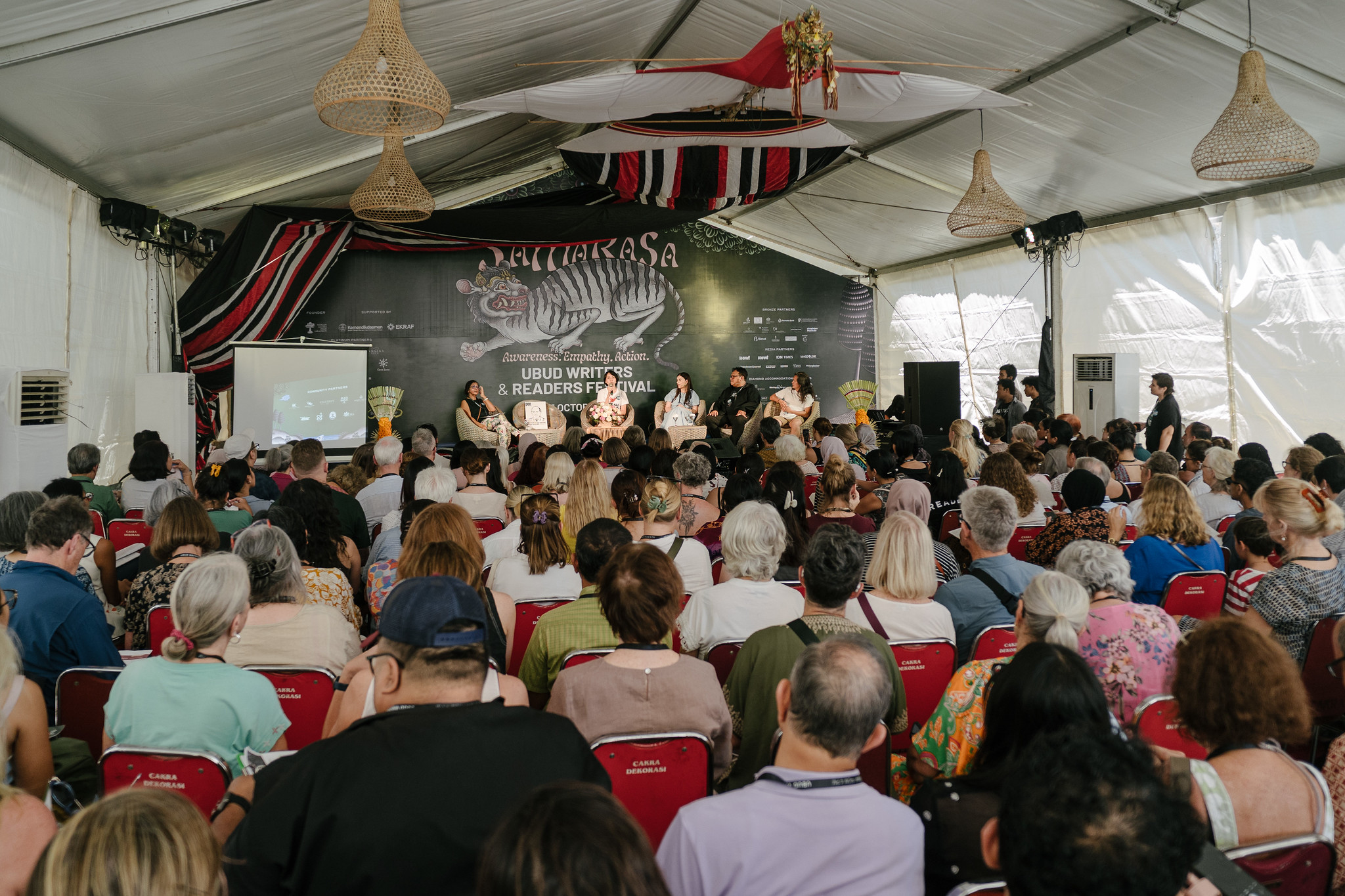
The literary exchanges began before the formal opening. October 20 marked the final day of writing retreats led by Peter Godwin and Xu Xi, giving participants time to develop their craft before the larger festival programme began.
On October 21, Puri Agung Ubud hosted the opening gala. Puspanjali dancers welcomed an international gathering in a setting that placed Balinese cultural traditions at the centre of the occasion. Organised by Yayasan Mudra Swari Saraswati, the festival connected its global outlook with the community and cultural life of its host town.
That evening’s programme extended beyond the ceremony. A free performance at Ubud Square combined dance, music and spoken word, while the Women’s Poetry Slam at Indus provided another space for literary expression. Together, these events introduced a festival in which stories could be spoken, sung and performed as well as read.
October 22 Put Indonesian Voices in Global Conversation
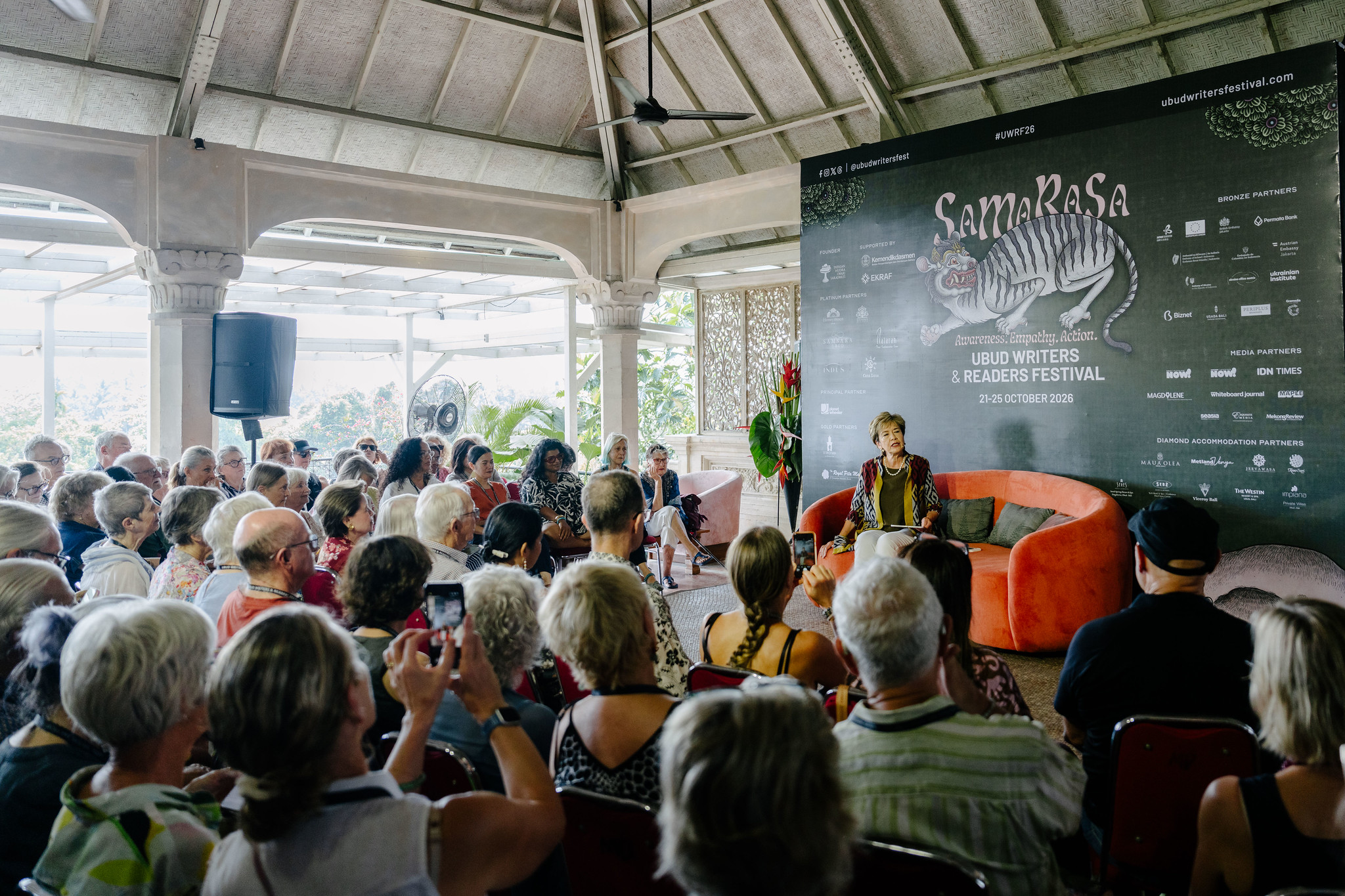
Thursday, October 22, marked the start of the main sessions across the Agung, Indus and Valley stages. Following founder and director Janet DeNeefe’s welcome, the programme opened with a keynote by Tari Lang, whose memoir, My Neighbour, the Dictator, revisited her experience of Indonesia’s upheaval in 1965.
Personal testimony provided a starting point for wider discussions about history, power and belonging. Kiran Desai’s conversation about The Loneliness of Sonia and Sunny appeared alongside sessions exploring language, censorship, literary magazines and the responsibilities of writers.
In “Literature: A Mirror to the World,” the programme brought Desai together with Palestinian author Adania Shibli and Indonesian writer Raisa Kamila. The pairing positioned Indonesian literature within an international conversation about the forces shaping individual lives.
Other sessions kept the discussion close to local experience. “Language and Belonging” featured Cyntha Hariadi, Grace Tioso and Valiant Budi, while “Who Gets to Tell the Story of Paradise?” invited scrutiny of the narratives surrounding places such as Bali. For an island frequently described through tourism, the question offered a useful opening: whose experiences become visible, and whose remain outside the picture?
Music Brought Another Generation into the Discussion
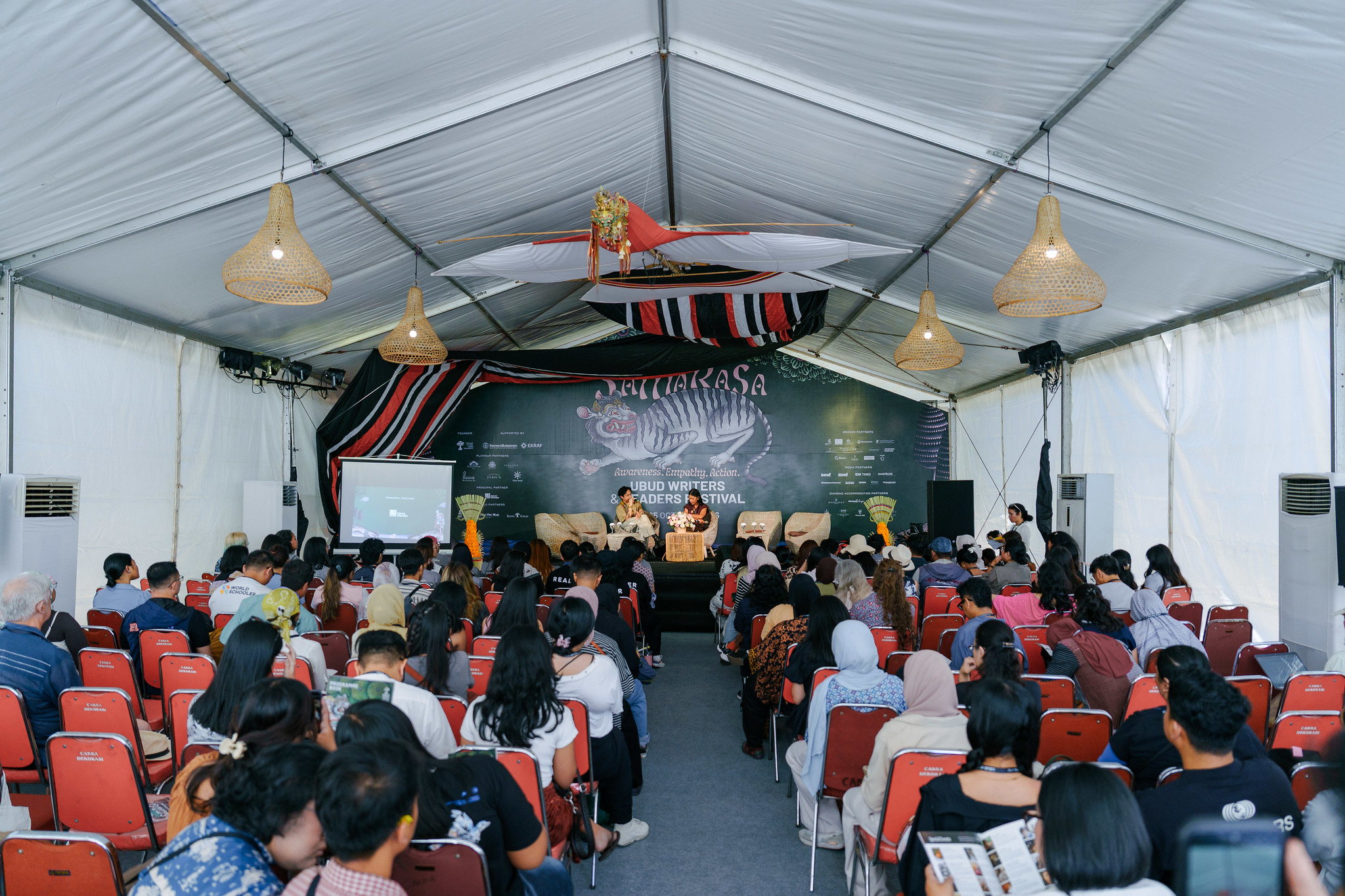
Baskara Putra, known through his solo project Hindia, brought songwriting into the literary programme through “Soundtrack of a Generation.” Moderated by Jasmine Ansori, his October 22 session explored creativity and the pressures surrounding contemporary life.
Speaking to IDN Times, Baskara described his longstanding wish to attend the festival.
“I’ve always wanted to come to Ubud Writers as a guest, as a visitor,” he said.
His appearance connected literary discussion with audiences who encountered storytelling through music. He also questioned the pressure to accelerate creativity through artificial intelligence and resisted the expectation that every current issue should immediately become a song or piece of content.
The wider programme offered practical routes into writing. A youth session at SMP Negeri 1 Ubud invited students to discover stories, while translation workshops and masterclasses addressed the work involved in bringing ideas to readers.
Translation Opened Doors for Indonesian Literature
International exchange depended on more than placing writers on the same stage. Translation—and the people who sustained it—received particular recognition.
The festival honoured John H. McGlynn with its 2026 Lifetime Achievement Award. The programme credited the Lontar Foundation’s work with close to 250 books containing translations of more than 650 Indonesian authors, illustrating the scale of the effort required to bring Indonesian writing to wider audiences.
“Translation helps build bridges between languages and cultures, allowing Indonesian stories to reach international readers,” McGlynn said, as reported by tatkala.co.
October 22’s book-launch programme made that exchange tangible. “Tales of Two Continents” featured Sitor Situmorang’s poetry in bilingual form, translated by Harry Aveling, alongside recognition for Arianto Adipurwanto through the inaugural Sitor Situmorang Award.
Elsewhere, Oka Rusmini’s Menjahit Retakan Sejarah brought women’s memories and the legacy of 1965 into focus. These events connected established literary voices, historical experience and opportunities for a new generation.
Readers Gave the Conversations Their Own Meaning
The festival’s international character was also visible in readers’ choices. Reporting from Ubud on October 22, detikBali found interest in Shibli’s Minor Detail among visitors seeking Palestinian perspectives.
“Because the story of Palestine remains relevant today,” said Sadia Chaudry, a visitor from London.
Chaudry had studied the occupied Palestinian land and Palestinian literature at university. Encountering the author at the festival renewed her interest in reading the novel, showing how a public literary event could turn a longstanding subject of study into a personal encounter.
The evening programme widened those connections. “The Bandung Conference of Writers” drew on the legacy of the 1955 Asian-African Conference, bringing writers into dialogue around solidarity and shared histories. Film screenings connected literary concerns with Palestinian experiences, Indigenous land rights in Papua and forest protection in Sumatra.
Across its opening days, UWRF connected Bali’s cultural setting with stories reaching far beyond the island. October 22 gave that exchange a practical form: writers sharing their work, translators opening new doors and readers finding reasons to keep listening.


