


Vietnam moves at two distinct yet complementary speeds. In Hội An and the Mekong Delta, life still follows lantern light, market boats and seasonal currents. In Hanoi and Ho Chi Minh City, motorbikes, digital businesses and new towers propel a country of 102.3 million people towards an increasingly urban future.
A Country Written by Water
Vietnam’s elongated, S-shaped geography stretches between mountains and more than 3,260 kilometres of coastline. Hills and mountains cover roughly two-thirds of the mainland, while the Red River and Mekong deltas support major population centres, farming communities and historic trading routes. Its waters connect fishing villages, ports and islands while sustaining food security and coastal livelihoods.
This geography also brings vulnerability. Flooding, coastal erosion, saltwater intrusion and rising seas increasingly affect settlements and farms. Deputy Minister of Agriculture and Environment Phùng Đức Tiến has described coastal protection as “our shared commitment to protect Vietnam’s coasts, strengthen community resilience, and support a sustainable ocean-based economy.”
Hội An Keeps Its Trading-Port Spirit
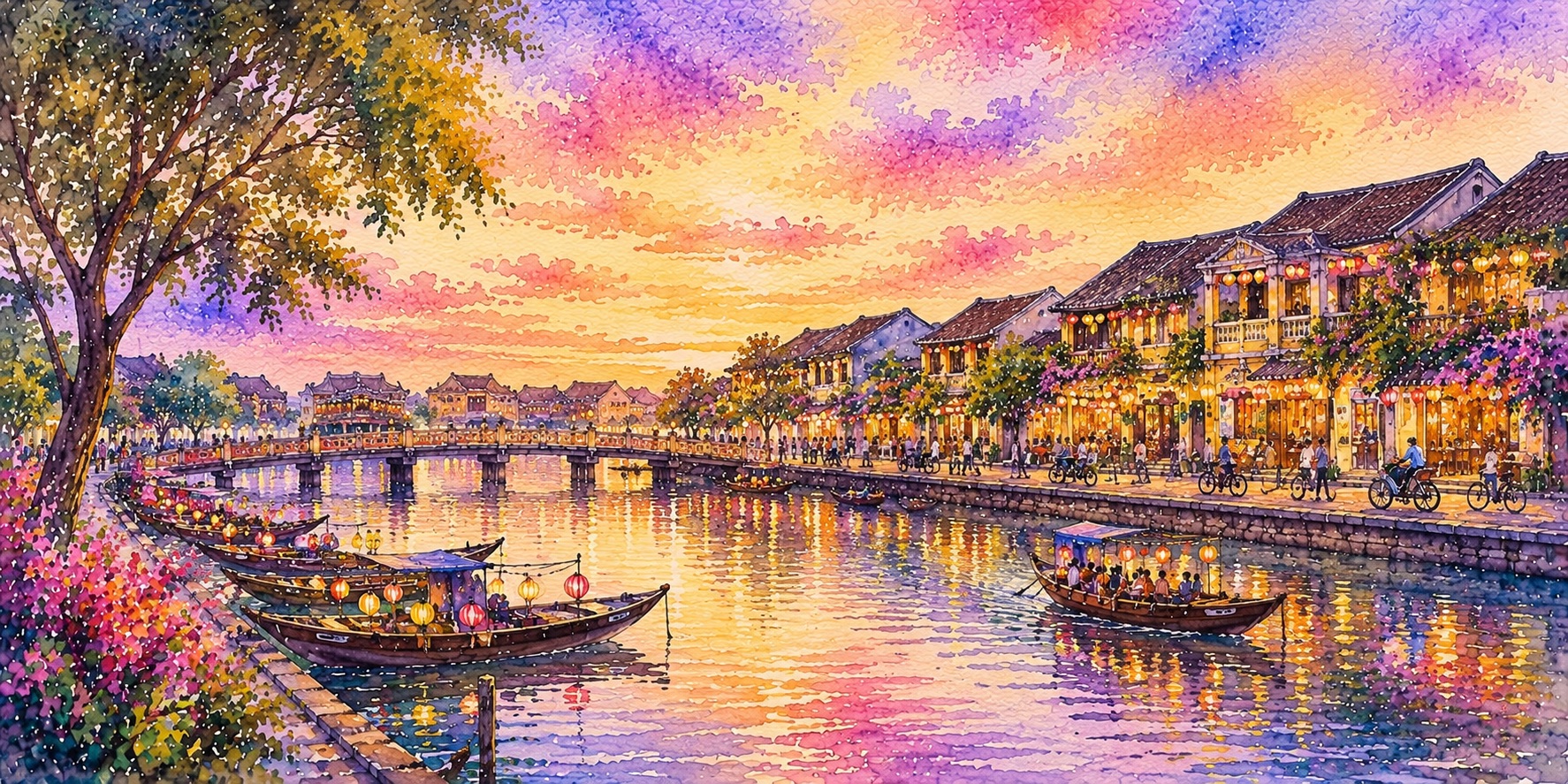
On the Thu Bồn River, Hội An preserves the atmosphere of a port that connected Vietnamese, Chinese, Japanese and European merchants between the 15th and 19th centuries. Its UNESCO-listed centre contains more than 1,100 timber-framed buildings, including family homes, assembly halls, temples, markets and the Japanese Covered Bridge.
After sunset, silk lanterns illuminate its mustard-yellow façades and reflect across the river. Lantern-making has been practised locally for more than 400 years, while candlelit offerings are placed on the water during monthly lunar observances. Behind this memorable scene are working communities of craftspeople, tailors, cooks and boat operators who keep Hội An’s heritage economically and socially alive.
Its popularity creates a delicate challenge: tourism must support residents and conservation without turning the town into a static backdrop. Flood management, traditional restoration and community participation are therefore essential to preserving Hội An as a living town rather than simply a historical display.
The Mekong Remains a Working River
Further south, the Mekong Delta forms an aquatic landscape of distributaries, orchards, rice fields and canal-side settlements. At Cái Răng, the delta’s largest wholesale floating market, traders announce their produce by hanging pineapples, watermelons and vegetables from long poles above their boats. Smaller vessels weave between them serving noodles and strong Vietnamese coffee.
Yet the delta is confronting increasingly severe pressure from climate change, development and growing competition for water. Prime Minister Phạm Minh Chính has called on Mekong countries to “renew cooperation thinking and take breakthrough solutions,” recognizing that the river’s future requires coordinated action beyond national borders.
Cities Race Ahead, Coffee Slows the Clock
Hanoi and Ho Chi Minh City reveal Vietnam’s other rhythm. Streets pulse with motorbikes, digital enterprises and creative studios, while contemporary architecture rises beside temples, colonial buildings and traditional markets. In 2025, nearly 63 percent of Vietnam’s population was of working age, giving the country considerable energy for its next stage of development.
Still, daily life makes room for pause. At pavement cafés, students, artists, office workers and elders wait for cà phê phin to drip slowly into their glasses. That simple ritual captures modern Vietnam: ambitious but grounded, moving quickly while preserving time for conversation, memory and community.
From Hội An’s lanterns to the Mekong’s market boats and Saigon’s restless streets, Vietnam does not choose between heritage and progress. Its strength lies in allowing both to travel together—carried forward by water, creativity and an enduring capacity to adapt.


