


When Ibn Battuta reached Samudra Pasai in 1345, he entered a Southeast Asia connected less by national borders than by monsoon winds, trading ports and shared faith. Nearly seven centuries later, Morocco and Indonesia are transforming that historic encounter into a contemporary bridge for tourism, culture and economic cooperation.
A Moroccan Traveller Reaches Sumatra
Ibn Battuta left Tangier in 1325 at the age of 21, initially intending to complete the pilgrimage to Mecca. His journey ultimately lasted almost three decades and covered an estimated 117,000 kilometres across Africa, Europe and Asia—farther than the recorded travels of his contemporary Marco Polo.
Originally dispatched towards China as an envoy of the Delhi Sultanate, Ibn Battuta continued independently after the diplomatic mission unravelled. In 1345, he arrived at Samudra Pasai in present-day Aceh, then one of the archipelago’s most influential ports.
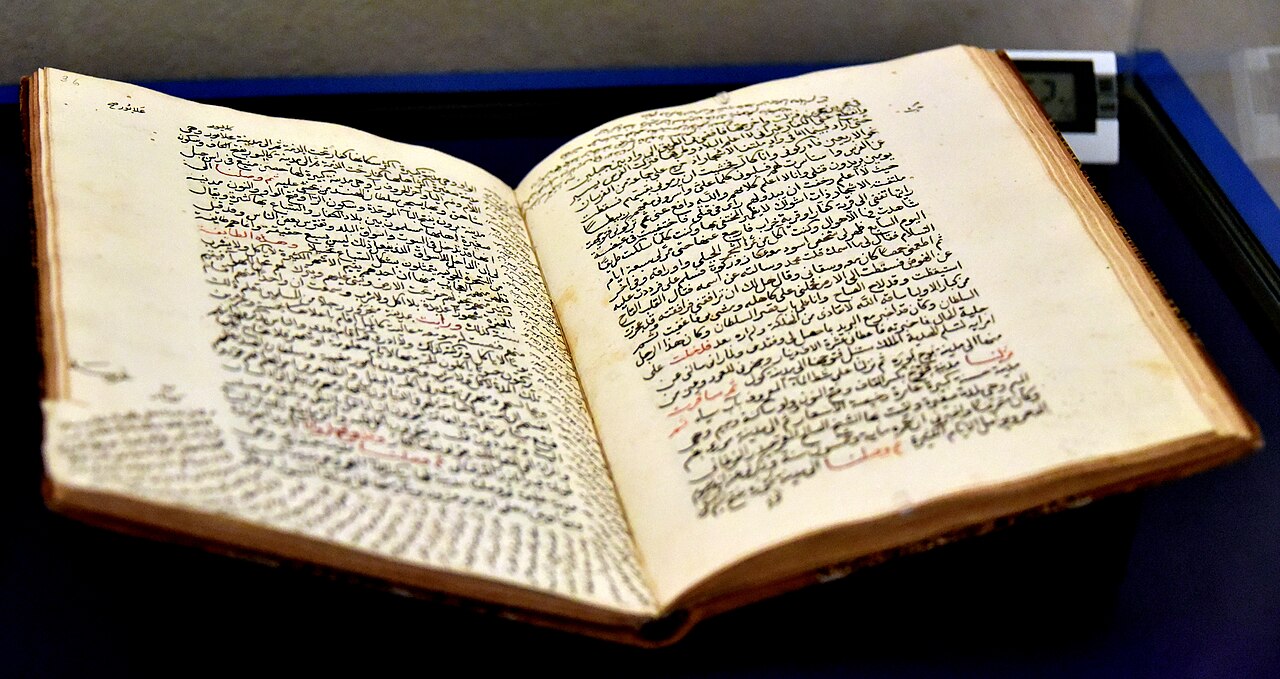
The Moroccan scholar stayed for about two weeks as a guest of Sultan Al-Malik Al-Zahir. In the Rihla, he described a prosperous Muslim kingdom following the Shafi‘i school of Islamic law and trading commodities such as camphor, cloves, areca nut and tin. To him, Pasai marked the eastern frontier of Dar al-Islam, although its harbour was already part of a wider commercial world linking India, China and the Arab lands.
Maritime Encounters and Unsettled Maps
From Sumatra, Ibn Battuta passed through the Strait of Malacca before continuing towards Quanzhou. His descriptions reveal a maritime Southeast Asia in which Muslim sultanates coexisted with powerful Hindu-Buddhist kingdoms and culturally diverse port communities.
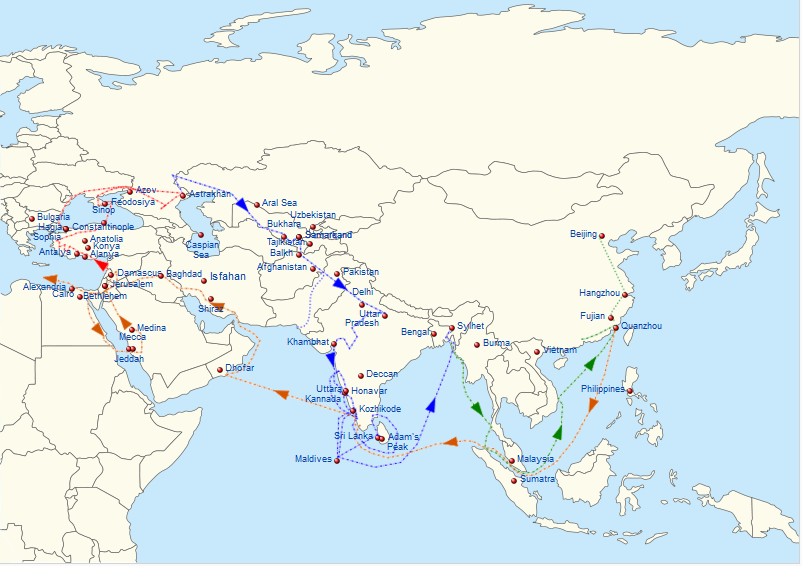
Not every location in his account can be mapped with certainty. The meaning of geographical names such as “Jawa” changed across medieval Arabic texts, while historians continue to debate the location of Tawalisi, where Ibn Battuta claimed to have met a warrior princess commonly identified as Urduja. Proposed locations include Pangasinan, Sulu, Sulawesi and parts of mainland Southeast Asia.
These uncertainties do not diminish the Rihla. Instead, they remind readers that medieval travel writing combined observation, memory and stories collected from sailors. Ibn Battuta’s admiration for eastern maritime societies continued in China, which he called “the safest and most agreeable country in the world for the traveler.”
An Ancient Passage Finds a Modern Echo
The journey now offers a compelling historical frame for Morocco–Indonesia relations, formally established in 1960 and elevated through a strategic partnership agreement in December 2023.
Both countries possess expanding tourism industries. Morocco welcomed a record 19.8 million visitors in 2025, an increase of 14 percent from the previous year, while tourism contributes about seven percent of its economy. Indonesia recorded approximately 15.39 million foreign visitor arrivals during the same year.
A mutual recognition agreement on halal certification, signed in May 2026, could further support cooperation in food, hospitality and tourism services. It gives businesses and travellers greater confidence in shared standards while strengthening commercial connections between the world’s largest Muslim-majority country and one of North Africa’s leading destinations.
Culture Becomes the Invitation
The partnership is increasingly visible at community level. At Indonesia–Morocco Art Night in Jakarta, the Dayak sape, Sundanese kendang and Betawi kong ah yan shared the stage with Moroccan Sufi and Andalusian music.
“Culture is one of the strongest bridges connecting nations,” Moroccan Ambassador Redouane Houssaini said. Indonesian Culture Minister Fadli Zon similarly described cultural diplomacy as “one of the most effective forms of soft power,” capable of opening opportunities in tourism, education and the creative economy.
In Rabat, Le Marché Indonésien introduced Moroccan visitors to Indonesian food, handicrafts, music and holiday destinations. In West Nusa Tenggara, meanwhile, officials have explored tourism cooperation with Morocco. The province offers 265 destinations and 375 tourism villages, giving potential partners opportunities extending beyond Bali to Lombok and eastern Indonesia.
The Next Voyage
The modern traveller can now trace Ibn Battuta’s legacy from Tangier’s medina to the remains of Samudra Pasai in Aceh, before continuing through Jakarta or Lombok. In the opposite direction, Indonesian visitors can encounter Morocco through Rabat’s historic quarters, Fez’s scholarly heritage, Marrakech’s markets and the caravan landscapes beyond the Atlas Mountains.
Ibn Battuta’s voyage did not create modern diplomacy, but it offers both nations a powerful historical symbol. His eastern passage shows that Morocco and Indonesia were never as distant as the map suggests—and that travel can still turn an old maritime encounter into a living friendship.


