You’ve probably seen them on social media, Thai boats with a big engine hanging off the back, smoke billowing from the exhaust, and a long metal shaft propelling them across the water at surprisingly high speeds.
They’re Thailand’s iconic long tail boats. And that big engine at the back? It may not be a boat engine at all, it can be an automotive engine adapted to power the boat.
But why would anyone put a car engine on a boat in the first place?
The answer goes back to Thailand in the 1930s, when local boat builders began experimenting with a simple way to power boats along the country’s extensive network of rivers and canals.
It Started With a Simple Modification
Boats have played a major role in Thailand's history because rivers and canals were important transportation and trading routes.
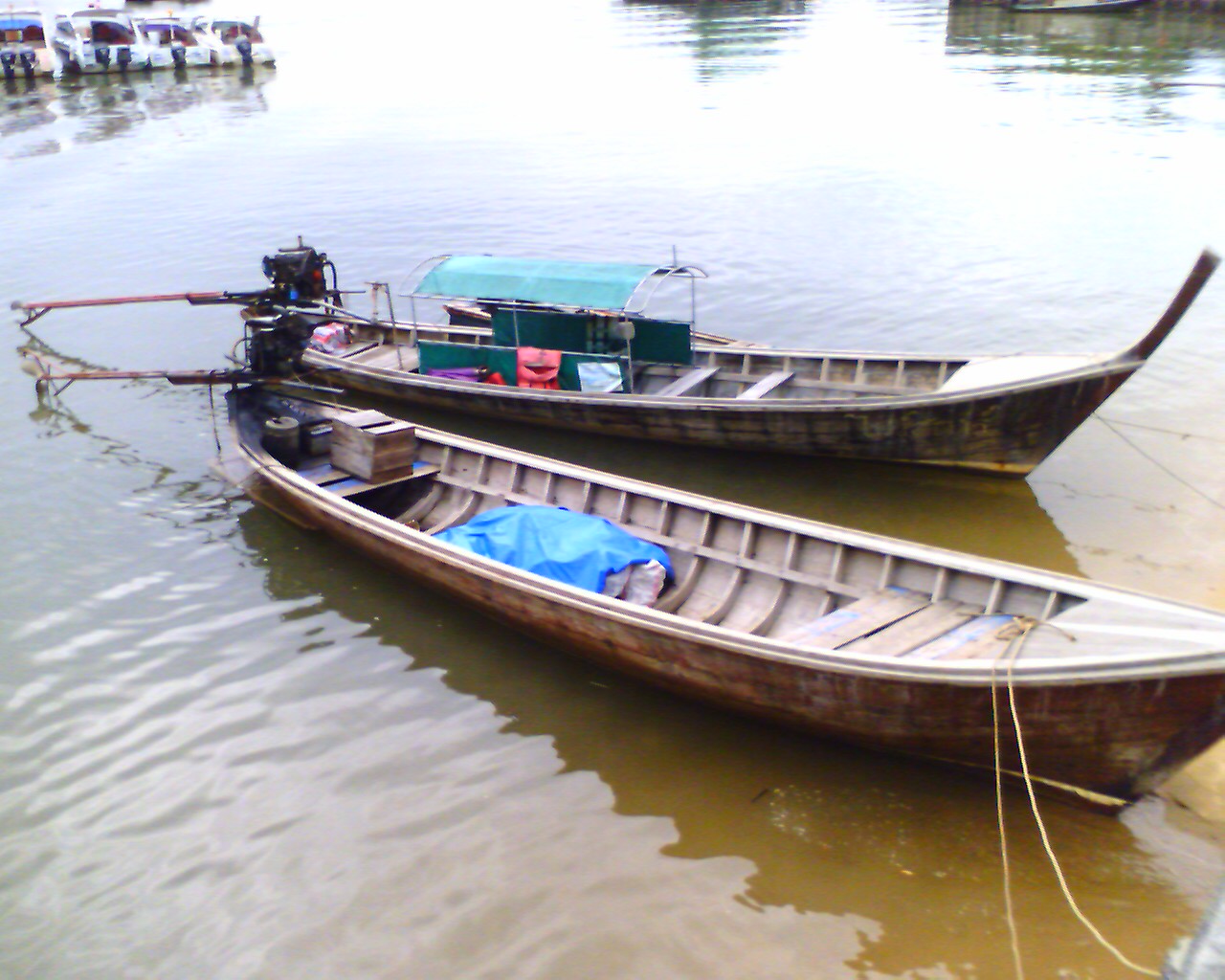
According to the Southeast Asian Fisheries Development Center (SEAFDEC), boats were historically used for transportation, trading and even warfare, before the expansion of automobile based transport reduced their role. The modern long tail design emerged in the 1930s.
Research from Kyushu University traces the first long tail boat to Sanong Thitibura, a royal helmsman who developed the design in Sing Buri province. The early version started with a rowing boat, onto which an engine was mounted. Thitibura then extended the shaft and fitted a two blade propeller at its end.
The design was subsequently developed by other Thai builders, including Sucheep Ratsarn in 1933, Chanchai Phairatkhun in 1939, Sukhum Chirawanit in 1941, and Samai Kittikhun in 1950, according to the same historical account.
The basic idea remained fairly simple, put the engine on the boat, extend its shaft, and put the propeller in the water.
Why Use a Car Engine?
It came down to cost, availability, and practicality.
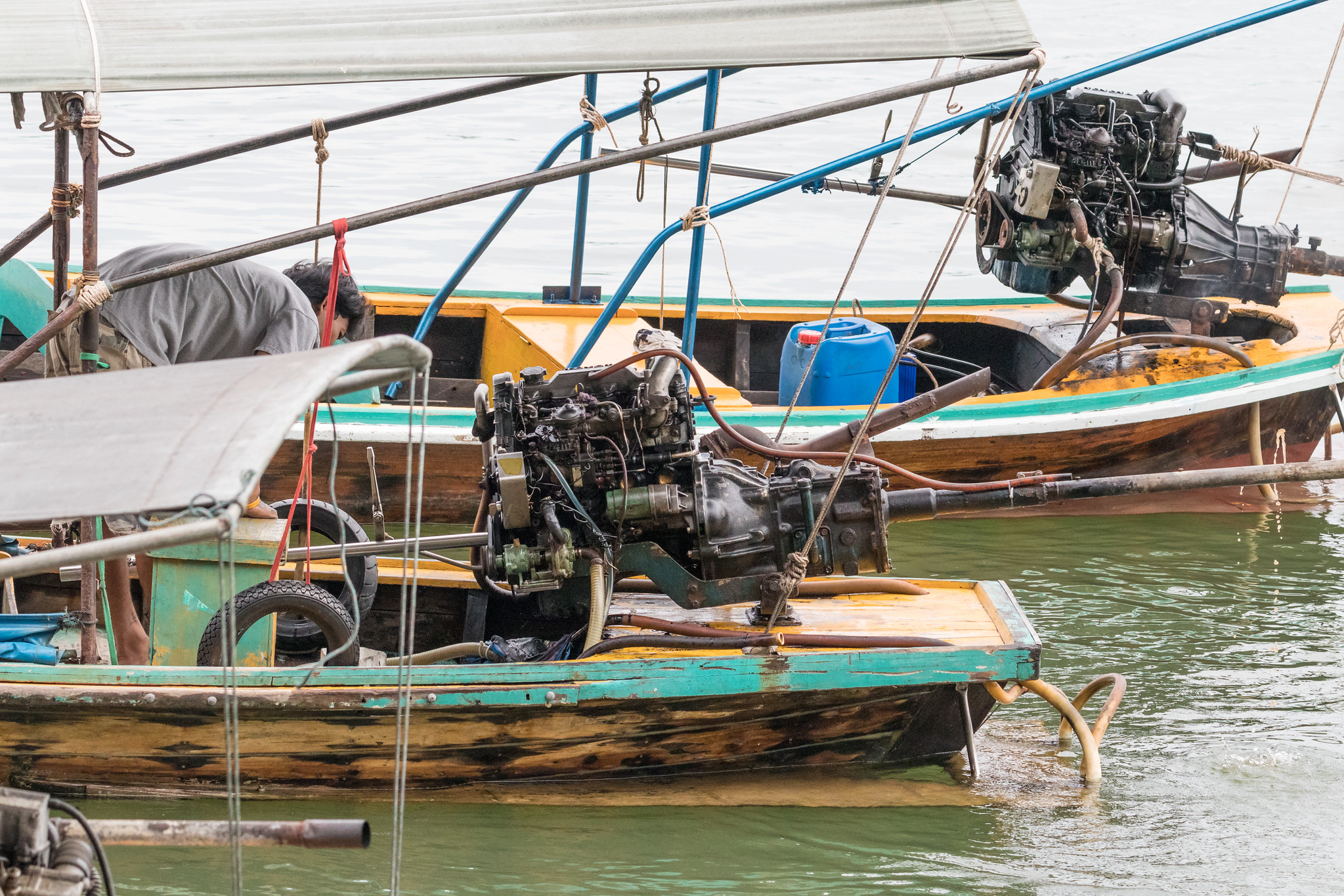
In 1930s Thailand, there was no local marine engine industry, but automotive and general purpose engines were relatively easy to source secondhand. SEAFDEC's documentation on Thai long tail boats records engines from manufacturers such as Toyota, Isuzu, Nissan and Mitsubishi, ranging from roughly 58 to 280 horsepower.
Repairability mattered just as much as price. Because the engines were common automotive models rather than specialized marine units, spare parts and mechanics familiar with them were widely available across Thailand, even in rural areas far from any marine dealer.
The long tail's mechanical design also made the swap easier than it might sound. By eliminating the gearbox and clutch found in conventional marine propulsion, and instead lifting the propeller out of the water at startup, the boat didn't need an engine built specifically for marine use. A regular automotive engine, adapted to drive a long shaft directly, was enough.
Honda's own historical account confirms this, engineers who studied long tail boats on the Chao Phraya River found owners already relying on repurposed automotive engines rather than dedicated marine outboards.
Where Did the “Long Tail” Come From?
The clue is right there at the back of the boat.
Instead of putting the propeller directly underneath the hull like most boats, a long tail boat connects its engine to the propeller with a long metal shaft. The engine spins the shaft, the shaft spins the propeller, and the boat moves. That’s basically where the “long tail” comes from.
But the shaft isn't just there to make the boat go forward. The driver can move the entire shaft from side to side, changing the direction of the propeller and steering the boat at the same time. The propeller can also be lifted out of the water, which is useful when the boat enters shallow water.
And because the engine is connected so directly to the propeller, there’s a little trick involved when starting it. The driver lifts the propeller out of the water first, starts the engine, and then lowers the propeller back in.
So that giant, noisy contraption at the back is actually doing almost everything, powering the boat, helping steer it, and letting the driver deal with shallow water.
From Working Boat to Thai Icon
Long tail boats were developed as practical working vessels rather than tourist attractions.
SEAFDEC documents their continued use for transportation and fishing, particularly in more remote parts of Thailand, while their use in major cities expanded into ferry services and tourism.
The design has also spread beyond Thailand. Long-tail boats as being widely used in Southeast Asia, including Vietnam, while Thailand remains strongly associated with the distinctive configuration.
A boat that began as a practical modification of a rowing vessel in 1930s Thailand therefore ended up with one of the most recognizable propulsion systems in Southeast Asia.