


June 1942, London. The Dutch government was operating in exile. The Netherlands had been occupied by Germany for two years, while the Dutch East Indies, its most important colony in Asia, had just fallen to Japan.
Amid these circumstances, Prime Minister Pieter Sjoerd Gerbrandy appointed a colonial official from East Java to his cabinet. His name was Raden Adipati Ario Soejono.
Soejono became a minister without portfolio with a special assignment at the Ministry of Colonies. His appointment marked the first time that a native of the Dutch East Indies had sat in the Dutch cabinet. He was also the first Muslim to enter the Dutch government.
Yet nearly eight decades later, Soejono remains difficult to place in a single category. He was the Indonesian who reached the highest position in the Dutch colonial government. But he also used that position to voice ideas about Indonesia’s future after the war.
A Priyayi Who Built a Career in the Colonial Government
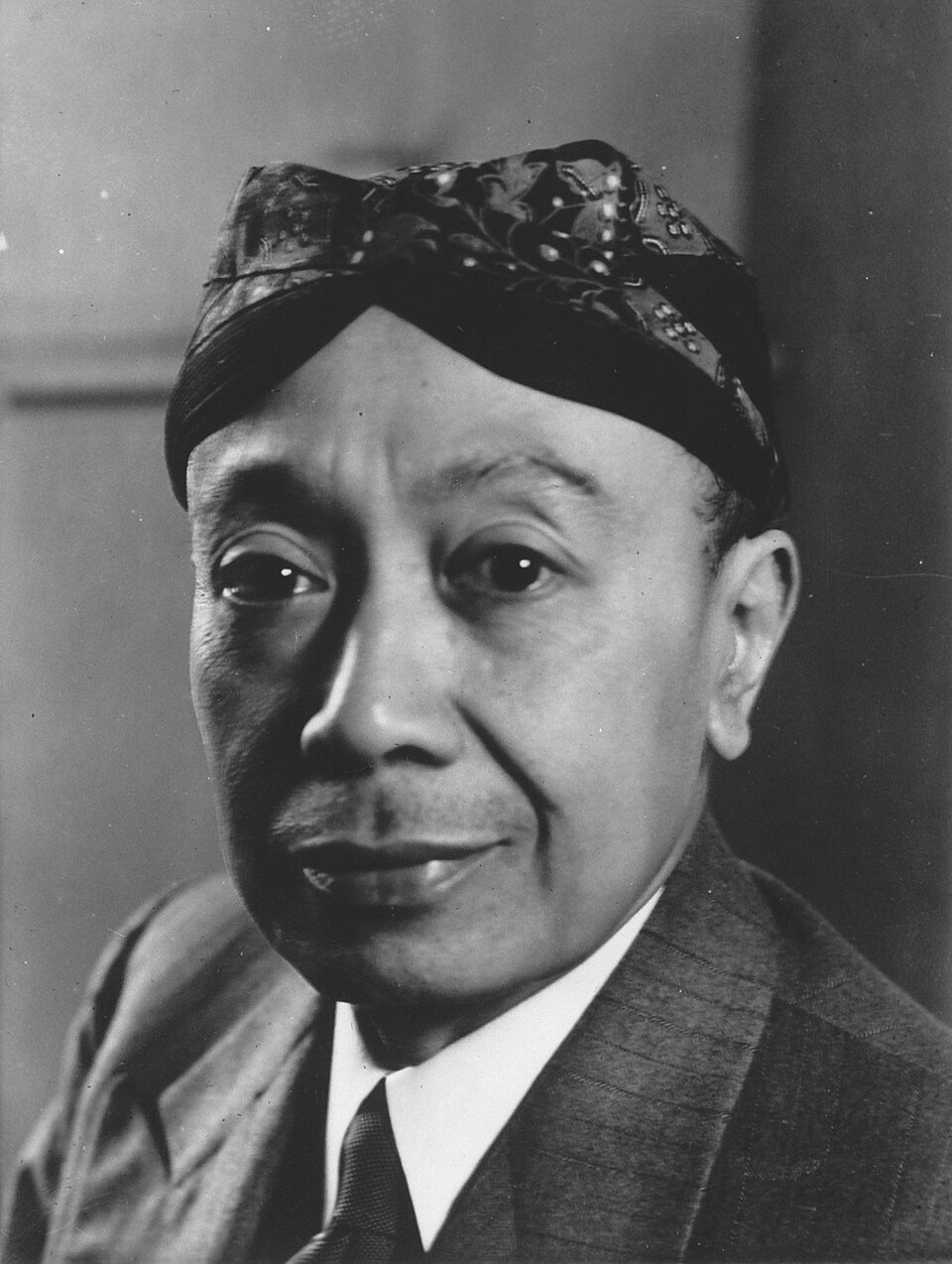
Soejono was born in Tulungagung, East Java, on March 31, 1886. Historical records identify his biological father as Mangkunegara VI, the ruler of the Mangkunegaran principality in Surakarta, from his relationship with Mas Adjeng Wandaningsih.
Because he was born before his parents’ relationship was formally recognized, Soejono was not included in the Mangkunegaran line of succession. He was later raised in Surabaya and attended the Hoogere Burgerschool (HBS) in Surabaya before receiving training in the colonial civil service in Batavia.
At around the age of 22, he began his career in the colonial government as an assistant wedana.
His career continued to advance. In 1915, at the age of 28, Soejono was appointed Regent of Pasuruan. That same year, he married the daughter of the Regent of Purwodadi and later had four children: Loes Soepianti, Mimi Soetiasmi, Irawan, and Idajat.
In the 1920s, he became a member of the Volksraad, a representative body established by the colonial government with limited powers. In 1930, he took a year-long leave to study agriculture, livestock, fisheries, and cooperatives in the Netherlands.
Between 1936 and 1940, Soejono was stationed in The Hague as a liaison to Hubertus van Mook at the Ministry of Colonies. In 1940, he was appointed a member of the Raad van Indië, the advisory body to the Governor-General of the Dutch East Indies.
Indonesia’s First Seat in the Dutch Cabinet
The Japanese occupation changed everything. After the Dutch East Indies government surrendered on March 9, 1942, Soejono left the colony with Van Mook, who was then serving as Lieutenant Governor-General.
They first traveled to Brisbane, Australia, before continuing on to London.
There, Soejono took a position that no native of the Dutch East Indies had held before. Between June 6 and 9, 1942, Gerbrandy appointed him minister without portfolio with a special assignment at the Ministry of Colonies. His office was at Mexborough House, 17 Berkeley Street.
During a cabinet meeting, Gerbrandy described the appointment as the first time a son of Indonesia had become a member of the Dutch government.
For the Dutch government in exile, Soejono’s presence also carried political significance. The Dutch East Indies had been occupied by Japan, but the Netherlands continued to maintain its claim to govern the colony.
Soejono would go on to be recorded as the only person from the Dutch East Indies ever to sit in a Dutch cabinet.
Bringing Indonesia’s Future to the Cabinet Table
While serving in the cabinet, Soejono also discussed the future of the Dutch East Indies after the war.
In October 1942, he submitted two memoranda stating that many people in the Dutch East Indies disagreed with the Dutch government’s plans. He also proposed that the people of the Dutch East Indies be granted the right to self-determination after the war.
The idea did not amount to full independence. Soejono still envisioned constitutional ties between Indonesia and the Netherlands.
He expressed these views outside the government as well, including to the English Muslim Society in London. On December 7, 1942, he also appeared alongside Queen Wilhelmina during a state speech.
His proposal did not receive the support of the other eight ministers in the Gerbrandy cabinet.
A Legacy That Outlived the War
Soejono did not live to see the end of World War II or the birth of the Republic of Indonesia.
On January 5, 1943, he died in London of a heart attack at the age of 56. The Dutch cabinet held a special meeting in his honor. Three days later, he was buried in the Muslim cemetery in Woking, Surrey.
Two years after Soejono’s death, his son, Irawan Soejono, also became involved in the history of the war in the Netherlands, though in a different context.
As a student at Leiden University, Irawan joined the resistance network of Perhimpunan Indonesia and became involved in publishing the underground magazine De Bevrijding. The publication appeared three times a week and had a circulation of around 20,000.
On January 13, 1945, Irawan was shot dead by police while cycling near Leiden station with a stencil machine. His name was later given to Irawan Soejonostraat in Amsterdam on May 4, 1990.
Meanwhile, Soejono remains part of Dutch political history as the first Indonesian to sit in the country’s cabinet. He was also the first Muslim to enter the Dutch cabinet.
His appointment came at a time when the Netherlands was governing from exile and the Dutch East Indies was under Japanese occupation. His ideas about Indonesia’s future never received cabinet approval before his death in January 1943.


