


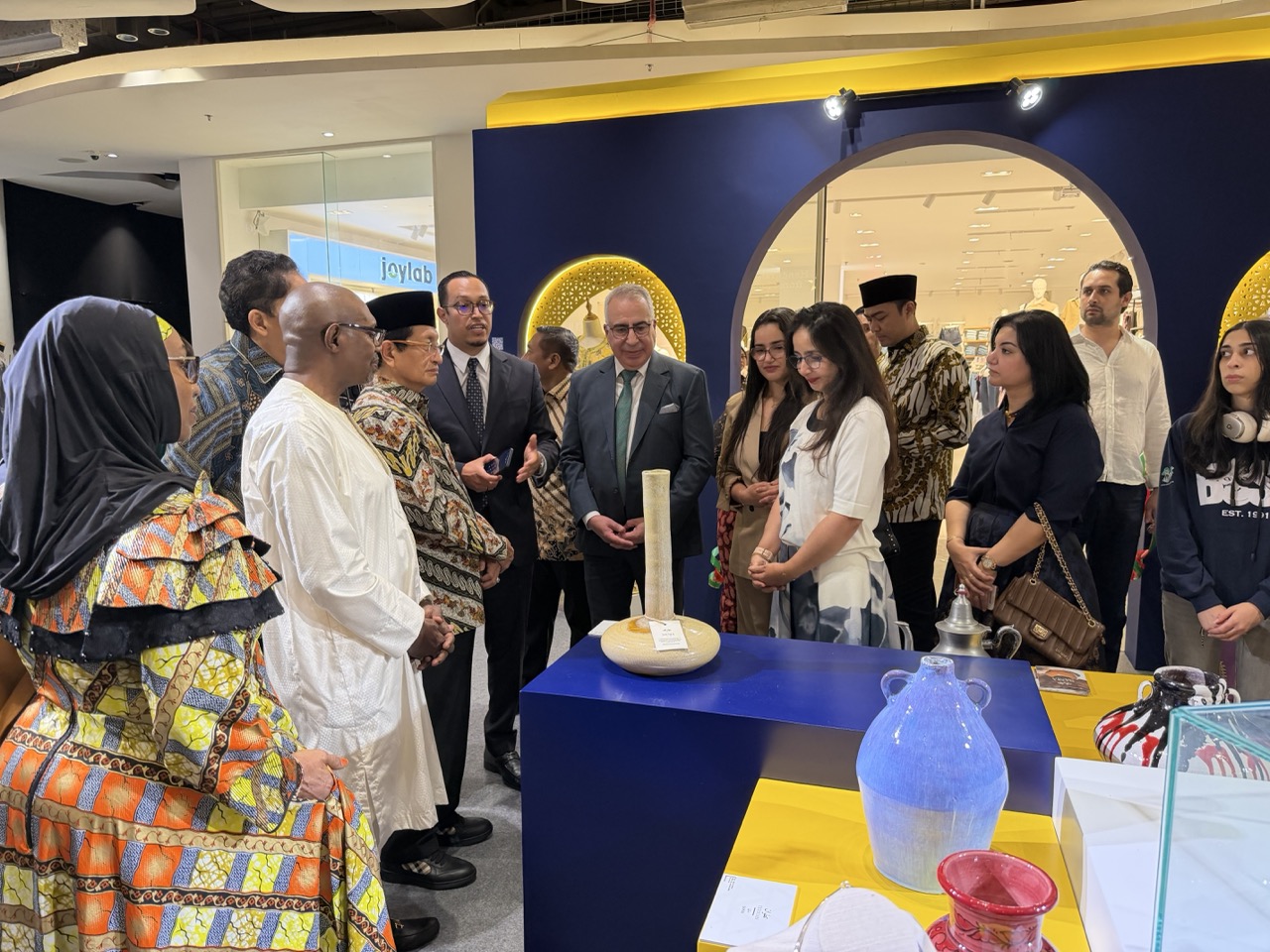
Moroccan tea, intricate craftsmanship and live music are bringing a taste of North Africa to Senayan Park, Jakarta. Opened on October 31 and running until November 6, 2026, Moroccan Week invites Indonesians to experience Morocco through its artisans, traditions and hospitality, while opening new possibilities for cultural cooperation.
Organised by the Moroccan Embassy and Maison de l’Artisan, the inaugural celebration opened with remarks by Ambassador Redouane Houssaini and Indonesia’s Ministry of Culture Secretary-General, Professor Bambang Wibawarta. Religious Affairs Minister Nasaruddin Umar also attended, alongside foreign ambassadors, dignitaries and members of the Moroccan community.
Bringing Two Cultures Closer
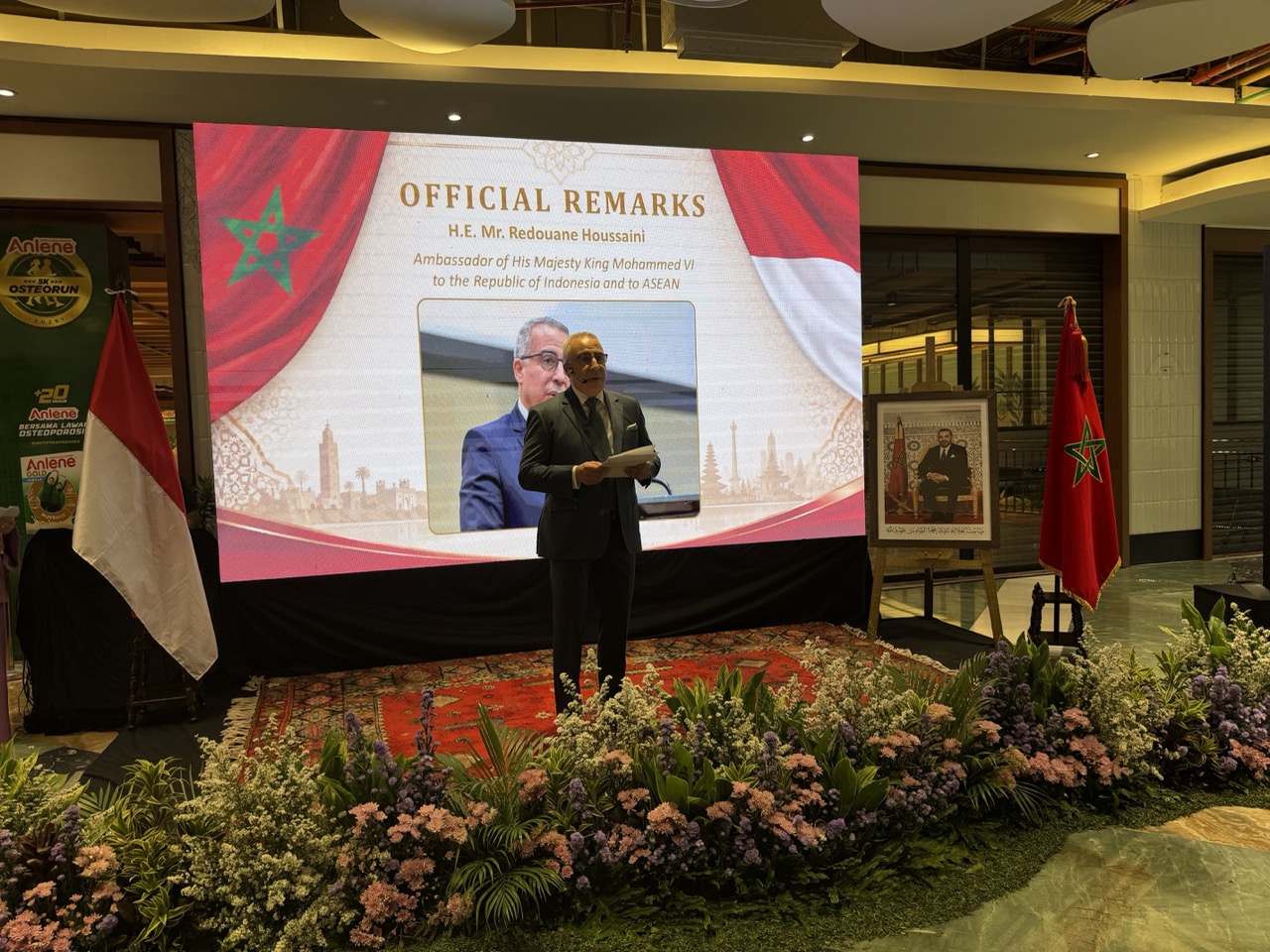
For Houssaini, the week offered a way to shorten the distance between two countries through personal encounters. His opening remarks emphasised friendship, mutual understanding and the possibilities that emerge when communities discover one another’s heritage.
“Geography might separate nations, but culture brings civilizations together,” he said.
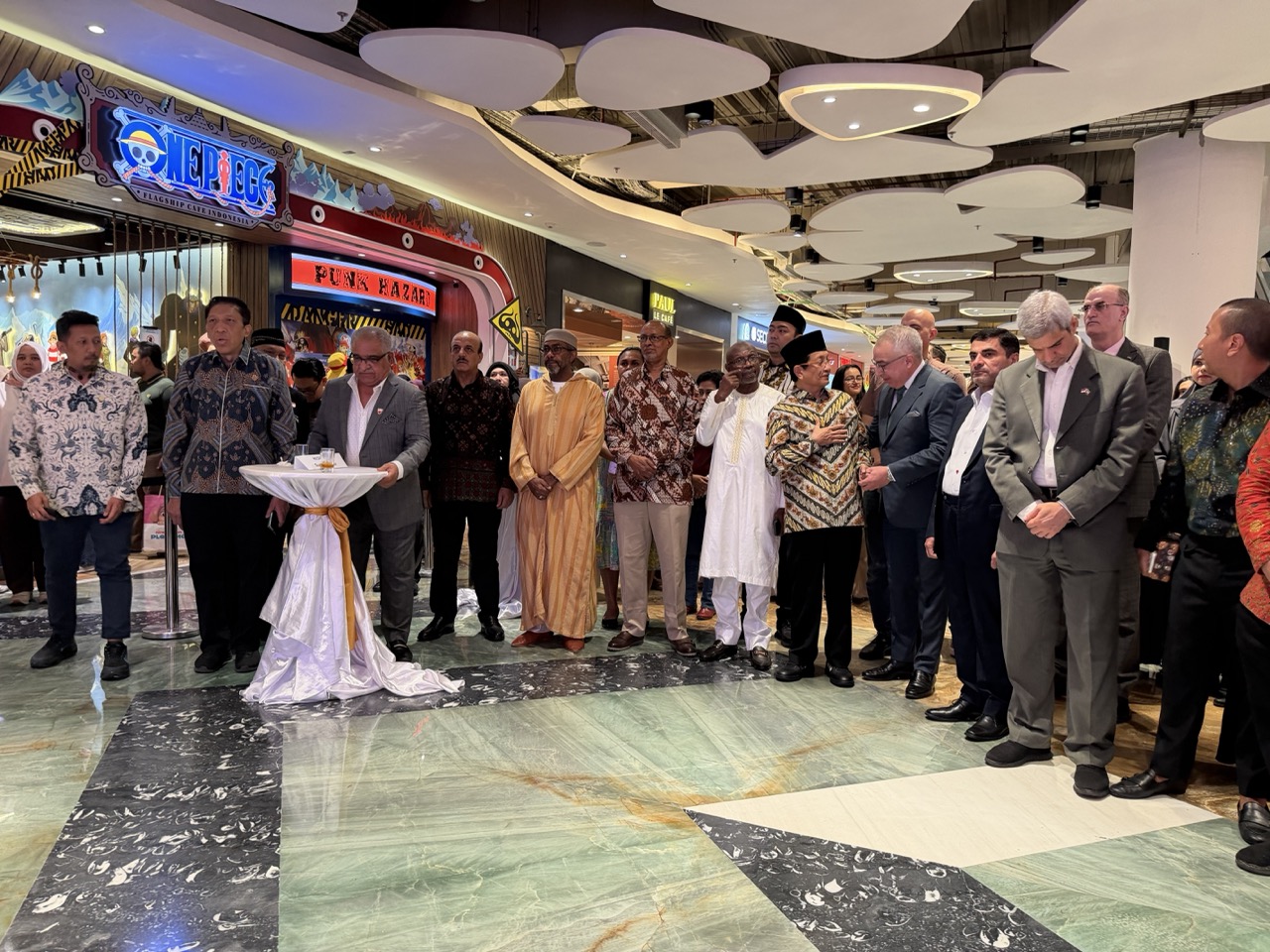
The celebration builds on 66 years of diplomatic relations, established in 1960. That history gives the exhibition a broader purpose: translating longstanding goodwill into exchanges involving artists, cultural institutions and younger generations.
Wibawarta echoed that ambition, describing culture as a means of “creating new connections, encouraging creativity, and building opportunities for future cooperation.” He expressed hope that the event would encourage lasting relationships between Indonesian and Moroccan artists and artisans beyond formal ceremonies.
A Pavilion to Explore—and Create In
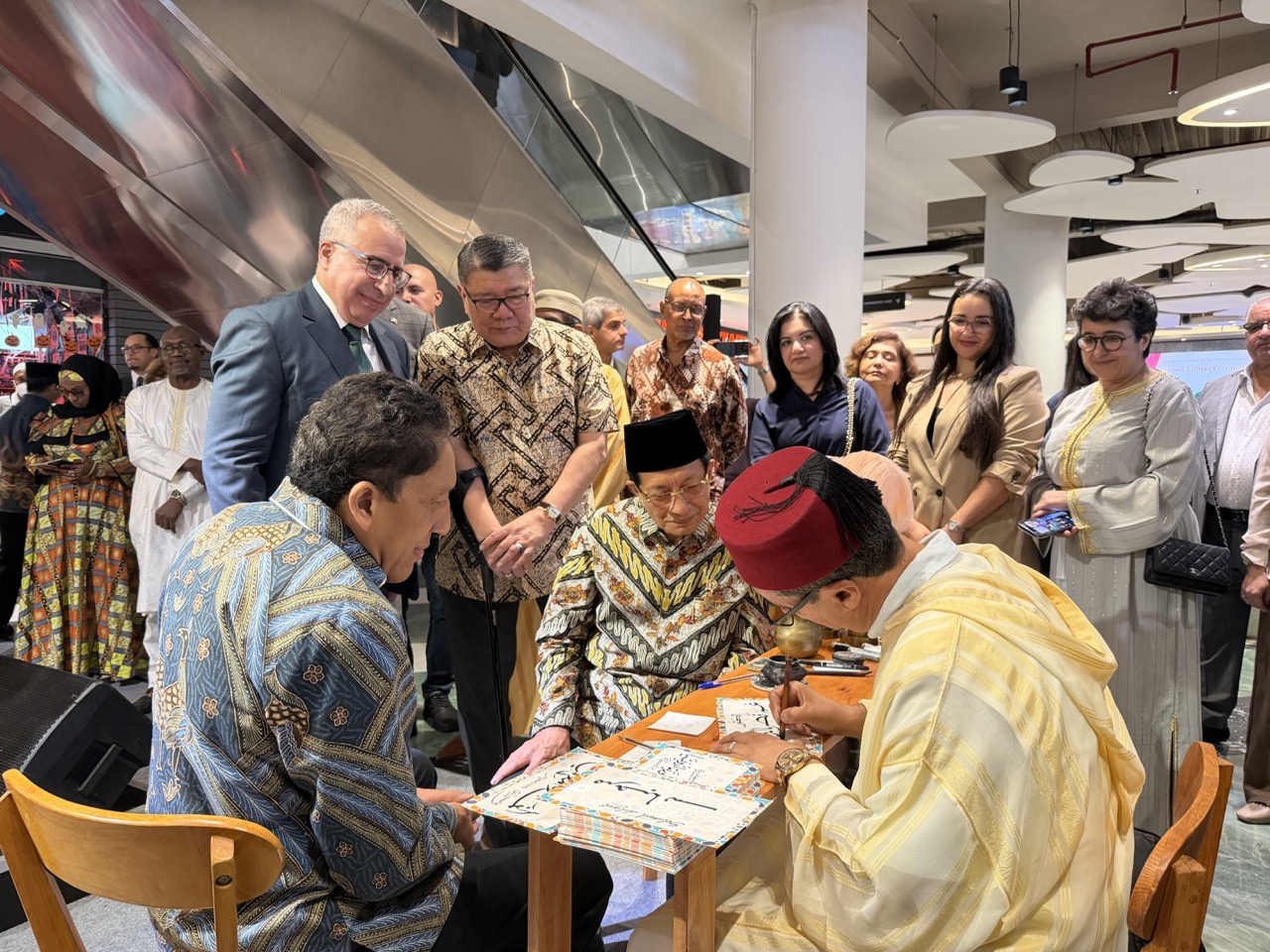
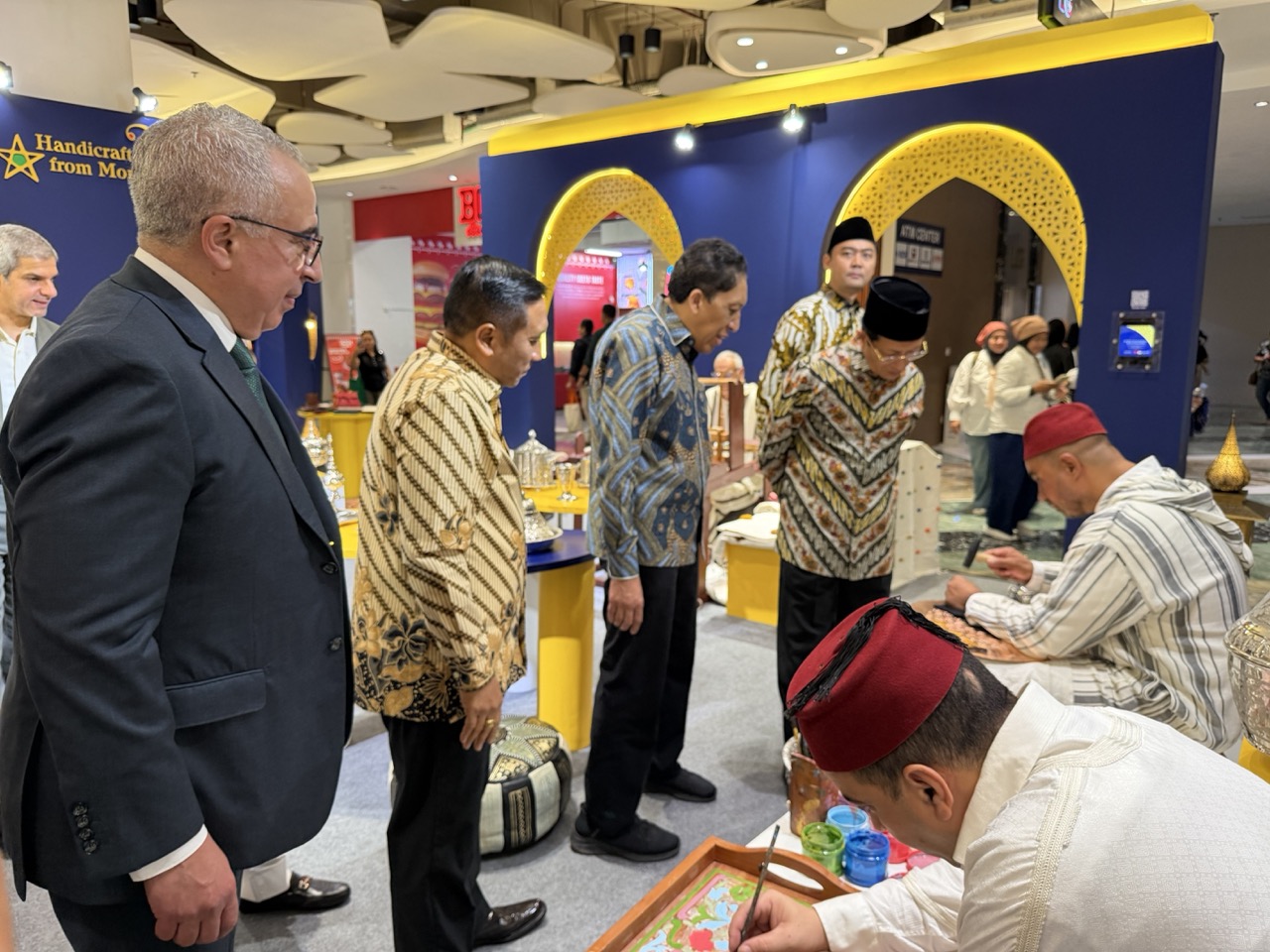
At the Moroccan Pavilion, visitors can move from watching craftsmanship to trying it themselves. Calligraphy, henna art, traditional craft demonstrations and interactive workshops fill the daily programme, while a tea master presents Moroccan tea traditions throughout the day.
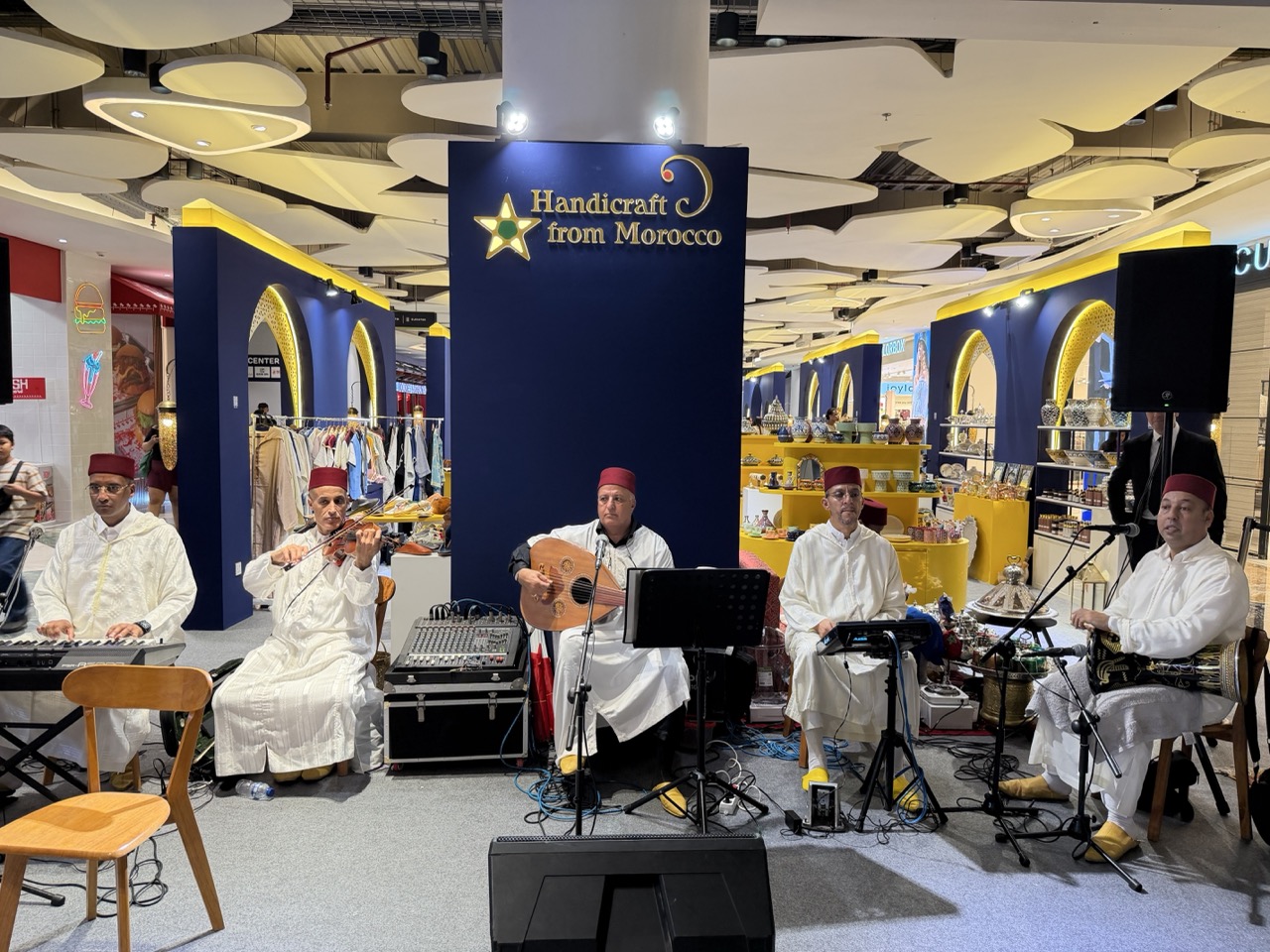
The displayed schedule places calligraphy and henna sessions between 10 a.m. and 2 p.m., returning from 3 p.m. to 8 p.m. Interactive workshops run from noon to 2 p.m. and again from 4 p.m. to 6 p.m. Live Moroccan music accompanies the afternoon and evening, with performances scheduled for 2–4 p.m. and 6–8 p.m.
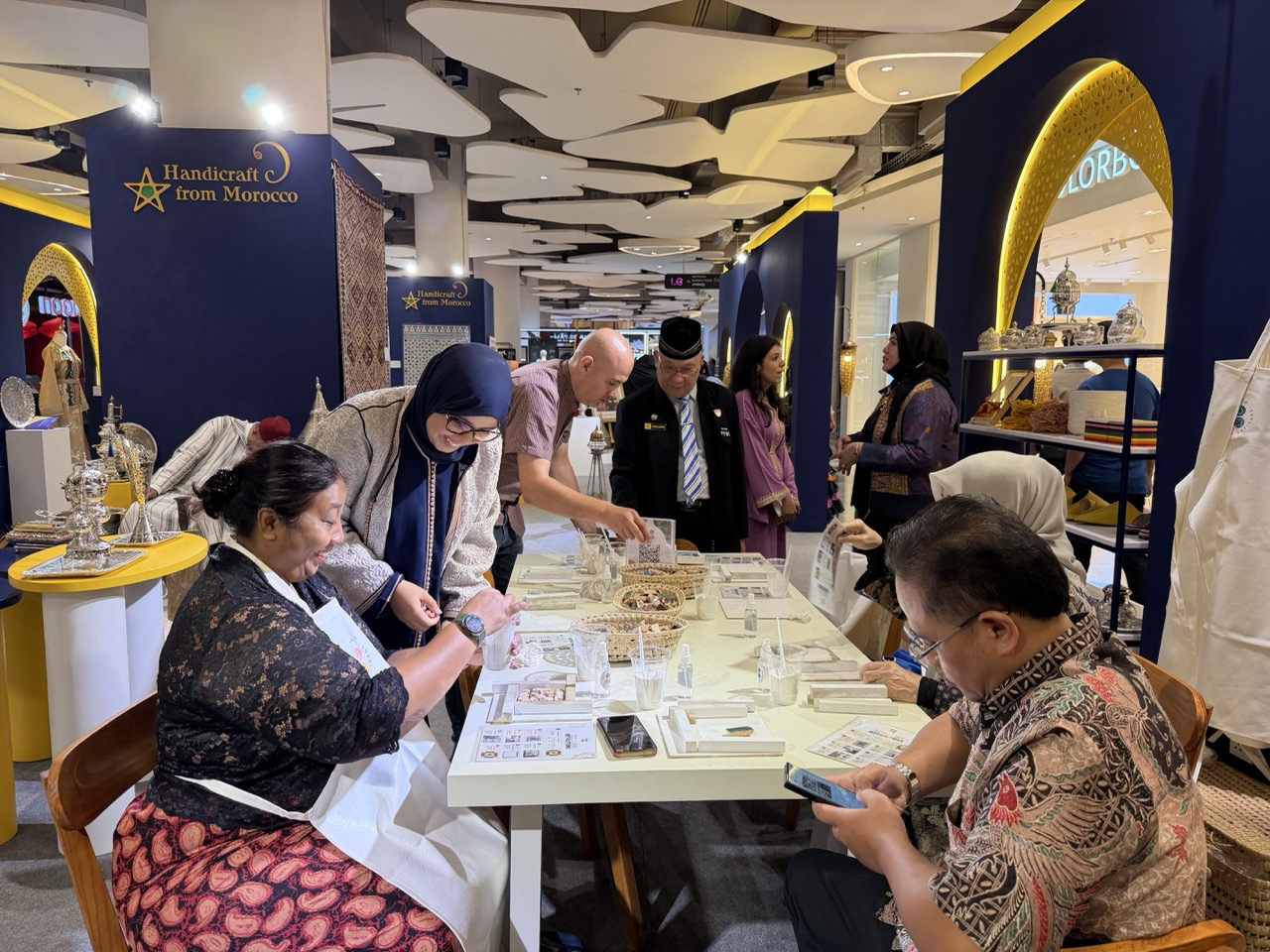
Among the hands-on experiences is zellige tile art. Participants arrange geometric pieces, position a frame and apply plaster to create a decorative panel. The activity offers a practical introduction to the precision behind Morocco’s distinctive mosaic traditions.
The exhibition, “Arts & Crafts: Creation and Transmission,” is curated by Moumina El Khayati. Her exhibition curration describes a travelling showcase combining contemporary artisan creations with historical objects, exploring how inherited skills evolve through new artistic approaches. For Indonesian audiences familiar with batik, weaving and woodcarving, that relationship between tradition and innovation offers a natural point of connection.
Two Dates with National Significance
The week’s opening coincided with Morocco’s first annual observance of Unity Day, or Aid Al Wahda. Announced by King Mohammed VI in November 2025, the holiday commemorates the diplomatic milestone Morocco associates with UN Security Council Resolution 2797, adopted on October 31, 2025.
The resolution supported negotiations based on Morocco’s autonomy proposal for disputed Western Sahara, while calling for a mutually acceptable political solution providing for the self-determination of its people. Houssaini situated the Jakarta celebration within Morocco’s understanding of national unity and territorial integrity.
The closing date, November 6, coincides with the Green March’s 51st anniversary. The 1975 mobilisation involved approximately 350,000 Moroccans entering then Spanish-administered Western Sahara, an event Morocco commemorates as a defining national milestone. The territory’s final status remains unresolved.
Friendship Beyond the Exhibition
Speaking after the opening, Nasaruddin highlighted opportunities for student exchanges and stronger connections between Islamic educational institutions. He also emphasised religious diplomacy as a means of advancing dialogue and addressing shared humanitarian concerns.
Houssaini pointed to sport, particularly football, as another promising avenue for cooperation. For visitors, he also announced an immediate attraction: three lucky raffle winners would receive flight tickets to Morocco, with participation details available at the pavilion.
Until November 6, Moroccan Week offers Jakarta residents an accessible introduction to a distant country through a cup of tea, a conversation or a handmade mosaic. Its lasting promise lies in the connections visitors and artisans carry beyond the pavilion.


