


At sunrise, Angkor Wat’s towers emerge as dark silhouettes against a changing sky. Yet Cambodia’s appeal now extends well beyond its celebrated temples, reaching Phnom Penh’s creative neighbourhoods, the Cardamom Mountains’ protected forests and the quiet islands scattered along its southern coast.
As the country navigates a challenging tourism recovery in 2026, it is presenting visitors with a broader invitation: stay longer, travel farther and experience the communities, landscapes and contemporary culture shaping the Kingdom of Wonder.
A Tourism Reset Opens New Routes
Cambodia welcomed 5.57 million international visitors in 2025, down 16.9 percent from 6.7 million in 2024. Tourism receipts nevertheless reached approximately US$3.88 billion, while domestic tourism grew by 11.7 percent to more than 25 million visits.
The first half of 2026 brought 1.75 million international arrivals, a year-on-year decline of nearly 48 percent. Much of the fall was concentrated in overland travel during a period of disruption along the Thai border. Air travel proved more resilient, accounting for about 62 percent of international arrivals.
Improved aviation infrastructure is supporting the sector’s longer-term prospects. Techo International Airport near Phnom Penh began operations with an initial annual capacity of 13 million passengers, while Siem Reap-Angkor International Airport can accommodate seven million passengers a year.
Cambodia Tourism Board chief executive Kim Minea captured the strategy behind this expansion: “Beyond our world-renowned heritage sites, Cambodia offers vibrant urban experiences, authentic cultural encounters, nature-based tourism and warm hospitality that deserve greater global recognition.”
Angkor Becomes the Beginning
Angkor remains Cambodia’s most powerful introduction. The UNESCO-listed archaeological park encompasses far more than its namesake monument, inviting travellers into an immense cultural landscape once shaped by royal cities, reservoirs, roads and religious complexes.
At Bayon, enormous stone faces gaze across temple corridors. At Ta Prohm, tree roots wrap around masonry in a dramatic encounter between architecture and forest. Banteay Srei reveals intricate pink-sandstone carvings, while Koh Ker, inscribed on the UNESCO World Heritage List in 2023, offers a quieter journey into the former Khmer capital’s monumental past.
Siem Reap extends that story into the present. Apsara performances, Khmer cooking classes, artisan workshops and contemporary galleries reveal a city that is not simply a gateway to ruins. Phare, the Cambodian Circus, combines theatre, acrobatics and music while supporting Cambodian performers and creative education.
Travelling responsibly here begins with simple choices: hiring licensed Khmer guides, dressing respectfully at sacred sites, supporting locally made crafts and allowing enough time to understand Angkor as a living cultural landscape rather than a backdrop for photographs.
Phnom Penh and Battambang Find New Creative Energy
Phnom Penh presents another side of Cambodia. Around the Royal Palace and riverside, traditional Khmer forms stand beside French-colonial shophouses, modern hotels, independent cafés and Cambodian fashion labels. Local restaurants are also reinterpreting familiar ingredients such as prahok, palm sugar, freshwater fish and Kampot pepper for a new generation.
The capital’s difficult history remains essential to understanding its resilience. Visits to the Tuol Sleng Genocide Museum and the Choeung Ek memorial demand time, sensitivity and respect. They document the human consequences of the Khmer Rouge period while preserving testimony for future generations.
Farther west, Battambang moves at a gentler pace. Its old shophouses, riverside streets, galleries and artist-led spaces have created one of Cambodia’s most distinctive cultural scenes. The well-known bamboo train adds a playful local experience, but the city’s deeper attraction lies in its creative community and close relationship with the surrounding countryside.
The Green Season Turns Cambodia Emerald
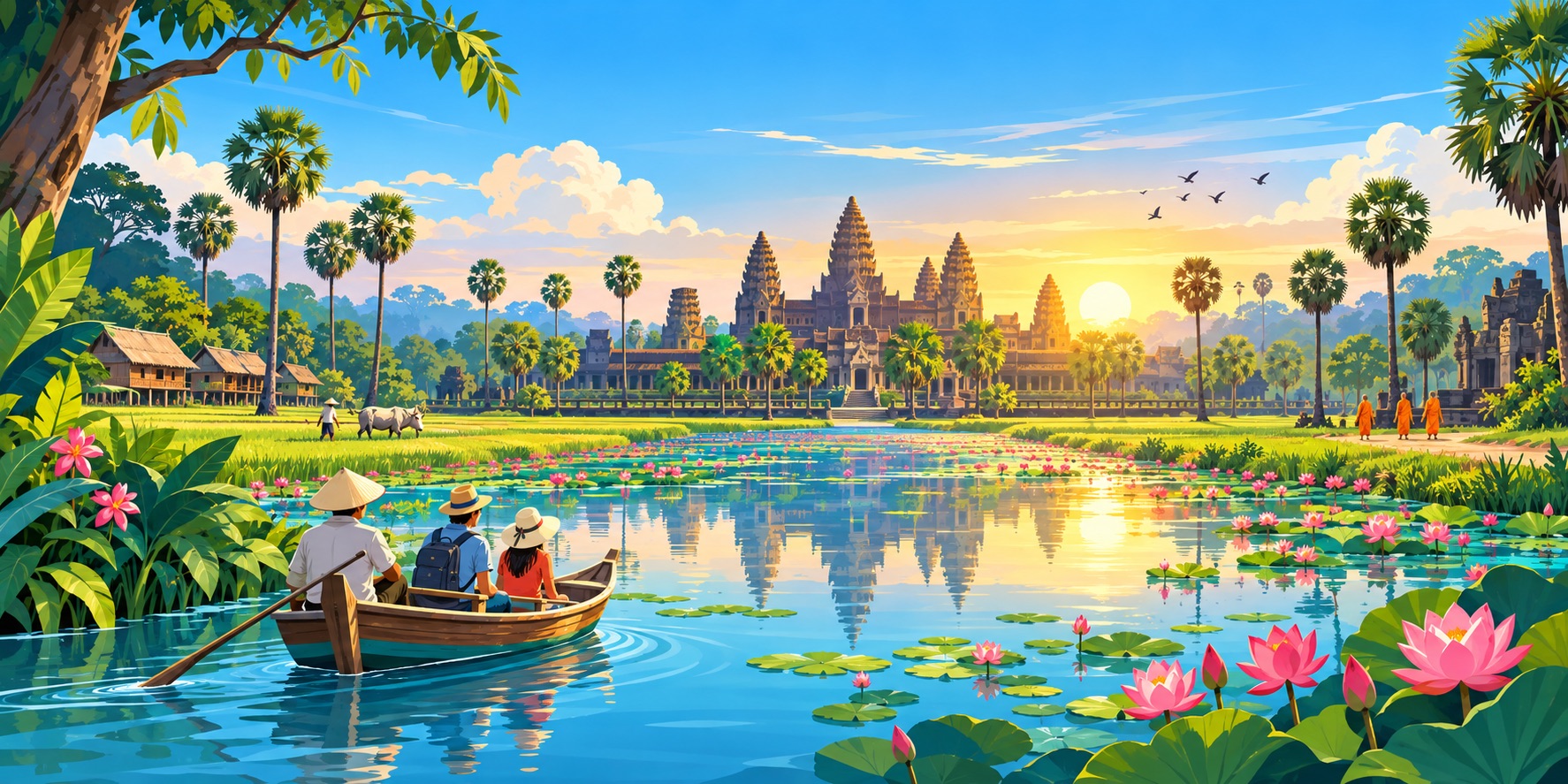
From May to October, monsoon rain transforms Cambodia. Rice fields brighten, waterfalls strengthen and forests take on deeper shades of green. Visitor numbers are generally lower, creating opportunities for slower travel, although journeys require flexibility around rain, road conditions and boat schedules.
Cambodia’s natural assets are receiving greater international recognition. A 2026 assessment reported by regional media ranked the country first in Southeast Asia and 17th globally for natural ecotourism, reflecting its protected landscapes and expanding conservation-based travel experiences.
The Cardamom Mountains contain one of mainland Southeast Asia’s largest remaining rainforest areas. Community-led destinations such as Chi Phat allow visitors to trek, cycle, kayak and stay in village accommodation while creating income linked to forest protection. Conservation-focused properties and camps elsewhere in the Cardamoms demonstrate how tourism can support local employment and wildlife monitoring when projects are responsibly managed.
Chambok in Kampong Speu offers another accessible model. Its homestays, guided forest walks and waterfall excursions place residents at the centre of the visitor experience, ensuring that a greater share of tourism revenue remains within the community.
Water, Wildlife and the Wild East
At Tonlé Sap, travel follows the rhythm of water. The lake expands dramatically during the rainy season as the Tonlé Sap River reverses direction, sustaining fisheries, wetlands and communities across central Cambodia. Boat journeys reveal stilted settlements adapted to seasonal change, while the Prek Toal Bird Sanctuary protects important breeding grounds for threatened waterbirds.
Responsible visits are especially important around floating and lakeside communities. Choosing established community programmes helps avoid intrusive tourism and supports local guides, environmental education and conservation.
Eastern Cambodia offers a more rugged experience. Mondulkiri is known for forested hills, waterfalls and elephant projects that prioritise observation over riding or performance. In neighbouring Ratanakiri, Yeak Laom’s volcanic crater lake provides a striking natural landmark surrounded by forest and Indigenous community lands.
The Coast Invites Travellers to Stay Longer
Cambodia’s southern coast gives the journey a slower final chapter. Kampot combines faded colonial architecture with salt fields, riverside evenings and plantations producing its internationally recognised pepper. Nearby Kep is celebrated for fresh crab cooked with green Kampot pepper, a dish rooted firmly in the landscape of the region.
Offshore, Koh Rong and Koh Rong Sanloem offer pale beaches, warm water and, under suitable conditions, glowing bioluminescent plankton. Development is increasing, but travellers can still seek smaller locally connected properties, reduce single-use plastics and choose operators that manage waste and marine activities responsibly.
The Cambodian market also remains relevant to Southeast Asian neighbours. Indonesia contributed almost 150,000 visitors in 2025 and remained among Cambodia’s ten leading source markets during the first quarter of 2026, illustrating the importance of regional air connections and shorter ASEAN journeys.
Building a More Balanced Visitor Economy
Cambodia’s tourism future depends not only on attracting more people, but on understanding where they travel, how long they remain and whether local communities benefit. Tourism Minister Huot Hak has described “accurate, independent, professional and timely” data as “a crucial foundation” for effective tourism policy.
That approach could help Cambodia distribute visitors more evenly between Angkor, its cities, rural communities, forests and coast. It could also turn the current slowdown into an opportunity to strengthen standards, protect heritage and build a tourism economy less dependent on a single attraction or arrival route.
Cambodia will always be inseparable from Angkor, but its emerging travel story is larger: a country where ancient stone, living creativity, forest conservation and community hospitality form parts of the same journey.


