


Dawn arrives differently on Mount Ramelau. After a night climb from Hato Bulico, hikers watch the sun rise beside a statue of the Virgin Mary, nearly 3,000 metres above an island of coral reefs, coffee-covered highlands and communities shaped by centuries of exchange.
Timor-Leste’s appeal lies in this intimacy. It offers adventure without the machinery of mass tourism, inviting visitors to move slowly, travel with local guides and understand the cultural meaning behind the landscapes they encounter.
A New ASEAN Member with Room to Grow
Timor-Leste became ASEAN’s 11th member on October 26, 2025, opening a new period of regional visibility and cooperation. Its tourism sector, however, remains small enough to offer the sense of discovery increasingly difficult to find elsewhere in Southeast Asia.
Government estimates indicate that the country welcomed approximately 45,000 international visitors in 2025, up from 26,000 in 2024. The national ambition is to reach 200,000 visitors annually by 2030, but the more important question is how that growth will be managed.
Local tour leader Anastacio Madeira captured the opportunity clearly: “I like the way tourism in Timor isn’t ‘boom’ right now. It gives everyone a chance to get everything right.”
Getting it right means building reliable transport, accommodation and digital connections while keeping tourism income within Timorese communities. It also means protecting reefs, sacred places and living traditions before visitor numbers accelerate.
An Ocean with Global Significance
Just north of Dili, Ataúro Island gives Timor-Leste its strongest claim to international ecotourism. A 2016 marine survey recorded an average of 253 reef-fish species at each surveyed site—the highest average documented at the time—and 642 species overall.
The figures translate into extraordinary experiences beneath the surface. Divers descend along coral walls alive with reef fish, while snorkellers can reach healthy marine habitats close to shore. Community conservation is supported by tara bandu, a customary system through which local people establish rules governing the use of natural resources.
Tourism on Ataúro also extends beyond diving. Women connected with Boneca de Ataúro produce handmade dolls, textiles and crafts, creating a direct link between visitor spending and household livelihoods.
Between October and December, the nearby Wetar and Ombai straits become a migration corridor for blue whales, sperm whales, pilot whales and large pods of dolphins. More than 20 cetacean species have been documented in Timor-Leste’s waters, while the deep ocean trench close to land makes wildlife encounters possible without long offshore journeys.
Even Dili has an unusual marine advantage. Shore-diving locations such as Pertamina Pier and Dili Rock sit within easy reach of the capital, allowing travelers to move from the city to coral gardens in a matter of minutes.
Sacred Peaks and an Untouched Eastern Shore
Timor-Leste’s landscapes rise rapidly from turquoise water to rugged mountains. Mount Ramelau, also known as Tatamailau, reaches 2,963 metres and is both the country’s highest peak and a place of pilgrimage. Its sunrise trek is physically demanding, but the reward is a sweeping view across highland ridges and valleys emerging from the morning clouds.
Farther east, Nino Konis Santana National Park protects approximately 1,236 square kilometres of terrestrial and marine habitat. Tropical dry forests, Lake Ira Lalaro, archaeological sites and ancient rock art sit beside reefs and coastal ecosystems, creating one of the country’s most important conservation landscapes.
At the edge of the park lies Jaco Island, an uninhabited sweep of white sand and clear water. The island is lulik, or sacred, and overnight stays are prohibited. That restriction is not an inconvenience to be overcome; it is part of the experience. Visitors arrive with local boat operators, spend a limited time on the island and leave its spiritual solitude intact.
Coffee, Tais and Journeys into the Highlands
The road into Ermera and Maubisse reveals another side of the country. Coffee grows beneath shade trees in cool mountain air, including the naturally occurring Híbrido de Timor, which helped shape coffee cultivation far beyond the island.
Visits to farms and cooperatives can connect travelers directly with growers, allowing them to follow the journey from hand-picked cherry to roasted cup. The experience also gives tourism a role in diversifying rural incomes in communities where coffee remains a central livelihood.
Timor-Leste’s cultural identity is equally visible in tais, the handwoven textile used during ceremonies, exchanges and important stages of life. Its colors and geometric designs carry regional and family meanings. UNESCO placed the tradition on its List of Intangible Cultural Heritage in Need of Urgent Safeguarding in 2021, highlighting the importance of transmitting weaving knowledge to younger generations.
In Baucau, pastel Portuguese buildings, old stairways and a historic market reflect another layer of Timorese history. Rather than functioning as museum pieces, these structures remain part of a living city where Tetum, Portuguese and local languages mingle in streets and cafés.
Dili Builds for a Wider Regional Role
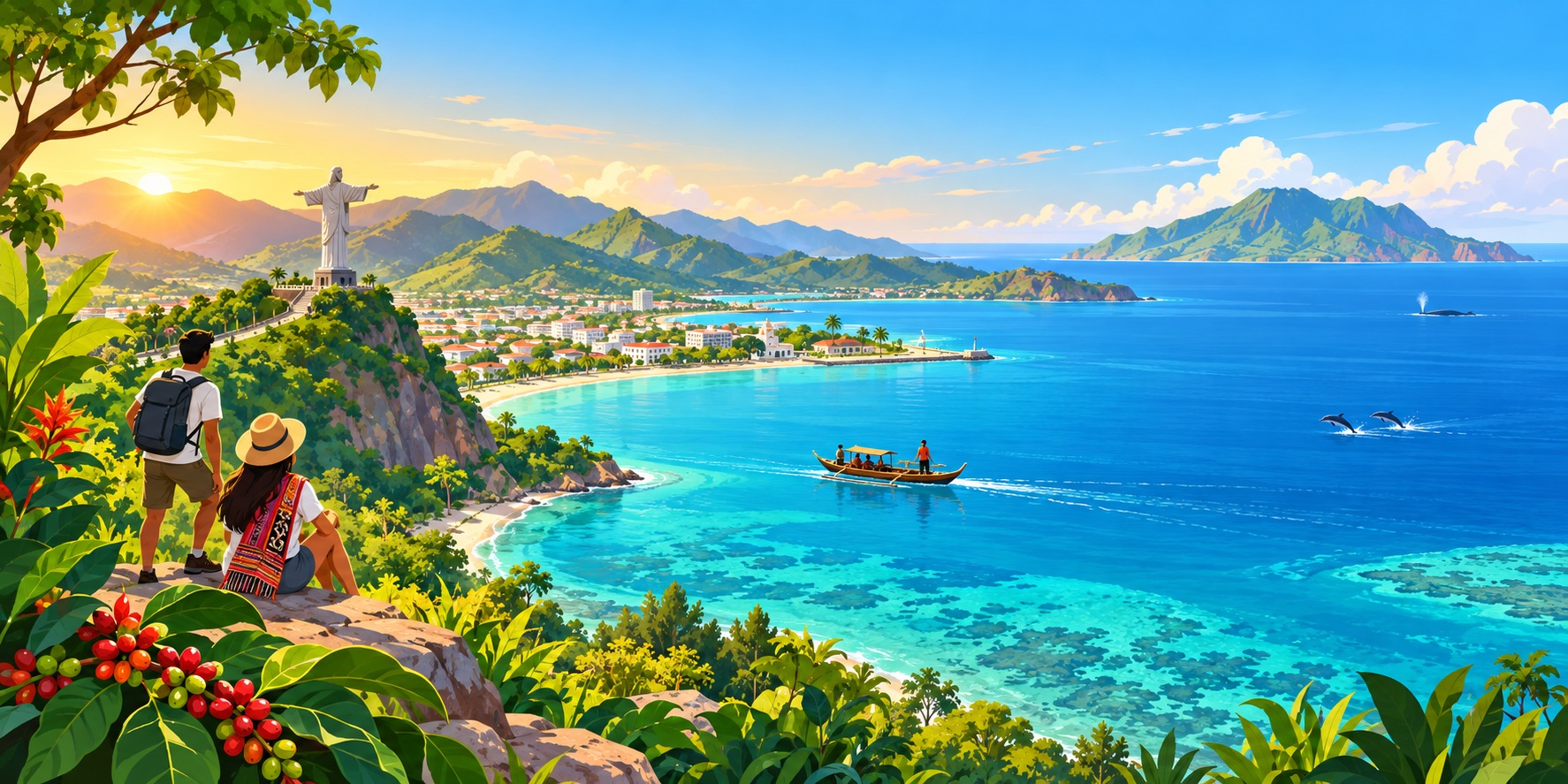
Dili brings the country’s past and future into one coastal frame. The climb to the 27-metre Cristo Rei statue provides panoramic views across the bay, while the Timorese Resistance Archive and Museum and the Chega! Exhibition document the struggle for self-determination with clarity and emotional weight.
The capital is also preparing for a larger regional role. Construction began in 2026 on an international convention centre intended to support major meetings and events ahead of Timor-Leste’s expected ASEAN presidency in 2029. Plans include a hotel, waterfront promenade and new public attractions.
“This new convention centre will give a considerable boost to Timor-Leste’s tourism sector,” said Director-General of Tourism Antonio da Silva.
Yet physical expansion is only one measure of progress. A national community survey conducted between November 2024 and June 2025 found that more than half of respondents were already connected to tourism through employment, family members or interactions with visitors. It also identified concerns about roads, sanitation, training, accommodation and the fair distribution of benefits.
Growth at a Timorese Pace
Timor-Leste now has an opportunity few destinations receive: the chance to decide what kind of tourism it wants before large-scale development takes hold. Its strongest future is likely to be built on modest guesthouses, skilled local guides, community-managed reefs, ethical wildlife encounters and cultural experiences shaped by Timorese people themselves.
For travelers, the country asks for patience and curiosity. In return, it offers something increasingly rare—an honest journey through a young nation whose reefs, mountains and traditions remain closely connected to the communities that protect them.


