


From delayed monsoon rains in Indonesia to worsening fire risks across the southern ASEAN region, a rapidly intensifying El Niño is placing Southeast Asia on alert. Although “Super El Niño” is an informal term, international agencies officially classify the event as very strong—and potentially historic.
A Pacific Giant Gathers Strength
By mid-September 2026, the weekly sea-surface temperature anomaly in the central equatorial Pacific had reached approximately 3°C. NOAA reported a greater than 90% probability of a very strong event and a 75% chance that its October–December peak could surpass previous El Niños recorded since 1950. The World Meteorological Organization expects the event to persist through February 2027.
The benchmarks are formidable. The very strong events of 1982–83, 1997–98 and 2015–16 disrupted rainfall, agriculture and public health worldwide. However, meteorologists caution that ocean temperatures alone do not determine local impacts. The Indian Ocean Dipole, monsoon circulation and regional geography can intensify or soften conditions from one country to another.
Indonesia Faces a Longer Dry Season
The ASEAN Specialised Meteorological Centre forecasts below-normal rainfall across much of the Maritime Continent from September to November, accompanied by above-normal temperatures and an elevated risk of forest fires and transboundary haze.
Indonesia is already experiencing the consequences. BMKG reported that the rainy season would arrive late across 529 seasonal zones covering about 61% of the country’s land area. Monitoring stations in 25 provinces had recorded more than 60 consecutive rainless days, while one location in Bantul, Yogyakarta, reached 131 days.
“El Niño and the IOD are worsening and prolonging drought across much of Indonesia,” BMKG chief Teuku Faisal Fathani warned in a statement translated from Indonesian.
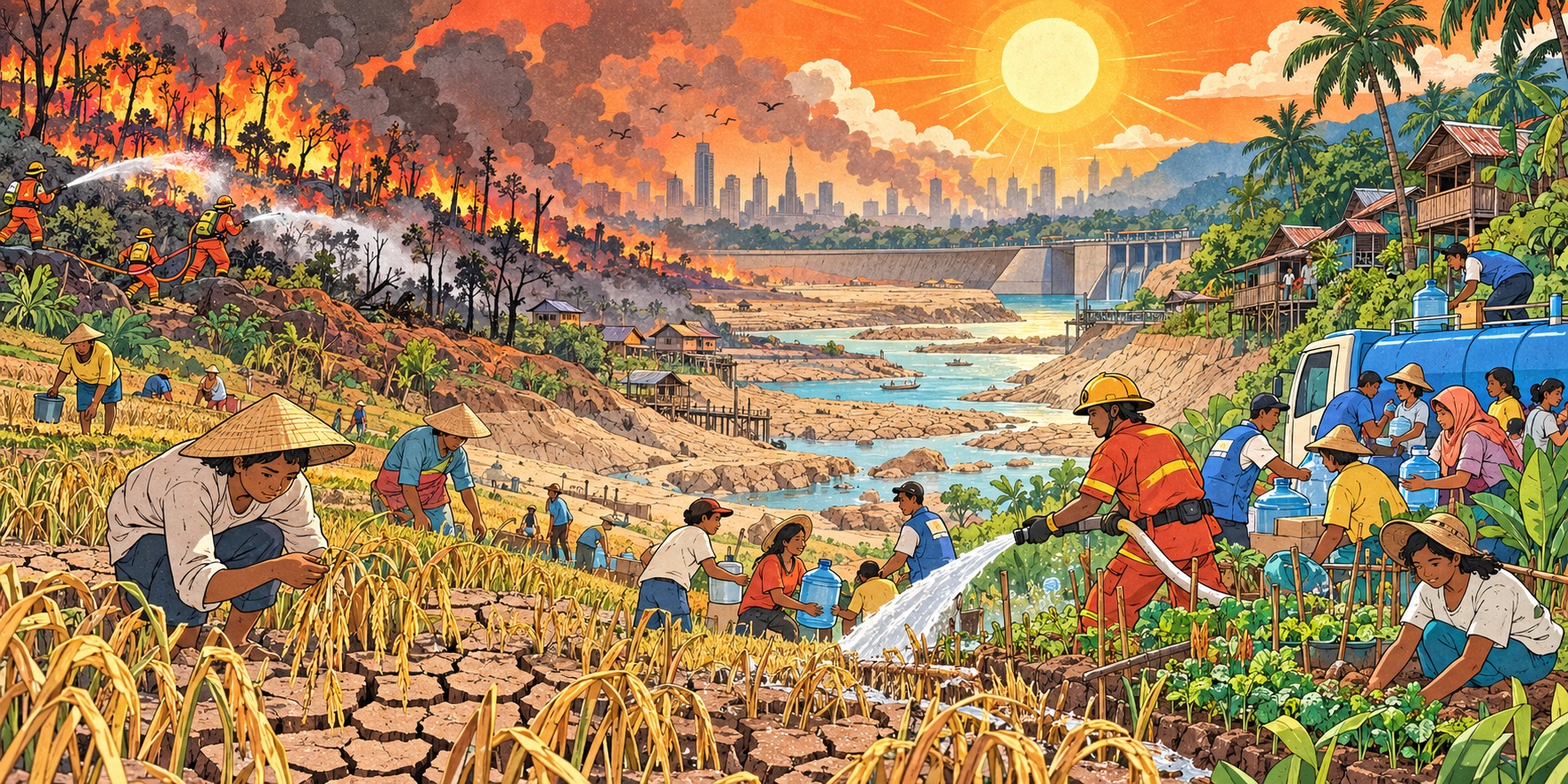
For households, that can mean tighter water supplies and hotter urban conditions. For farmers, it can delay rice planting and reduce irrigation at critical stages. Industry estimates suggest Indonesia’s rice output could fall by around 10% in 2027, while sugarcane, cocoa and palm-oil production also face drought-related pressure.
Fire Risk Crosses National Borders
Dry vegetation and peatlands can transform local fires into a regional emergency. Indonesia is experiencing its most intense wildfire season in 11 years, with smoke affecting parts of Malaysia and Singapore. More than 113,000 respiratory cases were reported during the first nine days of September across seven affected Indonesian provinces.
The region has seen the cost of delay before. ASEAN estimates that the 1997–98 haze crisis affected six Southeast Asian countries, caused more than US$9 billion in economic, social and environmental losses, and released an estimated one to two billion tonnes of carbon.
Forecasts Create Time to Act
The outlook is serious but not uniform. BMKG Deputy for Climatology Ardhasena Sopaheluwakan offered an important qualification: “The 2026–27 rainy season will generally be normal,” even though it is expected to arrive later and last for a shorter period in many areas.
That forecast creates a window for action. Short-cycle crops, careful reservoir management, restrictions on open burning, stronger peatland patrols and early health warnings can reduce losses. Coordinated haze monitoring is equally essential because smoke, rivers and food markets do not stop at national borders.
Southeast Asia cannot prevent El Niño from forming, but it can determine how much damage follows. The coming months will test whether better forecasts, regional cooperation and lessons from earlier crises can turn an extreme climate warning into earlier—and more effective—preparation.


