UNESCO declared the Lenggong Valley in Perak, Malaysia, a World Heritage Site in 2012 due to its ancient human settlement records. The valley holds a rich archaeological record spanning over 1.8 million years of continuous human activity.
River systems and granite mountain ranges surround this rural landscape in Hulu Perak. Limestone hills throughout the region contain dozens of prehistoric caves that sheltered early human communities.
Dramatic natural events helped preserve the physical evidence of ancient life across the terrain. A meteorite impact 1.83 million years ago and the Toba volcanic eruption 74,000 years ago sealed stone tools beneath rock and ash layers.
Researchers consider this area one of the most important prehistoric sites in Southeast Asia. The site provides deep insights into early human migration, tool technology, and cave lifeways.
Geological Heritage
Tectonic movements formed the geological foundation of Lenggong hundreds of millions of years ago. Ancient rivers carved deep limestone karst formations that created natural cave shelters for early hunters.
Early inhabitants established open-air tool workshops at sites like Kota Tampan and Bukit Jawa. Craftspeople used quartzite river pebbles, anvils, and hammer stones to manufacture thousands of sharp stone blades.
The Bukit Bunuh meteorite impact created suevite rocks that trapped ancient hand axes within melted impactite layers. These hand tools rank among the oldest evidence of hominid presence outside the African continent.
The massive Toba supereruption in Sumatra later deposited six meters of ash across sites like Bukit Sapi. This volcanic ash layer temporarily halted tool production and preserved the abandoned workshop floors underneath.
Read also: Timor-Leste & the World's Oldest Deep-Sea Fishermen
The Discovery of Perak Man
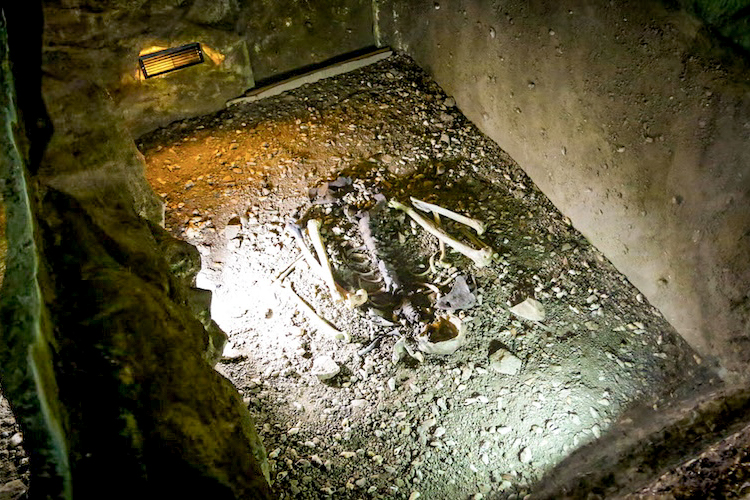
Universiti Sains Malaysia scientists discovered Perak Man inside Gua Gunung Runtuh in 1991. Radiocarbon tests dated this skeleton between 10,000 and 11,000 years old.
This skeleton is the most complete prehistoric human skeleton that researchers have found in Southeast Asia. Forensic analysis indicated that Perak Man belonged to an Australo-Melanesoid population and died around age forty to forty-five.
The man suffered from a rare congenital condition known as Brachymesophalangia Type A2 that shortened his fingers. This physical handicap restricted his left arm movement and caused his spinal column to curve toward the right.
Community members cared for him throughout his long life despite his inability to hunt or perform hard physical labor. Prehistoric mourners buried him in a fetal position surrounded by stone tools, river shells, and meat offerings from wild boars and deer.
Moreover, local cave networks provided permanent shelter and ceremonial burial grounds for ancient hunter-gatherer groups. Excavations in Gua Kajang revealed human burials and cultural deposits dating from 11,000 to 3,000 years ago.
Cave inhabitants gathered wild roots, harvested river snails, and hunted forest game using sharp flake tools. Later Neolithic populations introduced earthenware pottery decorated with cord marks and red slip designs.
Scientists at Universiti Sains Malaysia reconstructed Perak Man's facial features using advanced 3D virtual computer models. The Lenggong Archaeological Gallery now displays the original skeleton and artifacts to educate visitors about ancient human history.
Read also: World’s Oldest Cave Painting Found in Indonesia, Showing Human–Pig Interaction